
Puerto Rico needs our help now
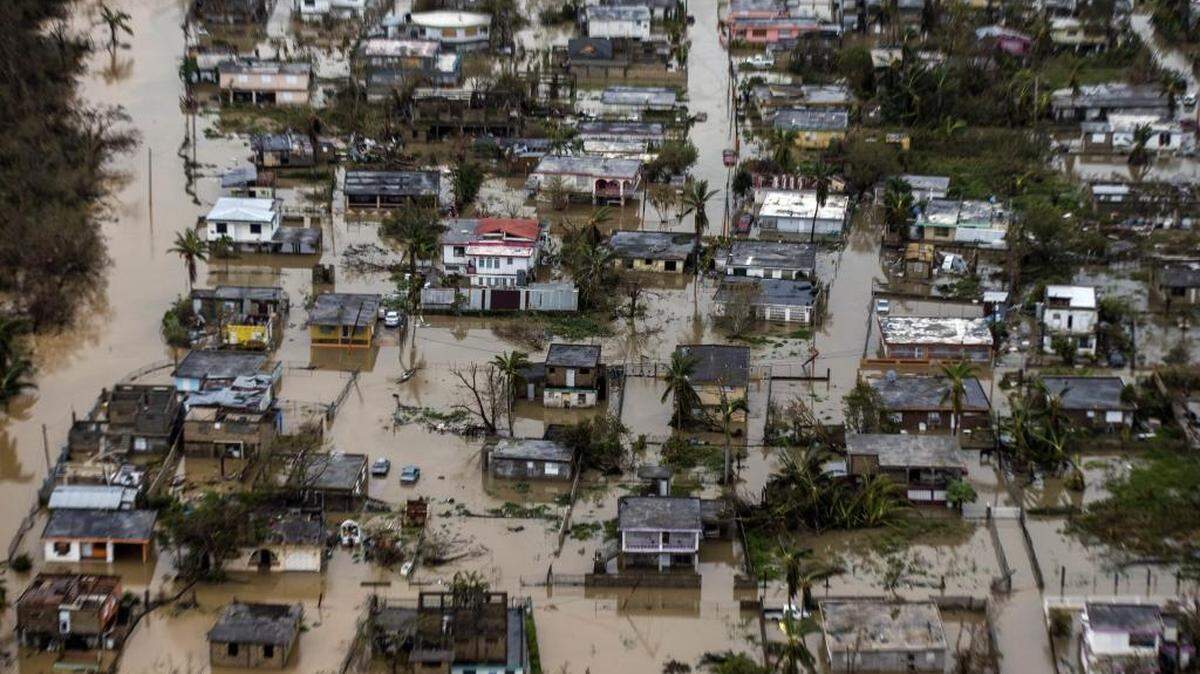
Hurricane Maria has brought devastation, desperation and darkness to Puerto Rico.
“It’s a system that has destroyed everything it has had in its path,” said Abner Gomez, the director of the island’s emergency management agency.
The Category 4 storm and its 155 mph winds hit the island Wednesday like a bomb, taking out its entire power grid, toppling cell towers, damaging buildings, leveling homes, uprooting trees and blocking highways. Its torrential rain unleashed massive flooding and triggered landslides. Anxiety spiked among members of Florida’s Puerto Rican community, hundreds of thousands strong, as they lost contact with family and friends on the island.
The timing of Maria, the worst storm to hit the island since 1932, was especially cruel. Puerto Rico has been struggling to emerge from a deep economic crisis that has inflicted hardship and uncertainty on its people, and accelerated an exodus to the U.S. mainland.
Members of Congress have clashed over the best economic policy direction for Puerto Rico, a U.S. territory with 3.4 million U.S. citizens. But those disagreements must not get in the way of rushing hurricane relief to the island, beginning with the basics: water, food, medicine, shelter.
A humanitarian crisis looms if the aid effort falters.
Florida’s two U.S. senators, Democrat Bill Nelson and Republican Marco Rubio, delivered a timely bipartisan appeal in a letter to President Trump last week, urging “your administration’s continued attention to this dangerous storm so that appropriate federal resources can quickly be made available as locally unmet needs arise.”
The president, to his credit, wasted no time in approving a disaster declaration for Puerto Rico late Wednesday, clearing the way for aid.
But it’s up to Congress to make sure there are enough federal resources, already stretched thin by Hurricane Harvey and Hurricane Irma. Another U.S. territory hammered by Maria, the U.S. Virgin Islands, also desperately needs help.
Earlier this month, Congress approved a $15.25 billion disaster relief package after Hurricane Harvey caused widespread flooding in Texas, and as Hurricane Irma was bearing down on Florida. That’s a significant sum of money — enough to run NASA for nine months — but it’s a mere down payment on the full cost of recovery from Harvey and Irma, not to mention Maria.
Combined damage estimates from the three storms easily exceed $200 billion. Nelson was correct in warning that the next infusion will have to be much bigger.
Some in Congress worry about the impact of huge disaster-relief packages on the federal budget deficit. But rather than dig in their heels and delay or even block aid to victims who need help right away, those lawmakers should be working on a more fiscally sustainable approach for future disasters.
A national catastrophe insurance program, for example, modeled after Florida’s catastrophe fund for hurricanes, could cover the cost of major disasters without adding to the deficit.
A decade ago, the U.S. House passed a bill sponsored by former Rep. Ron Klein, a Boca Raton Democrat, that would have established a national cat fund, but the bill died in the Senate. In the wake of Harvey, Irma and Maria, it’s worth reviving.
Meanwhile, full recovery in Puerto Rico from Maria could take months.
Restoring power is an essential first step. The destruction done by the hurricane has created an opportunity to upgrade the island’s outdated and poorly maintained grid to hold up better under future storms.
U.S. Rep. Darren Soto, an Orlando Democrat, has called for using federal dollars to match local dollars invested in hardening the grid. That will cost taxpayers more up front, but should reduce the need for federal disaster aid in the future.
Red Cross workers are providing food, shelter, health services and emotional support (as well as gargantuan efforts to help Harvey and Irma victims). More than 12,200 people were provided refuge in 200 government and Red Cross shelters across Florida, Puerto Rico and the U.S. Virgin Islands for Irma and Maria, the Red Cross reports.
To donate or volunteer, visit www.redcross.org.
This story was originally published September 23, 2017 at 2:24 PM with the headline "Puerto Rico needs our help now."