
From 9 nests to 1,473: a conservation story
The night she was born, the sand was still warm from a Longboat Key sunset.
Above her, the dark sky shimmered with unfamiliar stars. Inside her, something even more astonishing was happening; a microscopic lattice of magnetite crystals in her brain was encoding the unique signature of the beach where she was born—an invisible map of the Earth’s magnetic field.
Within minutes of hatching, she would scramble toward the Gulf and begin a journey of nearly 10,000 miles across the Atlantic. Decades later, after drifting in currents and navigating entire ocean basins, she would use that magnetic imprint, combined with other cues like wave direction and scent, to return to this very stretch of sand to lay her eggs.
The miracle is not just that she returns, it is that more are returning than ever before.
In 2025, Longboat Key recorded 1,473 sea turtle nests — a number that would have been unimaginable to the handful of volunteers who began counting in 1969, when there were just nine.
Back then, conservation was not yet a movement. Eggs were occasionally moved in foam coolers and kept overnight on volunteers’ lanais to safeguard them against flooding or predators. A makeshift hatchery once stood where the Wicker Inn now welcomes guests. There were no large grants, elaborate protocols or policies, just early mornings, handwritten logs, and miles of beach to walk.
Year after year, volunteers marked nests with wooden stakes, shielded them from raccoons and ghost crabs, and educated neighbors about turning off beachfront lights and removing beach furniture and other items at the end of each day. They endured storms that sometimes erased many nests and celebrated the mornings when hatchling tracks etched delicate signatures across the sand. Over decades, more and more turtles came back because of conservation efforts including ordinances, innovative research, and dedicated volunteers.
That success is more than a feel good, local story. Sea turtles are what scientists call an “indicator species,” a living dashboard for the health of the Gulf. When turtle populations thrive, it signals that seagrass beds are intact, jellyfish populations are balanced, and water quality can support life across multiple levels of the ecosystem. A strong nesting season is not just about turtles. It is about the whole interconnected ocean ecosystem.
Conversely, when turtle numbers decline, it can be an early warning. Pollution, habitat loss, warming waters, or disruptions to ocean currents can ripple through the ecosystem long before we notice them directly. The turtles notice first. Their lives, spanning oceans and decades, integrate these changes in ways few other species can. So, when 1,473 nests appear on Longboat Key, it is not just a statistic. It is a sign of resilience.
Sea turtles possess one of nature’s most extraordinary navigation systems: a biological compass tuned to a shifting, dynamic Earth. But it is also fragile. Artificial lighting can disorient hatchlings, pulling them away from the ocean and toward roads or buildings. Coastal development can alter their habitat. Climate change can shift nesting conditions and skew hatchling sex ratios. Even subtle human interference can scramble the map they carry. The same miracle that allows a turtle to cross an ocean and return to a single beach depends on a world that still makes sense to her senses.
Her story is our story. You do not need to cross an ocean to be part of this. You can start with your own simple, sustainable actions — help keep our beaches clean, do not leave items on the beach overnight, fill in holes and flatten sandcastles, support organizations that have spent decades protecting nests one sunrise at a time, volunteer, or share this story. Because somewhere, beneath the sand, another hatchling is forming her map and what she finds when she comes back depends, in part, on what we choose to do now.
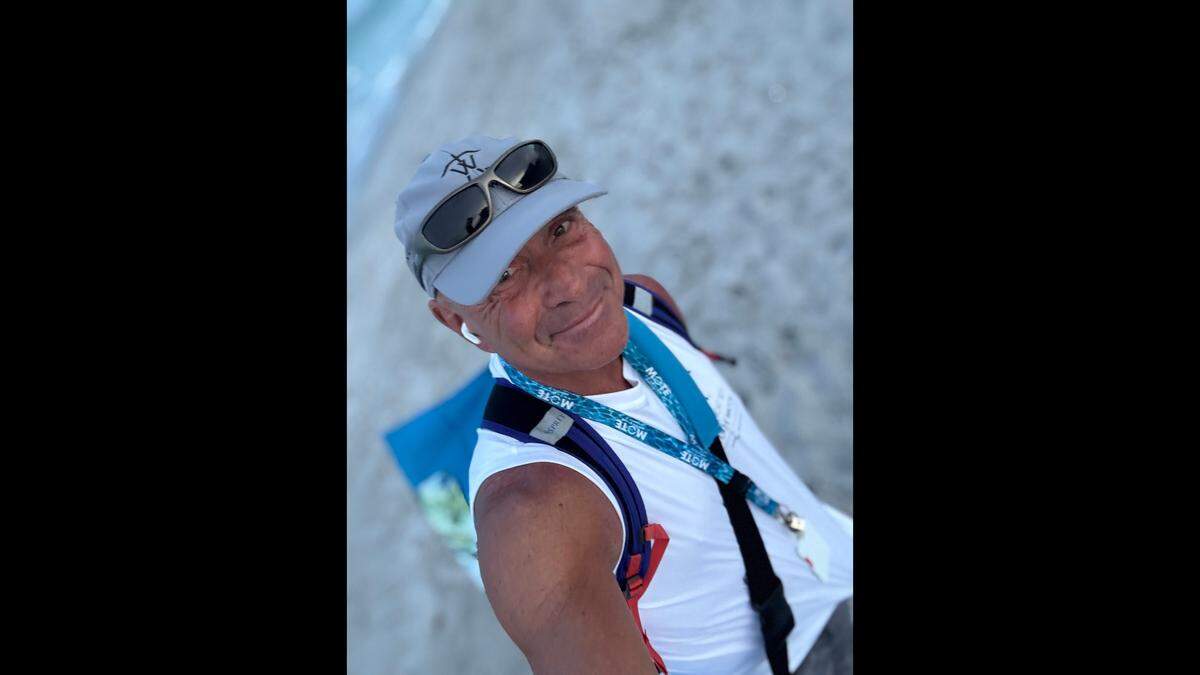
Dr. Jeffrey Driver, DrPH, DABT, is President of the Longboat Key Turtle Watch, Inc. and Associate Faculty at the University of South Florida’s College of Public Health.
This column is part of EcoBeat, a monthly series produced by the Science and Environment Council to bring leading Gulf Coast environmental voices directly to the public. Learn more at scienceandenvironment.org/ecobeat.