How bad is a Category 3 hurricane in Florida? What experts say about major storms
As Florida prepares for a major hurricane storm to strike the Big Bend area, what kind of damage could a storm of that magnitude cause?
Meteorologists monitoring Hurricane Helene expect it to become a major hurricane Thursday morning before making a Florida Panhandle landfall in the evening. Even though Manatee County is not in the cone of uncertainty, Helene will bring strong winds, intense storm surge and heavy rain to the Bradenton area.
The possible Category 3 storm could bring “devastating damage,” according to a guide by the National Hurricane Center.
A guide to hurricane categories
Hurricanes are ranked on a scale from Category 1 to Category 5, with five being the strongest possible storm. Hurricanes earn their ratings based on wind speeds. A Category 3 storm, with sustained wind speeds between 111 and 129 mph, is considered a “major” hurricane.”
A Category 3, 4 or 5 is deemed a “major” hurricane due to the potential for “significant loss of life or damage,” according to the NHC.
There are no Category 6 hurricanes. Any hurricane with wind speeds greater than 157 mph is still classified as a Category 5 storm.
Hurricanes of all categories can produce deadly storm surge, flooding and tornadoes.
What can a Category 3 hurricane do?
A guide by the NHC describes the damage from a Category 3 storm as “devastating,” with extensive wind and flying debris capable of destroying “nearly all” mobile homes. Experts say mobile homes built before 1994 are especially susceptible.
But the winds from a Category 3 hurricane are also powerful enough to inflict “major damage” on traditional homes, with winds capable of removing roof decking.
Meteorologist Mark Elliot explained in a Weather Channel video that Category 3 hurricane winds can be strong enough to blow in the door of a building or rip the siding from a house.
Tree damage can also be an issue during a Category 3 storm.
“Many trees will be snapped or uprooted, blocking numerous roads,” the NHC says.
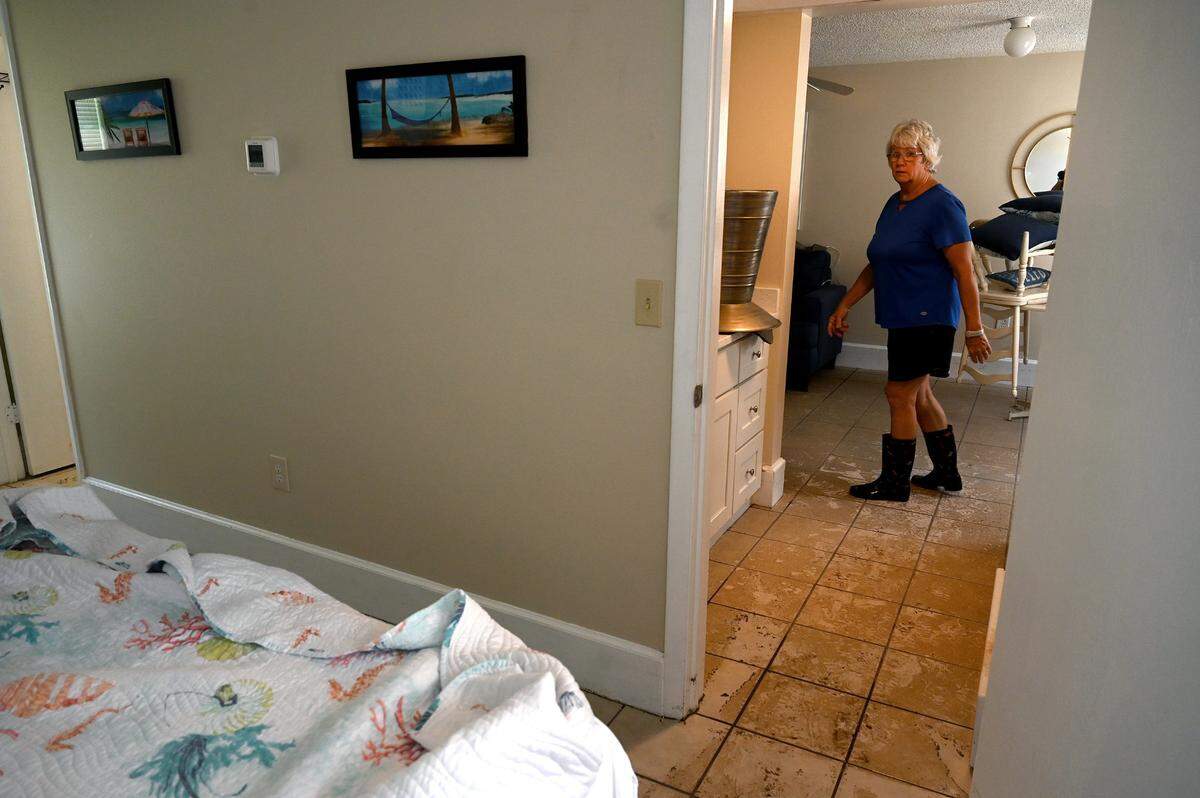
Falling trees can take down power lines, often leading to extended power outages while utility workers are forced to wait for improved weather conditions before sending crews out for repairs.
The NHC says Category 3 hurricanes are capable of causing electricity and water to be unavailable for “several days to weeks after the storm passes.”
While the winds from these storms can cause severe damage, it’s often the water that experts say is more worrisome.
These storms often bring heavy rain, which can make roads difficult to navigate due to flooding. But life-threatening storm surge is a bigger concern, experts say.
“Please take our evacuation orders seriously,” Manatee County’s Public Safety Director Jodie Fiske said during a Helene press conference Tuesday afternoon. “We’re talking about five to eight feet of storm surge.”
Storm surge happens when a hurricane pushes water from the ocean up onto the shore, which can suddenly bring several feet of water above ground.
The National Oceanic and Atmospheric Administration reports that storm surge is the most deadly part of a hurricane, with about half of the deaths attributed to hurricanes being caused by storm surge.
“Though hurricanes are well known for strong and destructive winds, hurricane storm surge is the greatest threat,” NOAA writes in its hurricane guide. “With much of the United States’ densely populated Atlantic and Gulf Coast coastlines less than 10 feet above mean sea level, the danger from storm surges is tremendous.”
Florida’s other Category 3 hurricanes
An example of a Category 3 hurricane is Hurricane Wilma, which made landfall in South Florida in 2005.
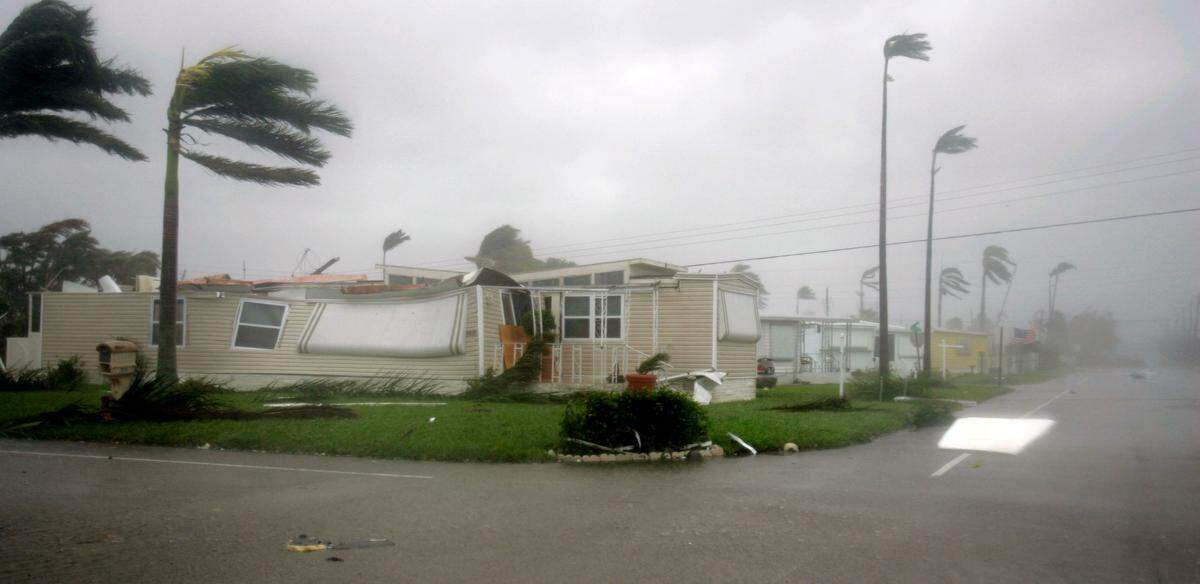
The storm, which the NHC described as “massive and powerful,” caused an estimated $16.9 billion in widespread damages. It also caused 10 tornadoes and killed 5 people in Florida.
The year before, Hurricane Jeanne made landfall near Palma Beach and was one of the deadliest Atlantic hurricanes ever recorded, causing over 3,000 deaths in Haiti, eight in Puerto Rico and five in the continental United States. Total property damage in the U.S. was $7.5 billion.
More recently, the last Category 3 storm to make landfall in Florida was Hurricane Idalia, which also tore through the Big Bend area in 2023, flattening homes and leaving entire neighborhoods underwater.
According to NOAA, the estimated damage from Idalia was $3.6 billion, with the majority of the damage impacting Florida’s agriculture industry in the Big Bend region and the northern portions of the state. Experts say it was the strongest storm to hit the region in 125 years.
Forecast: Helene to become major hurricane
If Helene stays on its current track, it would become the third storm to hit Big Bend in a year, with Category 1 Hurricane Debby making landfall in the region in August.
But no two storms are the same and there can be a variety of factors beyond a hurricane’s category that determine its severity, such as the size, speed and direction of the storm.
“Each tropical system can bring a variety of unique, life-threatening hazards to a given location,” NOAA writes in its guide.
Experts also say it’s important not to become complacent.
“Even if you’ve previously survived a storm in your area, future hurricanes may bring different hazards,” NOAA writes.
That’s why NOAA urges people to know their risk level, especially if they live in a storm surge evacuation zone or an area prone to flooding.
One of the most important things you can do to prepare for a storm is to follow local updates and begin preparing a hurricane plan as soon as possible.
With Hurricane Helene expected to rapidly intensify before landfall, the time to gather supplies and get ready is now.
This story was originally published September 25, 2024 at 11:23 AM.