
Hurricane Elsa has its sights on Florida. How should Manatee County residents prepare?
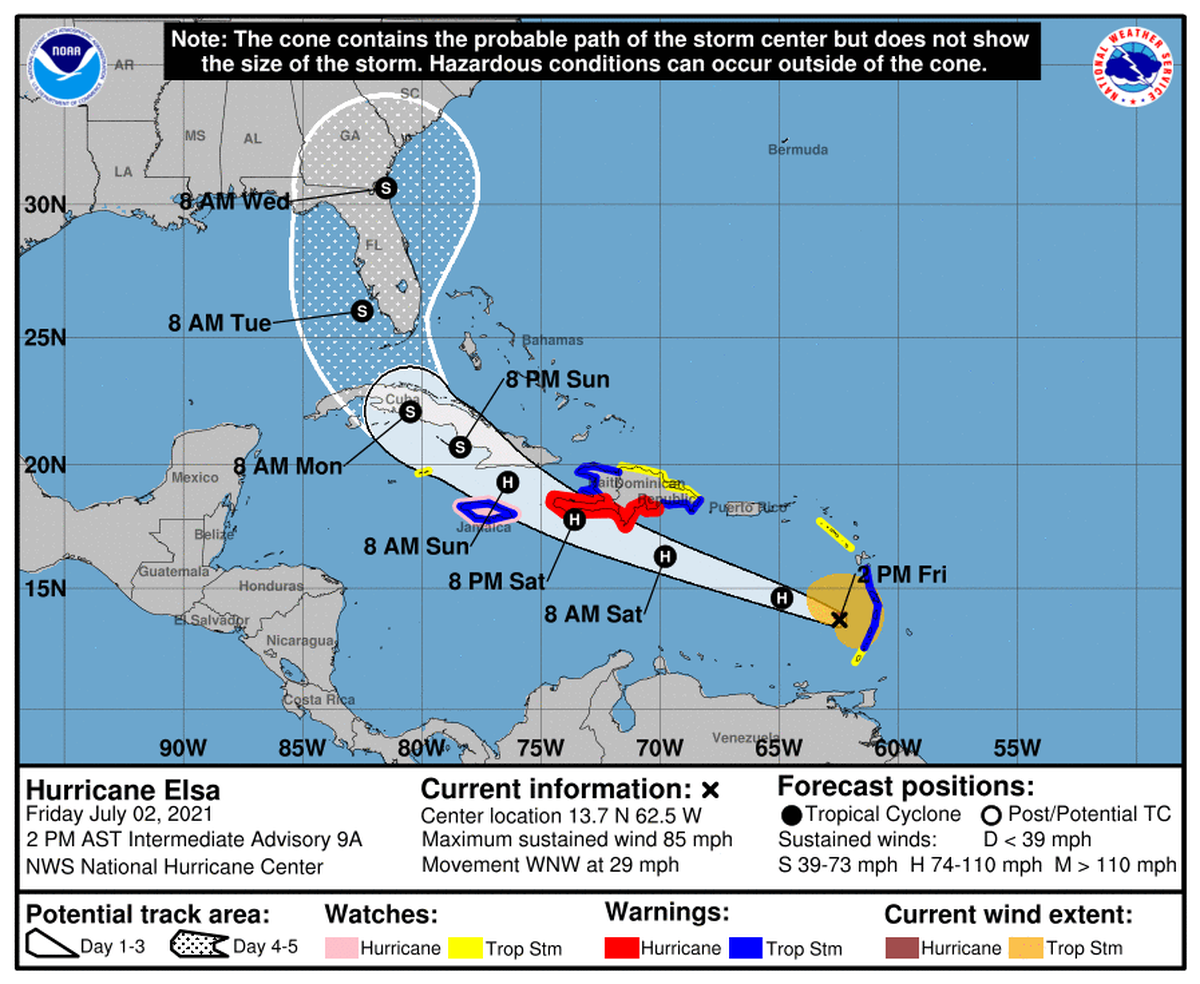
While the forecast was uncertain as of Friday morning, much of Florida fell within the cone of uncertainty for Hurricane Elsa, which could near the state by Monday or Tuesday.
Tropical Storm Elsa strengthened into a Category 1 hurricane by 8:30 a.m. on Friday. In a subsequent update, the National Hurricane Center predicted that Elsa would revert back to a tropical storm after passing over Cuba.
The impact on Florida will become more clear in the coming hours and days. In the meantime, Manatee County residents can prepare by staying informed and stocking up on supplies.
Chloe Conboy, strategic affairs manager for the county’s Public Safety Department, issued a statement on Friday afternoon, urging residents and visitors to remain vigilant.
“At this time, Manatee County’s Emergency Operations Center has not been activated, but we will continue monitoring Hurricane Elsa throughout the weekend,” she said.
Alert Manatee
Sign up for the county’s Alert Manatee system and get emergency updates delivered by phone call, text message or email.
That could include evacuation notices, boil water advisories, weather warnings, and hazardous traffic or road conditions, the county said on its website.
“If you were previously signed up for CodeRED, you will no longer receive those alerts. You must sign up for the new Alert Manatee system to receive emergency alerts,” the website states.
To sign up, enter the following URL in your internet browser:
Mymanatee.org/departments/public_safety/emergency_management/alertmanatee
To sign up anonymously via text, send the message “ManateeReady” to 888777. People who sign up using this method will not receive location-based alerts.
Evacuation levels and shelters
Manatee County residents can find their evacuation level and nearest emergency shelter by visiting mymanatee.org/residents/information and entering their address.
Each evacuation level corresponds with a “potential surge inundation,” meaning the potential height of salt water — not freshwater or rainfall — from a storm surge.
A (red) has a potential surge of 11 feet.
B (orange) has a potential surge 14 feet.
C (yellow) has a potential surge 18 feet.
D (green) has a potential surge 27 feet.
E (purple) has a potential surge 33 feet.
“All residents and visitors in mobile homes, manufactured homes, RVs or travel trailers must evacuate when hurricane evacuation Level A is issued, regardless of where you’re located,” the county reported.
Special Needs Registry
Manatee County offers a special needs registry for people who need help with transportation or sheltering after an evacuation notice.
To sign up, click on “Special Needs Registry” after visiting the following URL:
Mymanatee.org/departments/public_safety/emergency_management
Stock up on supplies
While the list of useful hurricane supplies can seem never-ending, the National Weather Service recommends a handful of must-have items to get started.
The agency recommends having enough non-perishable food, water and medicine to last everyone in the household at least three days. It also recommends:
- Keeping a full gas tank.
- Having cash on hand.
- A battery-powered radio and flashlights.
- A portable crank or solar-powered USB charger for cellphones.
Generators and charcoal grills can also be helpful in the aftermath of a hurricane. However, neither should be used inside — an often deadly mistake.
Hurricanes during COVID-19
The Centers for Disease Control and Prevention is urging people to stay safe as hurricane season collides with the pandemic.
To prepare for an evacuation and possible sheltering, the CDC recommends packing hand sanitizer, disinfectant wipes, liquid soap and masks for anyone age 2 or older.
The CDC also recommends getting a COVID-19 vaccine as soon as possible.
To see the agency’s guidance for vaccinated and unvaccinated people, visit the following URL online: cdc.gov/coronavirus/2019-ncov.
This story was originally published July 2, 2021 at 11:05 AM.