
Lake O releases to east and west will continue as Eta seen drenching South Florida
The U.S. Army Corps of Engineers will continue to release water from Lake Okeechobee to estuaries on the east and west as Tropical Storm Eta is expected to drench South Florida with up to 10 inches of rain starting this weekend.
Lake Okeechobee is already bloated at 16 feet, increasing risks to the Herbert Hoover Dike and communities around the lake, Col. Andrew Kelly, the Corps commander for Florida, said in a media briefing on Friday.
“We currently expect some significant rainfall directly over the Lake. The question is how much is going to be north of that, as that would end up causing the lake to rise,” Kelly said.
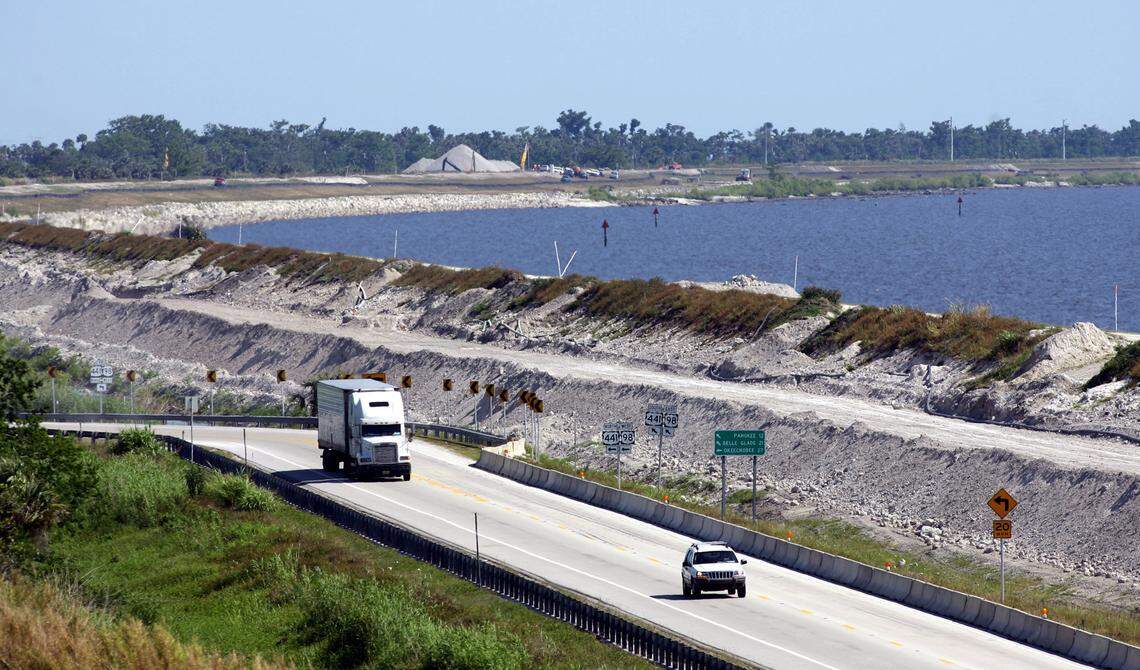
If the lake reaches 17 feet, the Corps will increase its review and inspection schedule along the dike, which continues to undergo renovation work including overhauling weak points and constructing massive new floodgates, he said.
“Right now, we are still pretty comfortable, there are no indications of any issues,” he added.
Heavy rain over and around the lake can spell trouble for South Florida’s decades-old flood control system that relies on hundreds of canals, levees and pump stations to control the flow of water in the rainy and dry seasons as managers work to address the often conflicting water needs of cities, farmers and the environment.
Many canals and water storage areas are already full after heavy rainfall in recent months, so the strategy to continue sending water east to the St. Lucie river and west to the Caloosahatchee is the best option at the moment, Kelly said. He said that the current release schedule could potentially continue for another month.
With Tropical Storm Eta potentially crossing the massive lake, rain and runoff are likely to increase water levels, which could put pressure on the aging dike that rings Lake O. The Corps likes to keep the lake level between 12.5 feet and 15.5 feet.
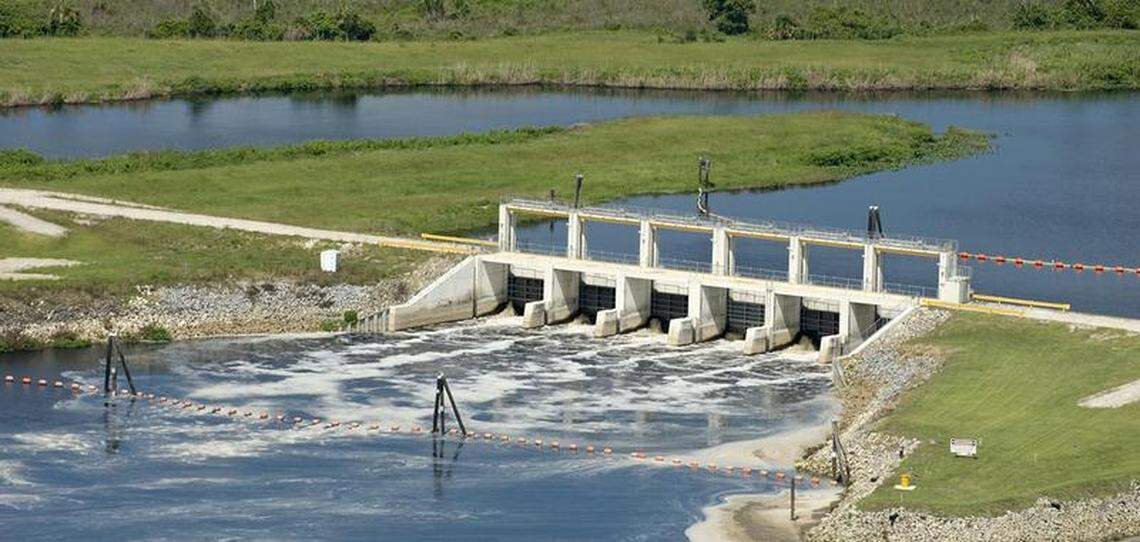
When Hurricane Irma hit two years ago, levels in the 730-square-mile lake — the largest in the Southeast — shot up 3 1/2 feet to 17.2 feet. That level increases regular inspections of the dike from weekly to daily. But Irma’s initial rainfall wasn’t the only problem. Water managers also had to deal with the stormwater runoff flowing down wetlands, canals and the lake’s recharge areas over the following weeks.
That’s why the Corps isn’t releasing lake water to the south, as conservation areas that are critical for wildlife preservation and Everglades restoration are also pretty full.
Yesterday the Corps announced it had started an emergency deviation to lower water levels at Water Conservation Area 3A to protect wildlife such as wading birds, deer and small mammals. This vast wetland expanse is soaked, with levels at least 1 foot above where they should be due to recent heavy rains in the region.
The Corps opened up flood control structures as the area got 180% of the average rainfall for the month of October, or about 3.5 inches above the average for just one month. The rain “put a record market on one of our gauges,” Kelly said.
“Every single drop of water we can get out of there is good right now,” he said.
This story was originally published November 6, 2020 at 4:35 PM with the headline "Lake O releases to east and west will continue as Eta seen drenching South Florida."
.jpg)