
Solid silver lion found on 1715 Florida shipwreck puzzles historians. ‘An odd object’
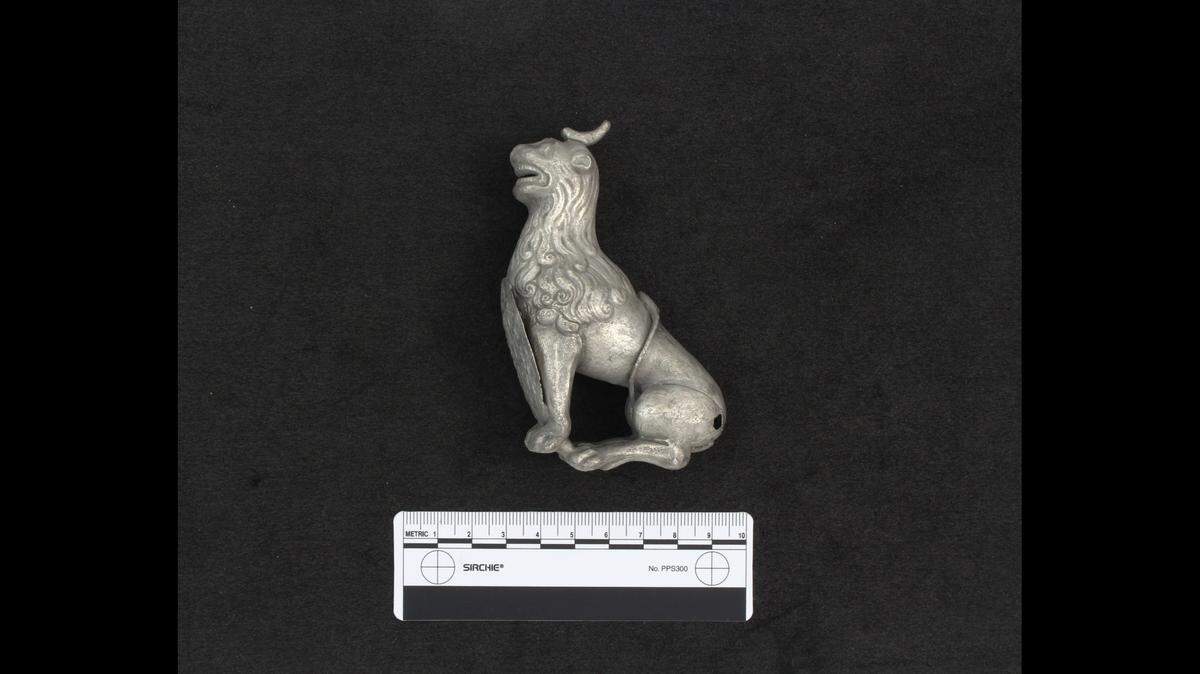
A mysterious silver lion found in the Atlantic Ocean off Florida has given archaeologists a puzzle to solve, as they ponder its purpose — and the possibility it was attached to something bigger that hasn’t been found.
The 4-inch-tall figure counts as treasure, having been expertly crafted around 1715 from about half a pound of solid silver.
A crest indicates it was the property of royalty or European nobility. However, that is also a mystery, since historians haven’t linked symbols to any family or branch of a monarchy.
“It’s really an odd object, an unusual object,” Sam Wilford, the Archaeology Collections & Conservation Supervisor with Florida’s Bureau of Archaeological Research, told McClatchy News in a phone interview.
“I thought it was incredible (at first sight), and unique. I’ve never seen anything like it.”
The details came to light after the lion went through months of conservation work and closer inspection in a lab.
It recently re-emerged as part of a growing collection of artifacts protected by Florida’s Division of Historical Resources, all of which are considered historically important.
However, in this case the artifact came with a lot of questions, and the answers may still be hidden on the seafloor.
Mysterious origins
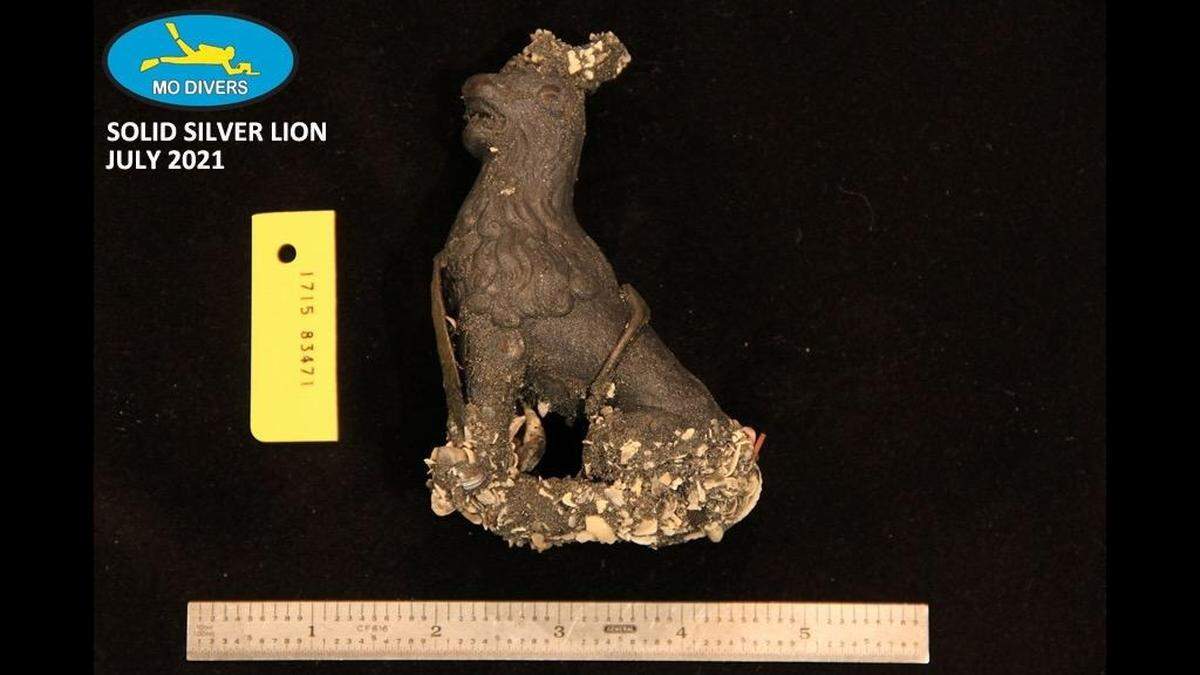
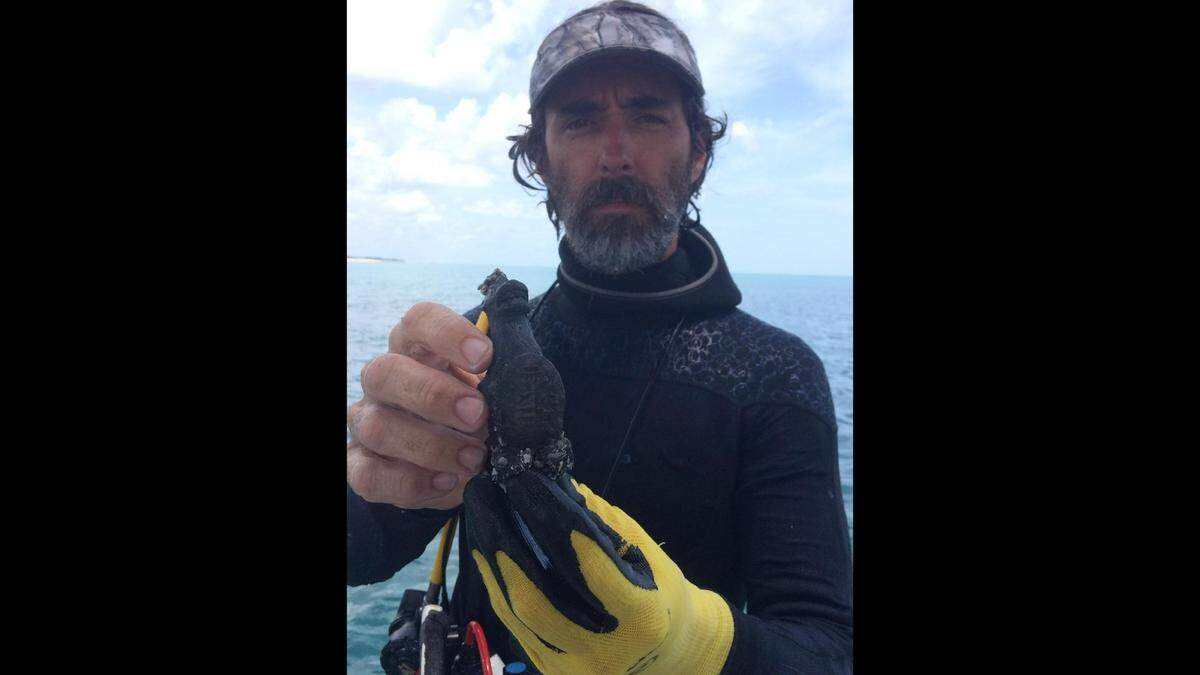
The lion was discovered under unusual circumstances in 2021, when Capt. Mike Perna and a team of salvage divers stumbled onto a cluster of 60 silver artifacts off Indian River County along Florida’s east coast.
It’s believed they were stored in a wooden chest that tumbled into the ocean when a fleet of Spanish treasure ships collided with a hurricane in 1715.
Perna was in 12 feet of water when he started finding treasure under 5 feet of sand. The team immediately slowed its pace and began delicately fanning away the sand with their hands, he recalled.
“There was only about 3 feet of visibility at the time. I could tell it was an object, but it was encrusted,” Perna told McClatchy News in a phone interview.
“It was exciting. I’ve talked to the other (salvagers) who have been working on the 1715 Fleet since Day One, and nothing like this has ever been found on the wrecks.”
An archaeological report drafted by Queens Jewels LLC, the custodian of the wreck site, concluded that “the primary function of this piece remains a mystery.” However, it is loaded with familiar symbols of the era.
Lions were often incorporated in European coats of arms as the “King of Beasts,” symbolizing “courage, nobility, royalty, strength, stateliness and valor,” the report states.
As for it being part of something bigger, Perna says something that resembles a broken suspension ring is on top of the figure’s head.
“What would it have been used for? It sits up fine on its own in a seated position, so why would it be hanging from something?” he says.
Closer examination
The 1715 Treasure Fleet was primarily loaded down with gold and silver treasures being taken from the colonies to Spain, but it also had personal belongings in its holds, historians say.
To date, the Florida Division of Historical Resources has amassed a collection of 24,000 artifacts salvaged by divers off the wrecks.
Thousands more artifacts have been shared with salvage operations such as Queen’s Jewels LLC, which currently has exclusive rights to search the wreck sites.
The state’s historians and archaeologists are selective about what they keep, typically going for objects that are unusual, rare or historically significant. The silver lion falls under all three categories.
It came out of the ocean in good condition and closer inspection of the shield fixed to the lion’s breast revealed images of a castle, a dog and a tree, along with “five small decorative elements underneath the dog.”
The symbols do not match the crest of the Spanish monarchy at the time the ships sank, which means the lion was likely commissioned for a noble family in Spain, Italy, France or Germany, state historians said.
Everything else about the lion is a best guess. It was created in Central or South America using silver that likely came from Peru, and a seam indicates it was made in two parts and put together, historians say.
As for what it may have been connected to, Wilford says it’s possible that object has already been found, but no one has recognized that the lion was part of it.
%20(2).jpg "Plates (1) (2).jpg")
Another mystery
The lion wasn’t the only mystery found among the 60 artifacts in 2021. Two mysterious silver plates were also buried in the sand, Perna says.
They are six inches in diameter, weigh about three quarters of a pound and are embossed with images of a mounted horseman, a castle-like structure and a “prone figure surmounted by a crown bearing three crescent moons,” Queens Jewels LLC noted in its report.
“These figures may represent a depiction of a horse back mounted crusader rearing over a conquered Muslim during the Crusades. Or an as yet unidentified motif? Research is ongoing,” historians wrote in the report.
“There is still some mystery as to the plate’s purpose. They are certainly meant to be ornamental. However the flower nut and threaded rod attached to the back of the artifacts suggest that they were affixed to something very thin.”
The plates remain in the hands of Queens Jewels LLC, which continues to seek explanations. It’s possible the figures represent a specific historical event, officials said. “What is the object carried in the horseman’s left hand and what significance does it have?” historians asked.
The Florida Division of Historical Resources and Queens Jewels LLC are hoping academics or historians may recognize the artifacts or symbols and offer ideas.
Meanwhile, Perna and his team are continuing to search the seafloor in an effort to find something linked to the lion or the plates.
As many as six ships from the 1715 Treasure Fleet have yet to be located, Perna says, and countless chests of treasure remain missing on the seafloor off Florida.
This story was originally published December 27, 2024 at 8:00 AM with the headline "Solid silver lion found on 1715 Florida shipwreck puzzles historians. ‘An odd object’."