Is your car engine purring? How to check if there’s a cat hiding in the danger zone
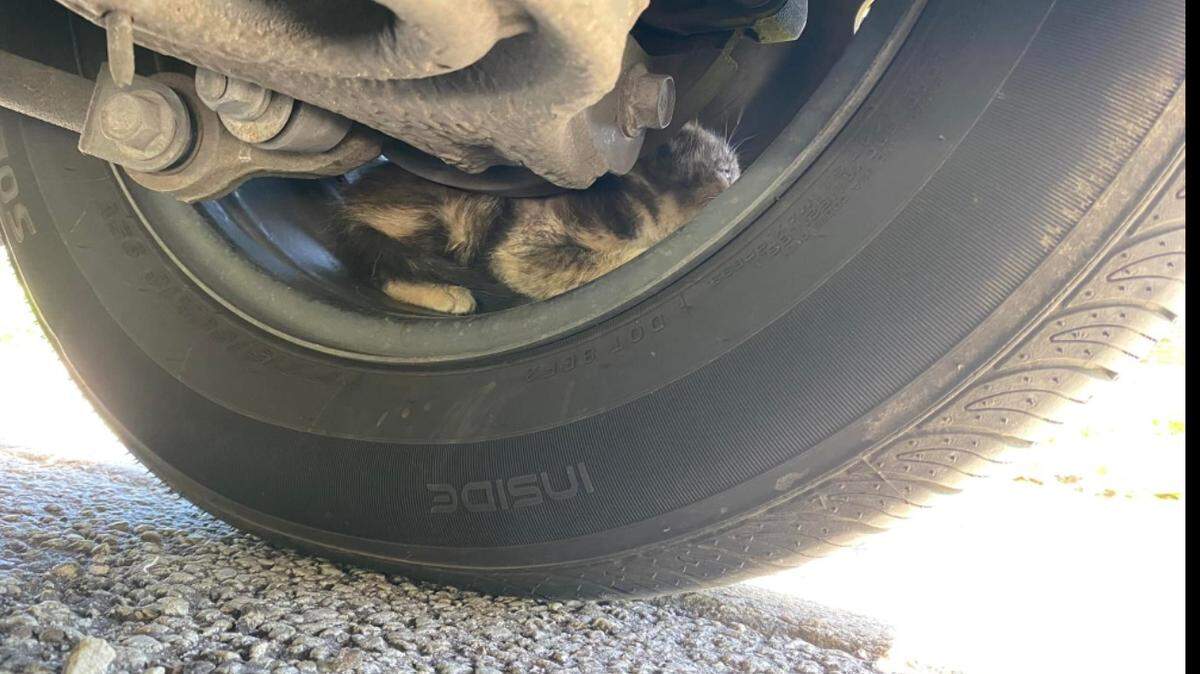
Have you ever had a cat fall asleep on top of your car? What about under your car’s hood, on top of the nice, toasty engine? Or in the tire?
Maybe your car was making a strange noise and you took it to the dealership, only to learn that an iguana, squirrel, possum or other rodent had bitten through the wiring (and left nasty droppings, too).
It happens, even in Florida.
Recently, a cute, little kitten hiding in a moving car’s tire was rescued in Palatka. However, these types of incidents don’t always end happily.
READ NEXT: Will car insurance cover frozen iguana damage in South Florida? Curious305 investigates
Often, the hidden kitty taking a warm catnap can die when the engine starts. And if a cat gets caught in the moving parts, it isn’t a pretty site. If kitty does survive the start-up of a car, it could fall off your moving vehicle and get seriously injured, according to Utah State University Extension.
Cold, rain and severe weather are all some factors that can have animals seeking shelter and finding a place to rest, according to Miami-Dade County Animal Services.
How to check for cats, other animals hiding in car engine or tires?
What can you do to reduce the risk of your car purring for the wrong reasons?
Some tips:
▪ Bang on the hood of your car or honk your horn to wake up any sleeping cats or critters that may have made your car its temporary nap room. Then wait a bit to give it time to escape. Caveat: The scare might cause some animals to crawl deeper into the car to hide, according to Utah State University Extension.
▪ Look under your car and check the tires for any hiding or sleeping animals.
▪ If you’re a cat owner yourself, make sure to check Mr. Whiskers is inside the home before you lock the door. Can’t find your kitty? Follow the steps above in case your tomcat is under your Toyota.
▪ Clean up your car, bro. That McDonald’s wrapper, and anything else that smells like food needs to go. Utah State University Extension says food can attract rats, squirrels and other scavengers to your car.
▪ If your car is in a garage, don’t store food or trash in the garage, and seal any gaps or cracks in the garage windows and doors to avoid attracting mice, rats and other rodents, Consumer Reports suggests.
▪ A clean driveway will also keep away critters. Keep it free of leaves, feathers and any paper or trash that can be used as nesting material, as well as food. This will prevent animals from having any reason to come foraging on your property and near your car.
▪ If you live in an area that’s prone to attracting rodents, consider spraying commercially approved rodent repellent or peppermint oil around your car and its wheels to try and keep them away, experts told the Detroit Free Press.
▪ Want to be extra sure there is no kitty curled up on your engine? Open the hood to check.
What you shouldn’t do
If you open the hood of your car and find a stray or wild animal, “DO NOT prod the animal or attempt to remove it. Instead, leave the hood open and walk away from the vehicle for a few minutes,” Utah State University Extension says.
This story was originally published April 14, 2022 at 3:05 PM with the headline "Is your car engine purring? How to check if there’s a cat hiding in the danger zone."