
Python-sniffing dogs join the fight against Everglades invaders
Truman, a black Labrador, and Eleanor, a German short-haired Pointer, frolicked in the grass near the C-111 canal outside of Everglades National Park.
But they weren’t there to have fun. The pups were on a mission to help rid the fragile ecosystem of dangerous invaders.
The 2-year-old sniffer dogs are the latest weapons in the battle against the destructive Burmese python, an exotic constrictor that’s devouring entire populations of small mammals, raiding wading bird nests and disrupting the natural balance of predator and prey. State wildlife managers have enlisted the detection dogs’ exceptional sense of smell to help biologists locate the slithery invasive species in the Everglades.
“Dogs can be trained to recognize one single smell like the Burmese python, and they will find it even in the middle of the Everglades, with all the other odors and distractions in that ecosystem,“ said Pepe Peruyero, who runs J & K Canine Academy and has partnered with the state to provide python-sniffing dog services. “Once they are out working, everything revolves around finding the snakes to get a reward.”
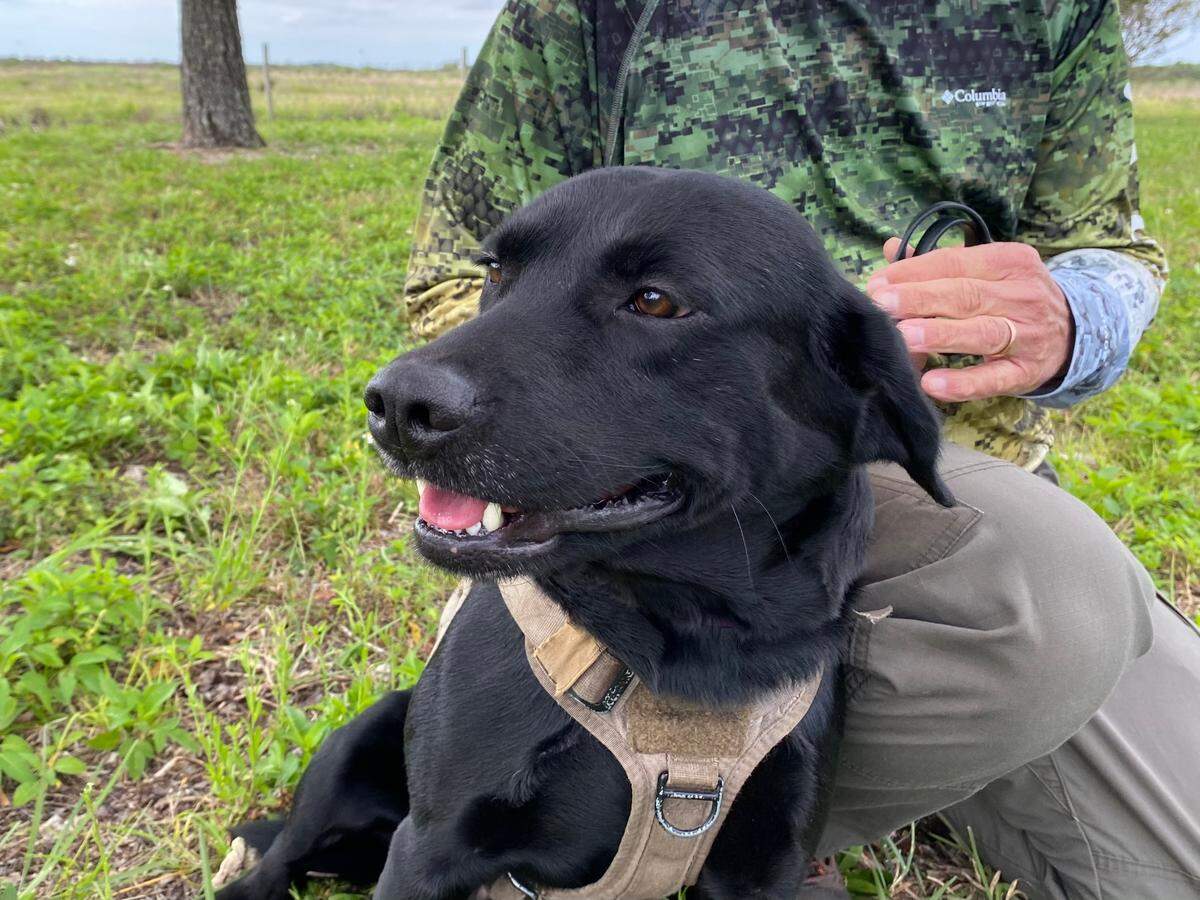
For Truman and Eleanor, the first dogs in the state’s Detector Dog Team, the reward is a ball to play with and lots of affectionate praise. They deserve it: The dogs work five days a week for up to six hours each day.
Peruyero said it took around three months to train the pups. First, they were exposed to towels that had been saturated with Burmese python scent. They learned to alert their handlers every time they caught a whiff of python. Then they did some field training, looking for bagged or radio-tracked pythons in the wild.
The duo started working for the Florida Fish and Wildlife Conservation Commission in October and sniffed out their first python — an 8-foot male — in the Rocky Glades hunting area in Miami-Dade County in December. So far, they have helped FWC find four snakes.
In a demonstration on Tuesday in the Southern Glades Wildlife and Environmental Area, FWC python research manager McKayla Spencer hid a bagged python in the bushes.
Truman started sniffing, his handler Paula Ziadi firmly holding his leash as the black Lab jumped excitedly over rocks and tall grasses, its tail wagging wildly. FWC biologist Jake Travers was right behind, snake hook in hand, ready to catch the snake.
Detection dogs don’t actually touch the target; they only find the snake and alert the handler, Spencer said.
When Truman sniffed out the python, it stopped and turned to face Ziadi in a pointing position.
“Good boy, good job buddy,” she told Truman, handing him a yellow tennis ball. When the dog points, that’s the cue for an FWC biologist to capture the snake.
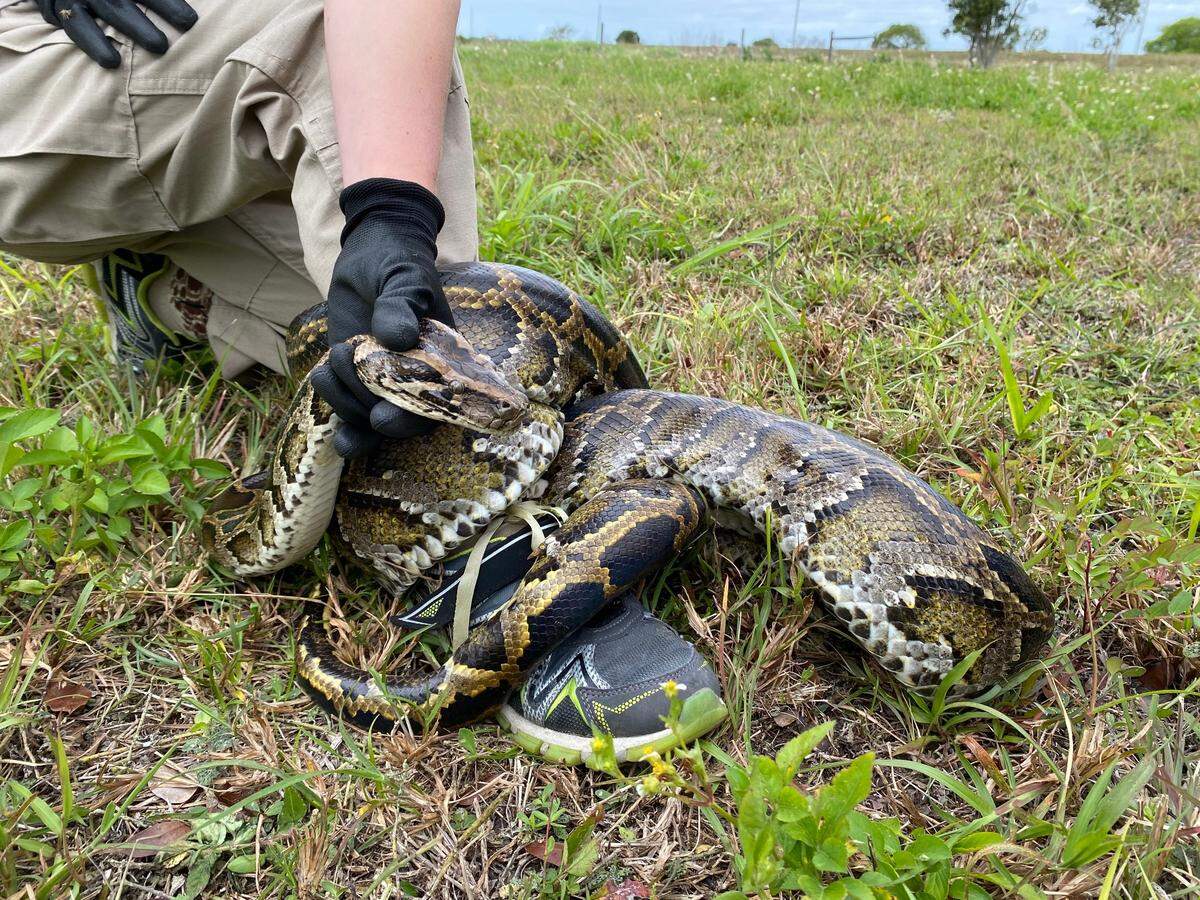
Finding and capturing Burmese pythons is extremely hard. There are possibly hundreds of thousands slithering around the Everglades, hiding in the marshes and tree islands where they have found the perfect conditions to thrive. Some estimates point to between 100,000 and 300,000 pythons.
The exotic constrictors are believed to have appeared in the Everglades in the 1980s, having been kept as pets and then released by frustrated owners who got tired of feeding them mice and other live meals.
FWC and the South Florida Water Management District pay python hunters to remove the snake from state and federal lands, and encourage citizens to look for them in private properties around the state. The state agencies have removed more than 5,000 invasive pythons from the Everglades since the removal programs started in 2017.
Last month FWC banned breeding and the sale of iguanas, tegus and other invasive reptiles because of the damage they cause to local ecosystems.
This story was originally published March 10, 2021 at 6:00 AM with the headline "Python-sniffing dogs join the fight against Everglades invaders."
.jpg)