Mom and baby whale were heading the wrong way off Florida. Scientists are now relieved
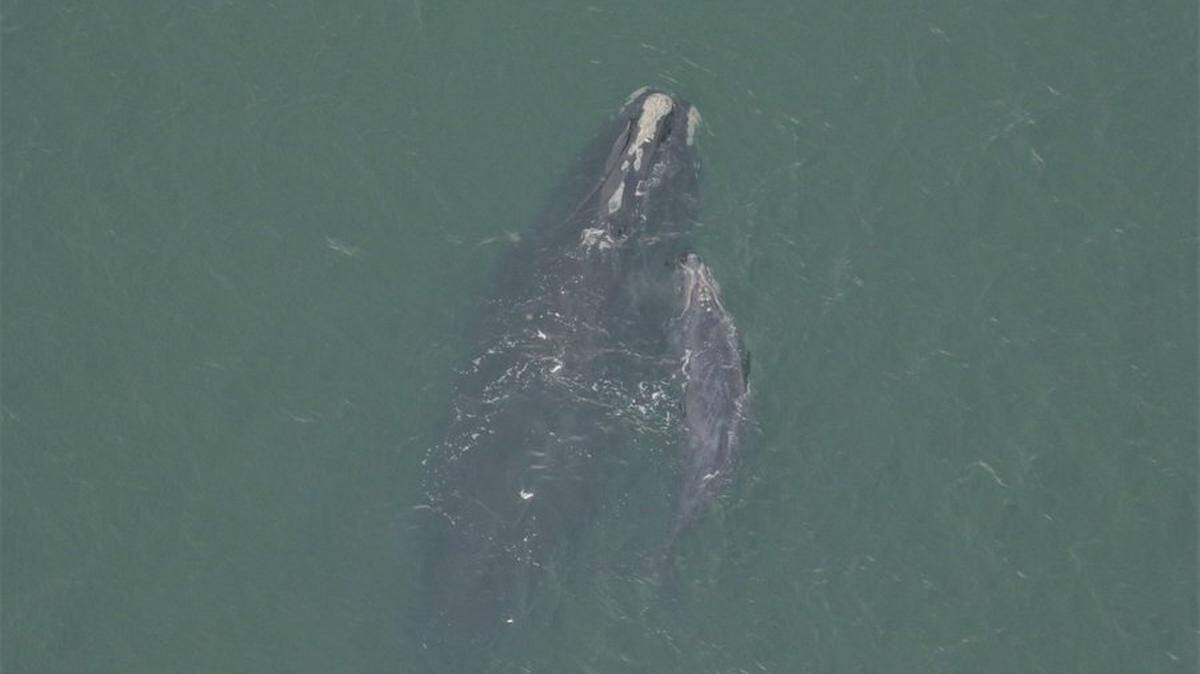
They were last spotted a little over a week ago heading too far into South Florida waters for scientists’ comfort. But the mom and baby North Atlantic right whale pair now appear to be back on their correct course.
Mother whale, who National Oceanic and Atmospheric Administration biologists named Champagne, and her newborn calf were seen this week off Ponte Vedra Beach near Jacksonville, said Allison Garrett, a NOAA spokeswoman.
“So, they are heading north again, which is great news,” Garrett said.
Right whales, which are critically endangered, give birth to their calves in the ocean waters off South Carolina, Georgia and northeastern Florida. Then they typically swim north to New England.
Every now and then, they don’t, and scientists get worried.
That’s exactly what happened last Wednesday after Champagne and her calf were spotted near the Lake Worth Inlet, just north of West Palm Beach. The first time anyone had seen the pair was Jan. 21 off Amelia Island, much farther north near Jacksonville.
NOAA asked boaters in the area to be on the lookout for the pair, cautioning that by federal law, people must stay 500 yards away from right whales.
Federal scientists estimate there are fewer that 400 North Atlantic right whales alive, making them one of the most endangered species of large whales.
According to the conservation group Oceana, the species was almost wiped out from whaling until the U.S. government banned hunting the species in 1935. However, they face other life-threatening challenges today.
North Atlantic right whales tend to swim slowly, which made them easy prey for whalers. Large ships traveling at normal speeds can’t maneuver to avoid hitting them, according to Oceana’s website.
Other man-made dangers the whales face are discarded fishing lines, and more important, vertical crab and lobster trap ropes found in abundance along their migration routes. These often get entangled around the whales’ fins, tails, mouths and bodies, Oceana said.
Also, emerging threats — such as seismic air gun blasting, which is used by energy companies to find deep-water oil and natural gas supplies beneath the ocean floor — threaten the lives of the remaining right whales, according to Oceana.
Rule proposed to protect whales
Catherine Uden, South Florida campaign organizer for Oceana, said the group is asking NOAA to strengthen a proposed regulation aimed at protecting right whales from fishing gear.
“We know that the two major threats are when it comes to the future of North Atlantic right whales are getting entangled in fishing gear and hit by boats,” Uden said. “The U.S. government has a new proposed rule that could protect these endangered whales from fishing gear, but it’s still not enough.”
The proposed rule includes reducing the number of vertical crabbing and lobstering ropes by between 30 and 50% — depending on the state — and the expanded use by commercial fishermen of ropes meant to break when they come into contact with whales.
Environmentalists, however, said the rule needs more. Whitney Webber of Oceana, in December said in a statement that the break-away lines are designed for adult whales, but still leave juveniles at risk. And, Webber said NOAA should include entanglement monitoring, including by satellite, in the rule.
“North Atlantic right whales are desperate for government protections that work. These critically endangered whales must navigate an obstacle course of ship traffic and vertical ropes from fishing gear along the Atlantic coast,” Webber said.
Scientists believe Champagne is about 12 years old. Right whales can live up to 70 years, grow to about 52 feet long and weigh upwards of 140,000 pounds.
They are among the 14th known species of baleen whales, named for the baleen plates in their mouths used for skim feeding, as opposed to the teeth found in whales like orcas, dolphins and sperm whales.
New whale species found?
However, that number may have been raised to 15 after NOAA scientists believe they likely discovered a new species, they are calling Rice whales, this month. The breakthrough stems from the finding the body of a deceased whale on the shores of Sandy Key in Everglades National park in January 2019.
At the time, biologists believed it to be a Bryde’s [pronounced broodus] whale. However, Dr. Patricia Rosel and her NOAA Fisheries colleagues began noticing genetic differences in Bryde’s whale samples they studied in the lab in 2014.
The dead whale found in 2019 meant they finally had a skeleton to study to see if there were morphological differences that set it apart from Bryde’s whales.
.JPG "Patty points to bones in neck_distinct feature (1).JPG")
The scientists this year concluded there were and designated it a new species of whale, which they named after biologist Dale Rice, the first scientist to recognize Bryde’s whales live in the Gulf of Mexico.
To officially be designated a new species, however, the findings must be accepted by the Society of Marine Mammalogy Committee on Taxonomy.
This story was originally published February 4, 2021 at 5:51 PM with the headline "Mom and baby whale were heading the wrong way off Florida. Scientists are now relieved."