A man in a canoe disappeared in the Everglades. After 11 days, his phone became a clue
Mark Miele put his canoe in the water on Jan. 22 and set out on an eight-day journey through the Florida Everglades.
He packed for his adventure — a blue-and-white sleeping bag, maps of the national park, an ammo box with empty bottles.
And a phone, of course.
His destination along the Wilderness Waterway route was Flamingo station in Homestead. He never got there.
He was supposed to be in the Glades for eight days. On Day 11, a group of paddlers on a late-night excursion on Super Bowl Sunday came across more than a dozen items floating in the Lopez River, just down from Everglades City in Collier County. It was the first sign that the 67-year-old Miele visiting from Virginia, was in trouble.

They called park rangers. A Collier deputy on a boat went to pick up the items. The deputy found more items washed up on the river bank, including his wallet with a Christmas photo and a bag.
We “had found all of his gear,” said Collier sheriff’s Cpl. Ed Henderson.
But there was no sign of him or his canoe.
But they did find his phone. And it ended up saving Miele’s life.
Deputies were able to access the phone’s data and used the last GPS coordinates Miele had inputted on Jan. 31 to create a search perimeter.
Officials knew Miele had requested a permit to camp along the Wilderness Waterway. Based on his permit route, Miele would have been near the Lopez River — a popular back country campground — at some point. But they also knew he should have ended his trip four days prior at Flamingo.
Collier deputies, park rangers and Florida Fish and Wildlife officials coordinated an air and water search for the missing tourist.
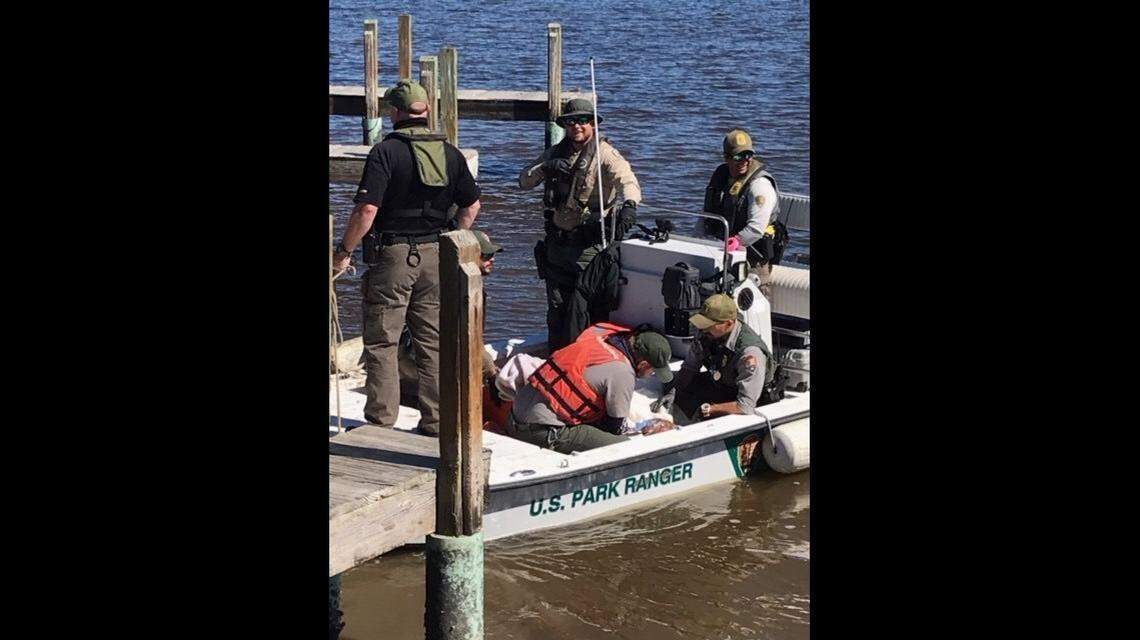
They found him hours later on his back, his life vest keeping him afloat, shortly before noon Monday.
“It’s a miracle he is alive and in the condition he is in,” his family said in a statement Tuesday through the sheriff’s office.
Miele was in a back water bay area about a mile away from the marked trail and about two miles from where his gear was found, said Henderson, one of the helicopter pilots who first spotted Miele. The paddler was covered in mud.
Rescuers arrived shortly afterward, slowly angling their boats to him.
Helicopter video shows rescuers appearing to talk with Miele as they extended a white pole. He grabbed it and they pulled him near the boat before dragging him on board. Miele barely moved.
While some water in the area is deep, Miele was found in shallow water, about three to four feet, said Park Ranger Nathan Moreno, who was driving one of the rescue boats. Most people can stand up in it, he said.
The six-foot Miele probably would have been able to as well if circumstances were different.
His “butt was touching the seabottom,” Moreno said, but he was suffering from “severe hypothermia” and was in “a lot of pain.”
Both Henderson and Moreno believe Miele was saved by his yellow life jacket, which helped keep his head out of the water.
“It did what it was supposed to,” Moreno said.
Miele’s phone also played a huge part in his rescue.
By using the GPS coordinates, along with the permit information rangers had, Henderson says Miele was spotted within an hour of the helicopters being deployed Monday.
Miele was taken to Physicians Regional Hospital in Naples and is in stable condition.
His canoe?
It was halfway filled with water, and found in the area by some mangroves.
It’s still a mystery what went wrong.
This story was originally published February 4, 2020 at 8:42 AM with the headline "A man in a canoe disappeared in the Everglades. After 11 days, his phone became a clue."