
Florida’s emergency chief steps down after COVID, hurricanes to ‘hit the pause button’
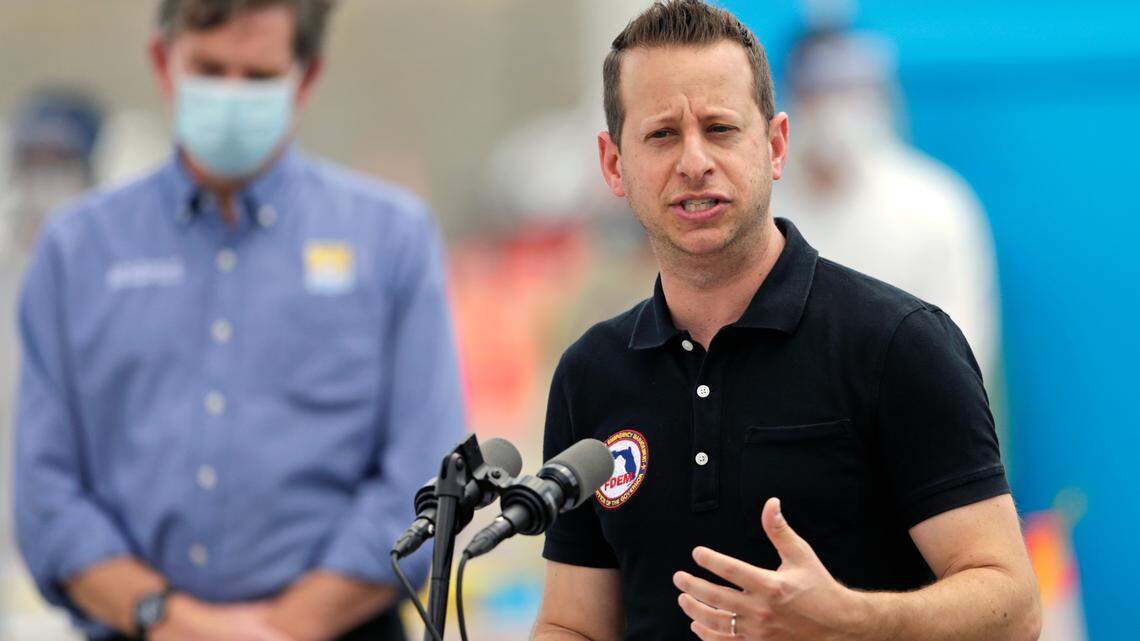
Jared Moskowitz, the former Broward legislator and director of the Florida Division of Emergency Management who has led the state’s logistical response to the coronavirus, announced Monday he will be leaving his post to spend more time with his family.
Moskowitz, 40, said he will turn in his formal resignation early Tuesday and will leave April 30 to head home to South Florida. The announcement comes a day after the third anniversary of the shooting at his alma mater, Marjory Stoneman Douglas High School in Parkland, where 14 students and three adults were murdered.
“I am reminded on the third anniversary of the @MSDHighSchool school shooting in my hometown, along with this pandemic that tomorrow is not guaranteed,’’ Moskowitz wrote on Twitter Monday, tagging his friend Fred Guttenberg, the father of Jaime Guttenberg, one of the victims.
“With 15 years in public office, time to hit the pause button to be with my family. I’ll be back,’’ he wrote.
Gov. Ron DeSantis said at a news conference at the Capitol Monday that he will replace Moskowitz with the division’s deputy director, Kevin Guthrie.
“Jared is the reason why” Florida has the best logistics response to hurricanes and the pandemic, DeSantis said.
“It’s been two years, he’s worked extremely hard and his family is almost a world away, in some respects,” the governor added. “When you’re in Florida, many of you know, Tallahassee down to Broward, it’s not like you can just hop on a plane all the time and get down there and it’s a long drive. So he’s done well by us.”
Moskowitz, a lawyer who had previously spent nearly 10 years at Ashbritt Environmental Inc., a Deerfield Beach-based disaster recovery and environmental services contractor, said he has not decided what is next but still has “fire in the belly” and has not ruled out running again for elective office.
Tapped by the governor in December 2018, 10 months after the Parkland shooting, Moskowitz served as the lone Democrat to lead an agency in the Republican governor’s administration. He gives DeSantis, a loyal Trump supporter, credit for working with him and listening to his point of view.
“The governor came to me, a progressive Democrat who just passed gun control in the House and who was walking around with an F-minus T-shirt from the NRA,’’ Moskowitz said in an interview. “Anyone who knows me knows I’m not like a lemming. We were able to put our policy differences aside and work together for Florida.”
Moskowitz openly advocated for mask mandates, using his Twitter account and newspaper editorials to promote them even as the governor refused to model mask wearing in public and issued an executive order that prevents local governments from issuing mask ordinances.
“There was never a moment, even when he might have disagreed, that he didn’t let me make my case,’’ he said. “I took this job because I knew I could have a tremendous opportunity to help people.”
While Moskowitz anticipated the job would be time consuming, especially during the six months of hurricane season in the storm-prone peninsula, he said he never expected to be navigating the state through a global pandemic. The job kept him away from his wife and sons, Samuel, 7, and Max, 4.
A few weeks ago, as he was buckling one of his sons into his car seat, his son said: “‘Daddy you work for the governor. I don’t want you to work for the governor. I want you to come home,’’ Moskowitz recalled. “I listened to him. Your kids are only young once.”
Two months ago, Moskowitz had already told friends he was ready to leave, a normal course of events for agency heads in the mid-point of a governor’s four-year term. His name had been floated as a possibility to serve as President Joe Biden’s FEMA director, a job the new president gave to Deanne Criswell, the head of New York City’s emergency management department.
Moskowitz served as a Parkland city commissioner for six years before he was elected to the state House in 2012. He said he has never been the same since he spent an agonizing day with the families of the Parkland victims waiting for them to get the news their children would never return.
“All those parents had plans for their kids,’’ he said. “Future careers, marriage, weddings, but in a blink of an eye, it’s all gone.“
On the three-year anniversary of the massacre, he tweeted: “I am still haunted. Every second, of every hour, of every day.”
In the hours after the Parkland shooting, he worked with the late Kristin Jacobs in the Florida House and Sen. Lauren Book in the Senate to bring legislators to the scene of the crime so they could see the aftermath of the carnage firsthand.
The result was landmark legislation that raised the legal age of gun ownership to 21, imposed a three-day waiting period on gun purchases, brought more police officers into school and created a red flag law to warn of gun owners who may be a danger to themselves or others. It was the first gun control legislation passed by the Florida Legislature in more than 20 years and it halted the NRA’s agenda in a pivotal state.
“It took guts. It took skill but it also took the ability to go to my friends across the aisle to explain to them why we couldn’t miss this moment,’’ Moskowitz said. “Doing nothing was not an option.”
Moskowitz, who enjoys the spotlight and is a compelling speaker, earned bipartisan kudos for his handling of the state’s pandemic response.
“Your passion comes out loud and clear,’’ said Sen. Danny Burgess, R-Zephyrhills, after Moskowitz gave a presentation to the Senate Committee on Pandemic Preparedness and Response on Jan. 29. “When I think of you, I think of your little kids and I think of your family, and I think how long you’ve been away from them and doing what you’re doing countless days, countless hours, away from them, weeks on end.”
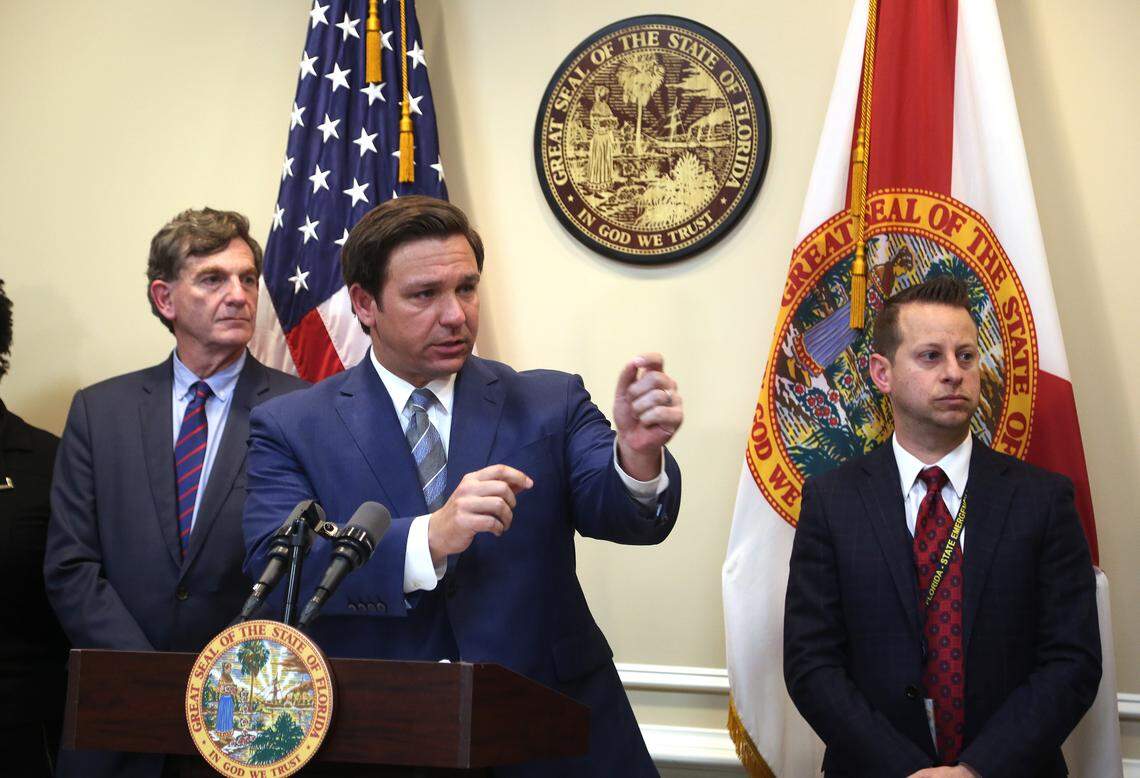
Because of the pandemic, the role of emergency manager was more powerful than ever, allowing Moskowitz to steer billions in state contracts to companies, often with sole source or no-bid purchase orders.
State law allows the Division of Emergency Management to be the only agency to deficit-spend in an emergency, and the governor’s executive orders often directed the spending for testing, personal protective equipment and vaccines through the agency, much of it without transparency.
This story was originally published February 15, 2021 at 8:36 PM with the headline "Florida’s emergency chief steps down after COVID, hurricanes to ‘hit the pause button’."