Medieval Fair landowner says he’s been treated unfairly as Manatee reviews permits
The owner of the Myakka City property at the heart of an internal investigation remains locked in a battle with Manatee County officials over the fate of this year’s Sarasota Medieval Fair.
A 47-acre parcel came under intense scrutiny earlier this year after one of Manatee’s code enforcement officers came forward with accusations against her supervisors, alleging that they turned a blind eye to allow development without permits. Their comments led the county administration to put six employees involved with the case on paid administrative leave.
On top of the employee suspensions, county officials began investigating how the complaints were handled. The Building and Development Services Department also announced a significant policy change, forcing agritourism permits to undergo a special permitting process.
Speaking with the Bradenton Herald, Edie Ousley, a spokesperson for landowner Jeremy Croteau, argued that her client had been treated unfairly. From the beginning, she said, Croteau acquired the necessary permits. Gov. Ron DeSantis also signed a bill into law in July that gave property owners more protection for different kinds of activities on agricultural land.
“Jeremy and his family, they’ve become the victims. This is a very complicated attack on the Mallaranny nursery to block the revitalization of this farm. It appears to be an organized attempt to stop these kinds of agritourism activities,” Ousley said, noting that the property has already been inspected and reviewed by several state agencies.
County officials disagree, however, that Croteau has been treated unfairly. Even as fair organizers continue to advertise the event and sell tickets online, the county has not issued the permits required for the event to proceed.
Public records show that Croteau purchased the land in September 2020 and began clearing the land to host the fair soon thereafter. County Administrator Scott Hopes suggested that the current race against the clock wouldn’t have been necessary if organizers had met with county officials to make sure the site was suitable for use as a fairground.
“Maybe, had they come in when they were thinking about buying the property and asked what they might need, a lot of this could’ve been avoided. To someone onlooking from the outside in, it appears that to go through the permitting process and public hearings would not have resulted in enough time to have a fair in 2021.”
State law encourages this type of use, especially when there’s a farm on the property, said Ousley. Hosting the Sarasota Medieval Fair would be a dream come true for Croteau, who has shown an interest in rural activities from a young age.
“Mr. Croteau has had a very long passion to own a farm, so when the opportunity came about for a 47-acre farm on State Road 70, that’s something he jumped at. He is fulfilling a dream, and in Florida, farming is one of the top three economic engines in our state,” she said.
“Much of the farmland in Florida has been developed into small communities and neighborhoods. This is an opportunity to maintain that farmland and rural life so that the next generation can have the opportunity to enjoy that life surrounded by horses and ponies.”
Fair is scheduled to open Nov. 6
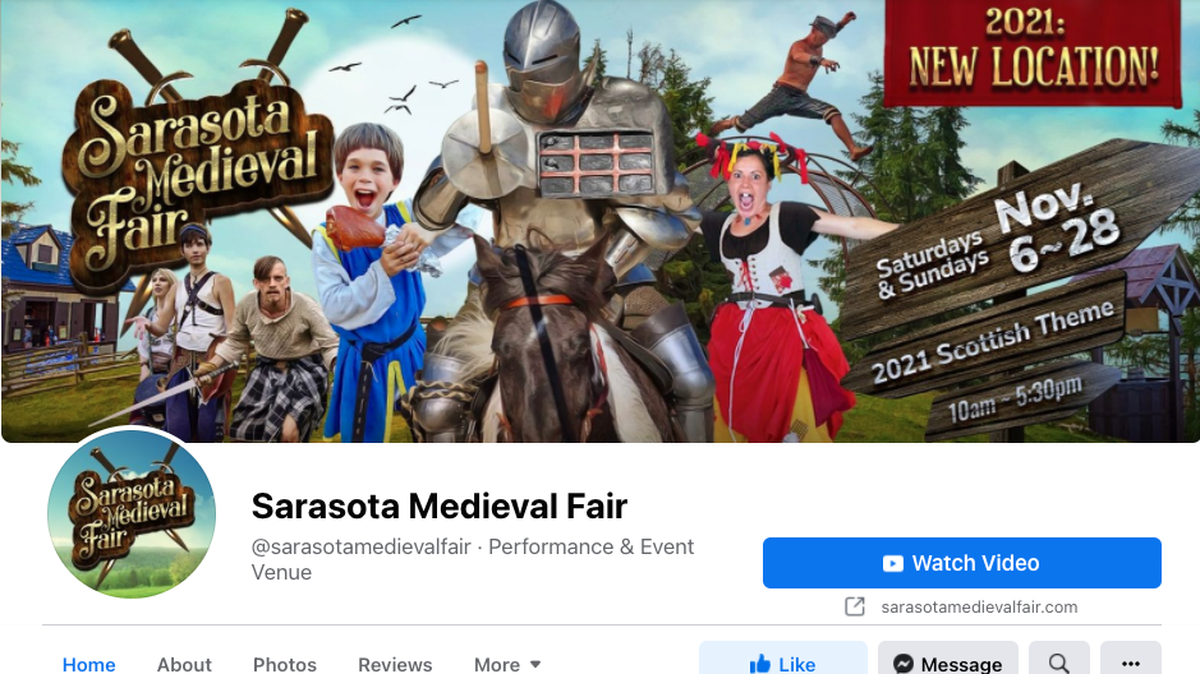
The Sarasota Medieval Fair is an annual event that draws tens of thousands of visitors. Organizers announced earlier this year that the fair would relocate to a new home in Myakka City, but it’s unclear whether the permit issues will be resolved by the fair’s Nov. 6 opening weekend.
“We’re doing what we can as expeditiously as we can to accommodate the desire there,” said Hopes, who explained that county staff are still in discussion with Croteau. “I don’t know what the fate of it is. They do not have a permit to hold a public event of this type.”
While some neighbors near the subject property complained about the potential impact of the ongoing site development, those concerns were unfounded, Ousley said. One of the primary allegations was that the clearing of the property caused flooding in the surrounding areas.
“If you look to the beginning, there have been a lot of reckless and false accusations of participation and public corruption that violates state and local laws. it’s just simply the opposite,” said Ousley.
The Southwest Florida Water Management District responded to those complaints in May, finding that the flooding was the result of an illegal earthen dam that other neighbors built 4 miles away from Croteau’s property.
Ousley also expressed concern that the county’s changes to the permitting process for agritourism go against recent changes in state law. She pointed to a letter from Steven Hall, the Florida Department of Agriculture and Consumer Service’s general counsel, that made the same argument.
“...I am concerned that the County’s special permit process goes beyond what was contemplated by the legislature,” he wrote to County Attorney Bill Clague.
As the county continues to review the request to host the Sarasota Medieval Fair, Hopes said he disagrees with Croteau’s interpretation of the law.
“I find it hard to believe that the intent of the legislature was to allow someone to buy property for what appears to be a primary use of having a public event over a period of time where thousands will attend, drive cars, ride horses, with jousting and alcohol, and that somehow doesn’t have any protections for the public with the county government making sure there’s electricity, lighting and water.”
An investigation into code enforcement’s initial complaints and an independent review of the fair’s permit requests are ongoing.