
Behind the scenes: Herald photographer Tompkins-Condie tells how she took on 'Pacific Pivot'
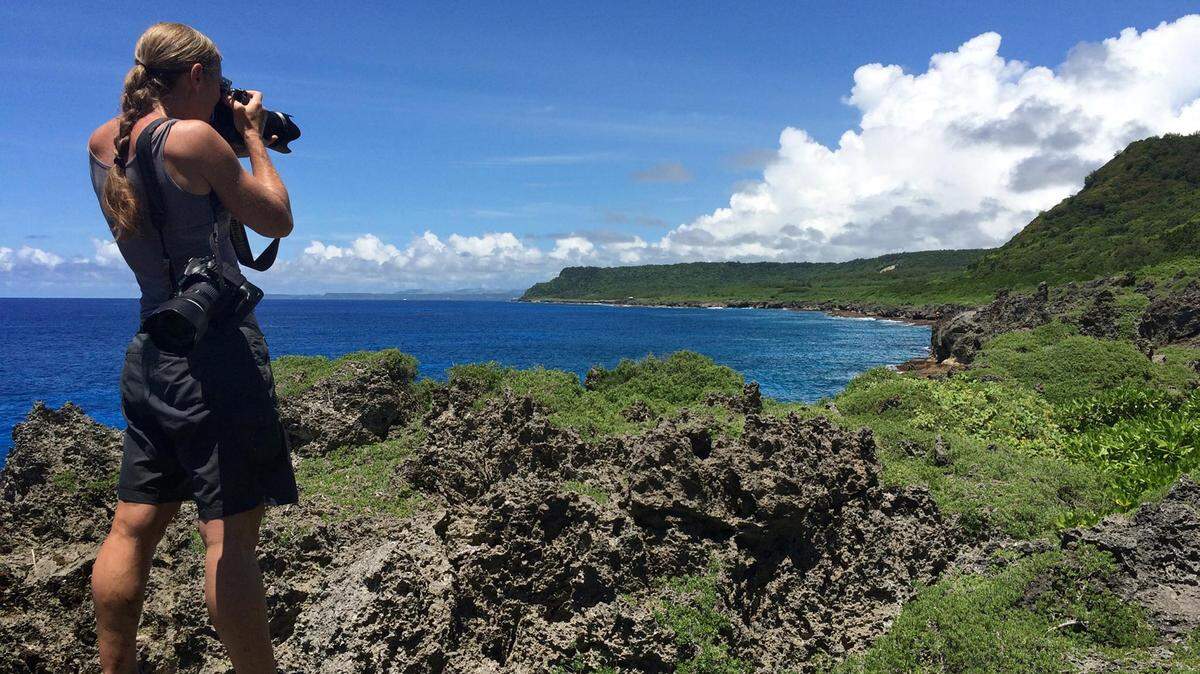
Big projects can have small beginnings.
Through years of conversations with my son while he was serving in the Marine Corps, I'd been sifting and sorting nuggets of information and squirreling them away for a dream project of my own.
That's why I was ready when Bradenton Herald Executive Editor Joan Krauter asked if I had any ideas for an international reporting proposal. I knew what I wanted to do.
I had heard about a conflict on the Japanese island of Okinawa, where plans to expand a Marine base were setting off concerns that it would destroy an ecologically sensitive area and put an endangered marine mammal, the dugong, in peril. I'd followed it, both out of interest in my son's stories and because the dugong is almost exactly like our manatee.
In reality, of course, there was much more to the story.
I was ecstatic and shocked when I got a "go" signal from the Herald's Washington Bureau to do the project.
Soon after I got an email from Adam Ashton, the military reporter with McClatchy's newspaper in Tacoma, Wash.:
Hello!
I'm the military reporter at The News Tribune in Tacoma. I got a cryptic note from the WashBuro suggesting they're sending a female photographer from the Bradenton Herald on a story to Okinawa and Guam and they're looking for a writer to back her up.
Through exhaustive investigative work, I'm guessing that might be you? And you're maybe pitching a story on the military building new stuff on Guam because the people of Okinawa think they have too many Marines? Am I on the right track?...
Have a good day,
Adam
Since that day, Adam worked tirelessly to sharpen the focus of this project, to pin down the logistics of finding flights, hotels, contacts (so many military contacts!) and dozens of other details -- and he did it without the benefit of getting any of my jokes. (He would often shake his head and sadly say "I still don't get your jokes.")
Upon landing in Japan, Adam and I exchanged looks of panic as we were escorted to an interview room in the customs area. Whatever the problem was, it eventually was resolved and we were allowed to leave. One more flight and we arrived on Okinawa, where we were met at our hotel by our translator, Junko Takahashi. A brief night's rest and we were on the road to our first interview of many in the 2 1/2 weeks we'd be there, then on to a week in Guam.
Okinawa, the largest island in the chain of Ryukyu Islands in the Pacific, was the scene of one of the bloodiest and longest battles of World War II. Scars remain on all sides.
The island now finds itself as the focal point for U.S. and Japanese military for national security, as Okinawans work to take back their land and heritage.
Political rivalries, lawsuits against the United States, NIMBY-ism on a grand scale... it's all there. Over the next six days, our series, "Pacific Pivot," explores the U.S. military's expanding presence there.
You'll meet Takiechi Kakinohana, who was 15 when he was forced to fight with Japanese soldiers on the small island of Aka where he lived. He watched American soldiers land amphibious vehicles on the beach in front of his village from a hiding spot in the mountains.
Kakinonhana can still see the beach where they landed from his front porch.
You'll learn about Anna Shimabukuro, an eco-educator with a bright smile, who has joined forces with others to fight the new Marine runways in a mostly pristine harbor called Oura Bay. She has sued the U.S. military twice.
Adam and I also visited Marines and sailors around the island and met with Japanese who have their own concerns about national security. As one Marine said, "There's no replacing for being close to where you need to be."
Our translator, Junko Takahashi, was delightful, determined and dedicated to our project from the moment she signed on. She survived our back-seat driving and exhausting schedule with wit, style and an ever-present smile.
The folks at our Washington Bureau and Joan Krauter at the Bradenton Herald put their faith and support into our work and let me go to the other side of the planet to learn about this stuff, and then share it all with you, our readers.
We are finally here.
This story was originally published November 25, 2015 at 9:13 AM with the headline "Behind the scenes: Herald photographer Tompkins-Condie tells how she took on 'Pacific Pivot' ."