Medieval treasure — belonging to legendary scammer — discovered in Poland mountains

After arriving in Poland sometime around 1708, Antoni Jaczewicz soon developed a sinister reputation.
The country was being torn apart by the Great Northern War, accompanied by a deadly plague epidemic and desperation, according to a May 8 news release from the Wojewódzki Urząd Ochrony Zabytków w Kielcach, or the Provincial Office for the Protection of Monuments in Kielce.
Desperate for hope and salvation, people sought out those claiming to have a special religious power — enter Jaczewicz.
Claiming to have received supernatural healing powers from the Mother of God, Jaczewicz offered healing prayers to the sick and protection over those still untouched by the plague, officials said.
He lived in the wilderness of the Świętokrzyskie Mountains as a hermit, and soon the money he took from people for his services grew to a legendary hoard, according to the release.
Other bandits were rumored to have sought out his refuge, and soon, Jaczewicz hired guards to rob pilgrims and protect his massive treasure.
Jaczewicz was captured by the bishop’s court, but then escaped from prison and resumed his work as a fraudster, officials said.
Four years later, he was captured again, and sentenced to life in prison in 1712, according to officials.
Jaczewicz became known as a legendary adventurer, hermit and fraud, but his rumored riches were never found — until now.
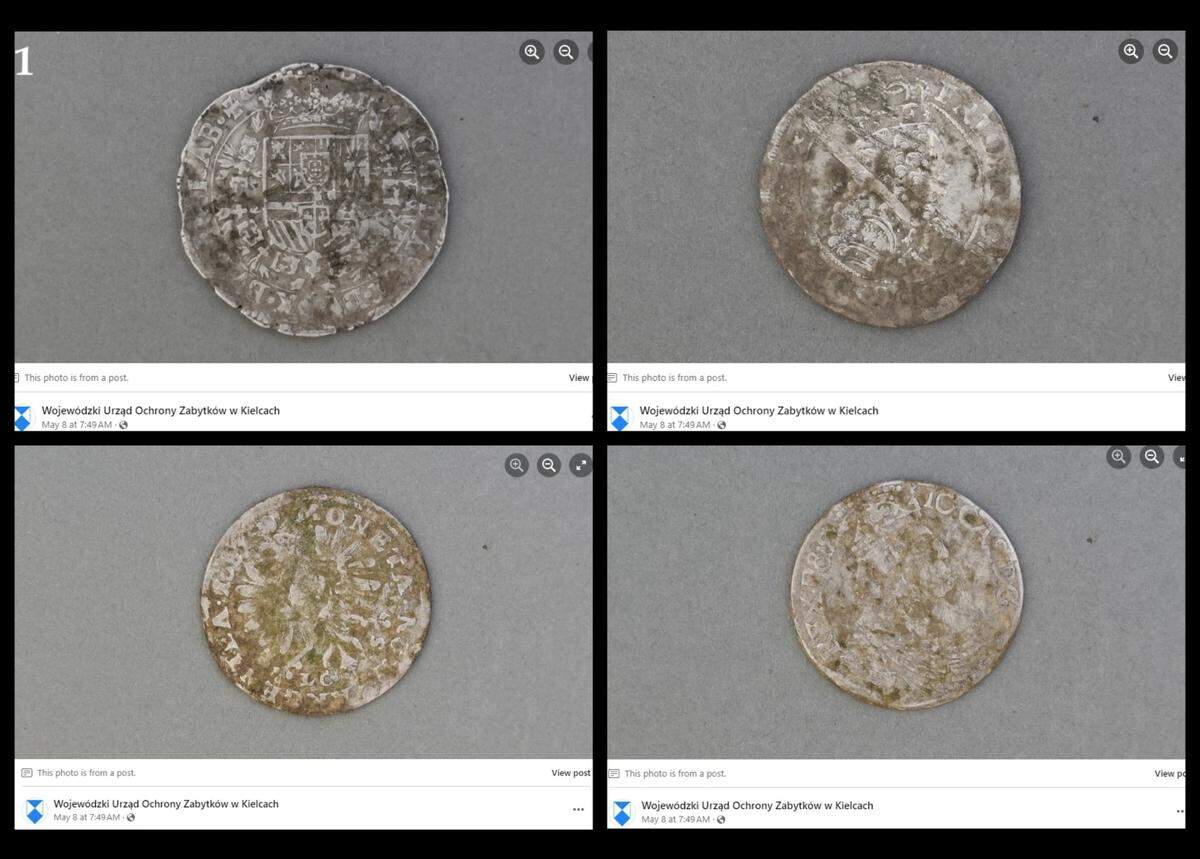
The Świętokrzyskie Exploration Group, a team of detectorists and history buffs who have been exploring the mountains since 2015, discovered some coins during a trek in the mountains in June 2022, group president Sebastian Grabowiec told Zwiadowca Historii.
One team member found the first pile, the largest, before others stumbled upon other groups of buried coins, Grabowiec told the outlet.
They found silver and gold coins from the 17th and 18th century, according to a May 10 news release from the Ministerstwo Nauki i Szkolnictwa Wyższego, the Ministry of Science and Higher Education.
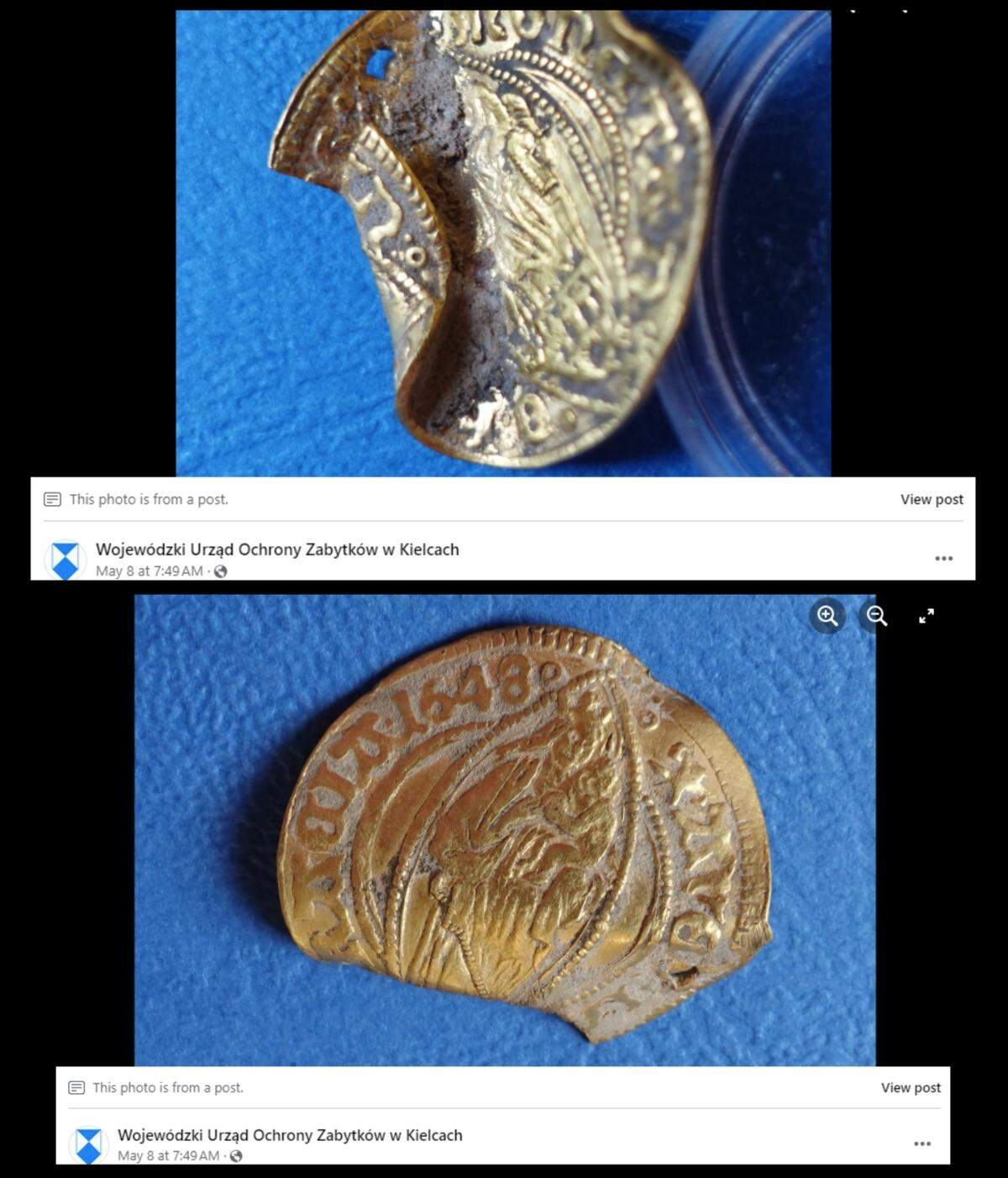
The find included orts, sixes, patagoons, krajcars and kopecks, officials said, but the most fascinating coin was a gold Hamburg ducat from 1648 with the image of Madonna and Child that had a hole punched along its edge, likely worn as as medallion.
Wojciech Siudowski, from Wojewódzki Urząd Ochrony Zabytków w Kielcach, told Zwiadowca Historii that the coins show the legend of Jaczewicz may be more fact than fiction.
The variety of coins were likely part of fees taken by the self-proclaimed healer, given as donations or votive offerings, or stolen from the local nobility, Siudowski told the outlet.
The coins were analyzed before their connection to Jaczewicz was confirmed, the outlet reported.
Preservation of the coins is scheduled for this year, officials said, and exploration of the discovery area will continue as more hoards may be buried nearby.
The Świętokrzyskie Mountains, also called the Holy Cross Mountains, are a mountain range in central Poland outside the city of Kielce, about a 110-mile drive south from Warsaw.
Google Translate was used to translate the news release from the Ministerstwo Nauki i Szkolnictwa Wyższego and the article from Zwiadowca Historii. Facebook translate was used to translate the news release from the Wojewódzki Urząd Ochrony Zabytków w Kielcach.
This story was originally published May 10, 2024 at 12:44 PM with the headline "Medieval treasure — belonging to legendary scammer — discovered in Poland mountains."