‘Mysterious’ purple lump found at ancient Roman ruins was once ‘worth more than gold’
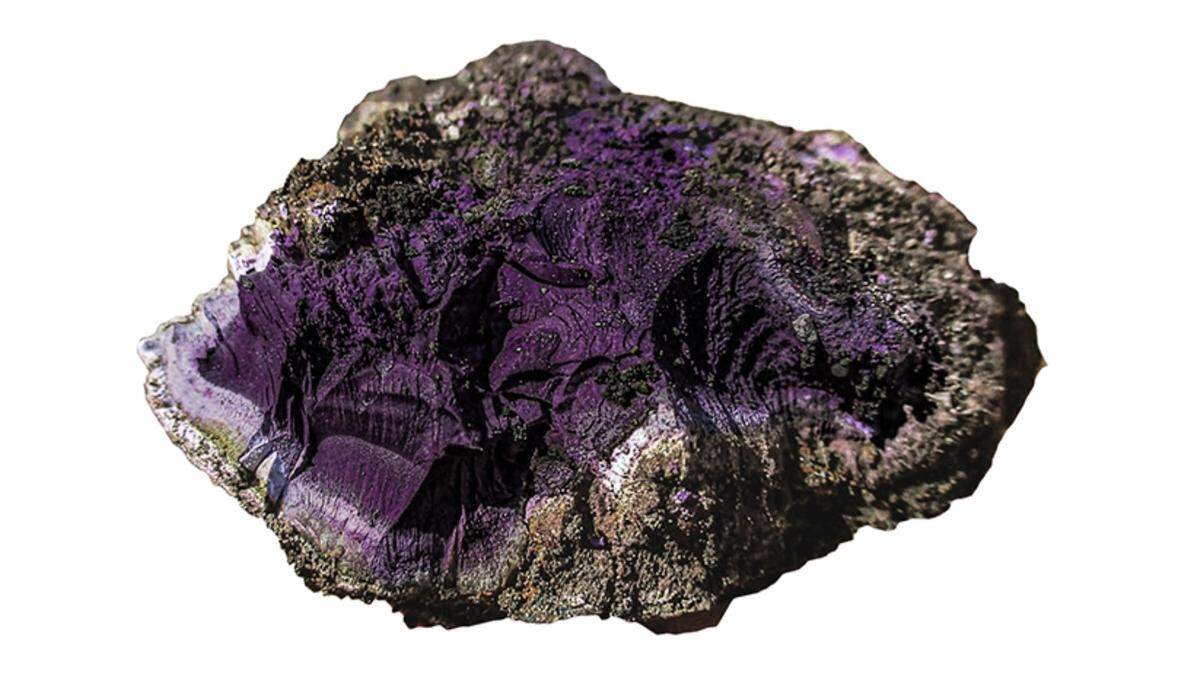
Archaeologists and volunteers excavating an ancient Roman site in the United Kingdom uncovered a “mysterious” purple lump.
It turned out to be an “incredibly rare” substance once “worth more than gold.”
The colorful lump was unearthed in the drain of a 1,700-year-old Roman bathhouse on the grounds of the Carlisle Cricket Club, according to Wardell Armstrong, the company managing the excavation.
Intrigued by the “mysterious lump,” archaeologists sent it to a laboratory for further analysis.
The analysis identified it as an “incredibly rare” lump of Tyrian purple dye, also known as imperial purple, the company said in a May 3 news release.
“For millennia, Tyrian Purple was the world’s most expensive and sought after colour,” Frank Giecco, the project’s lead archaeologist, said in the release.
Tyrian purple dye was “phenomenally difficult to make” because it required “thousands of crushed seashells” and was only produced along the Mediterranean coast and North Africa, the company said. As a result, the pigment was “expensive and was worth more than gold pound for pound.”
The lump of Tyrian purple dye found at the Carlisle Cricket Club is “roughly the size of a ping pong ball,” BBC reported.
“It’s the only example we know of in Northern Europe,” Giecco said in the release, and “possibly the only example of a solid sample of the pigment in the form of unused paint pigment anywhere in the Roman Empire.”
Tyrian purple pigment is mainly preserved in wall paintings and coffins, Giecco said.
Excavations of the ancient Roman bathhouse in Carlisle are ongoing.
The Carlisle Cricket Club is in Carlisle and a roughly 300-mile drive northwest of London.
This story was originally published May 3, 2024 at 9:55 AM with the headline "‘Mysterious’ purple lump found at ancient Roman ruins was once ‘worth more than gold’."