
10-foot alligator with mangled jaw was attacked by bigger predator, Georgia lab says
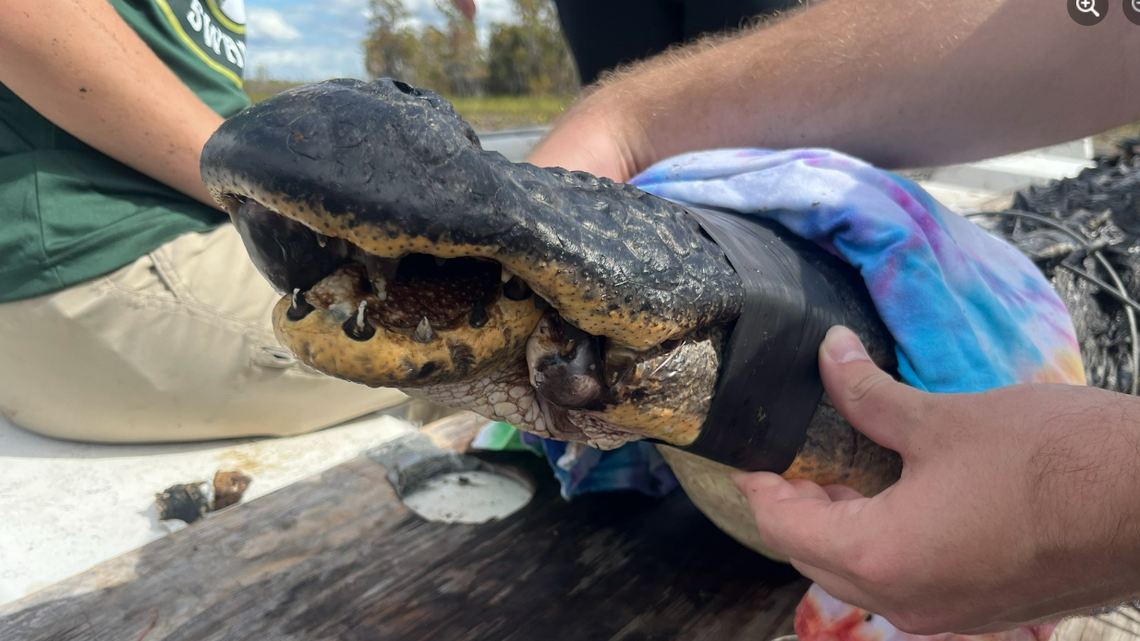
A 10-foot alligator that mysteriously fled its “established home range” in a Georgia swamp has been found months later with its lower jaw nearly ripped off, according to researchers.
It’s suspected the sudden move was an attempt to escape whatever attacked the alligator in Okefenokee National Wildlife Refuge, the University of Georgia’s Coastal Ecology Lab reported in a Nov. 11 Facebook post.
The injuries were discovered the first week of November, when researchers tracked down the gator, named BEN, to remove a satellite tag.
“We first noticed that he was a bit skinny and after we got him in the boat we realized why — a chunk of his bottom jaw had been almost completely broken off!” researchers wrote.
“This type of injury is consistent with a fight with another alligator, and we think that not only did BEN get chased out of his territory, but he lost a fight for his territory with the larger male that showed up.”
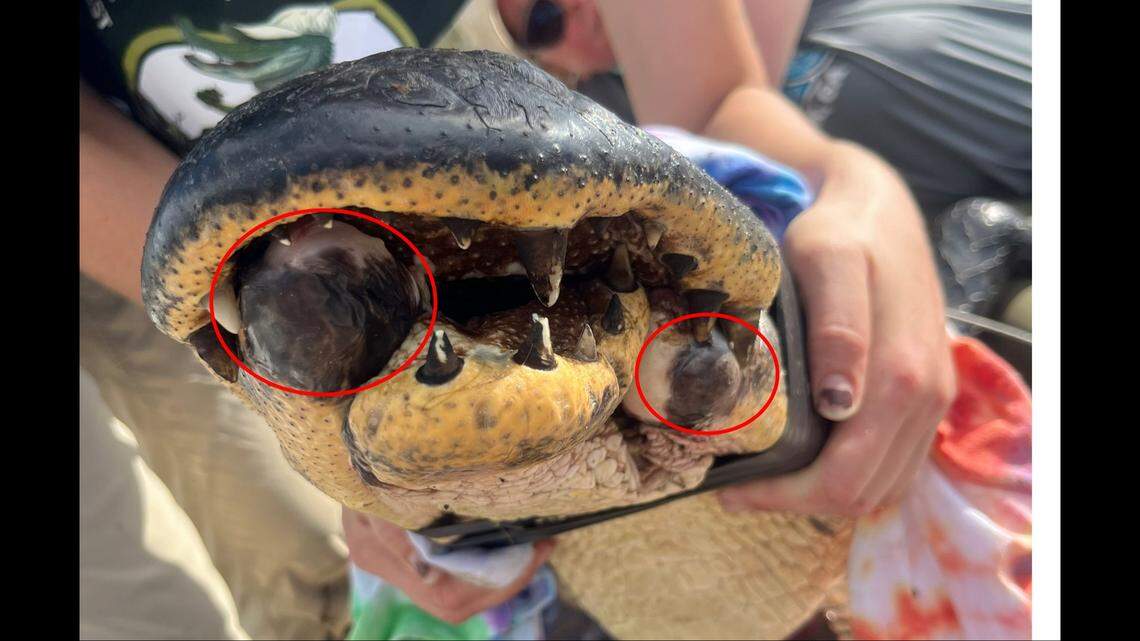
Closer inspection revealed his lower jaw was disconnected and hanging on only with the help of skin and his tongue, the lab said. Photos show the jaw appears folded in on itself, leaving only a small opening for food.
“Of course, we will never know for sure if that’s when it happened, but we are fairly confident that this was the result of a fight with another alligator,” the lab said. “Sometimes alligators can overcome injuries such as this and other times they are fatal.”
BEN’s weight loss shows he is having trouble “getting enough food to sustain his body size,” an indication he may not survive, per the lab.
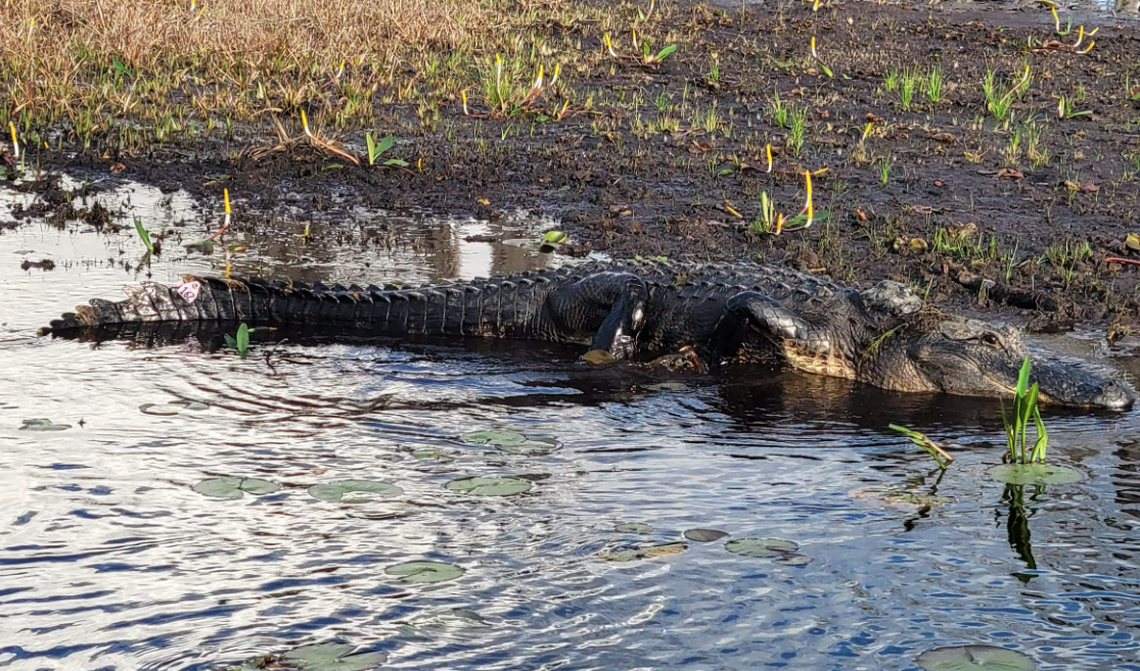
He lives near the Folkston Entrance of Okefenokee National Wildlife Refuge, which covers 353,981 acres of wilderness in southeastern Georgia.
BEN carried a satellite tracking tag for two years as part of a UGA research program that is tracking alligators to learn their growth rate, mating and nesting habits, and the health impact of “contaminants like lead, mercury, and polychlorinated biphenyls.”
“We may not know what will happen to BEN, but we thank him for his contribution to science and wish him the best of luck,” the lab noted.
Okefenokee National Wildlife Refuge is about a 53-mile drive northwest of Jacksonville, Florida.
This story was originally published November 13, 2024 at 12:27 PM with the headline "10-foot alligator with mangled jaw was attacked by bigger predator, Georgia lab says."