
What do early votes, polls show about presidential race in Georgia, a key swing state?
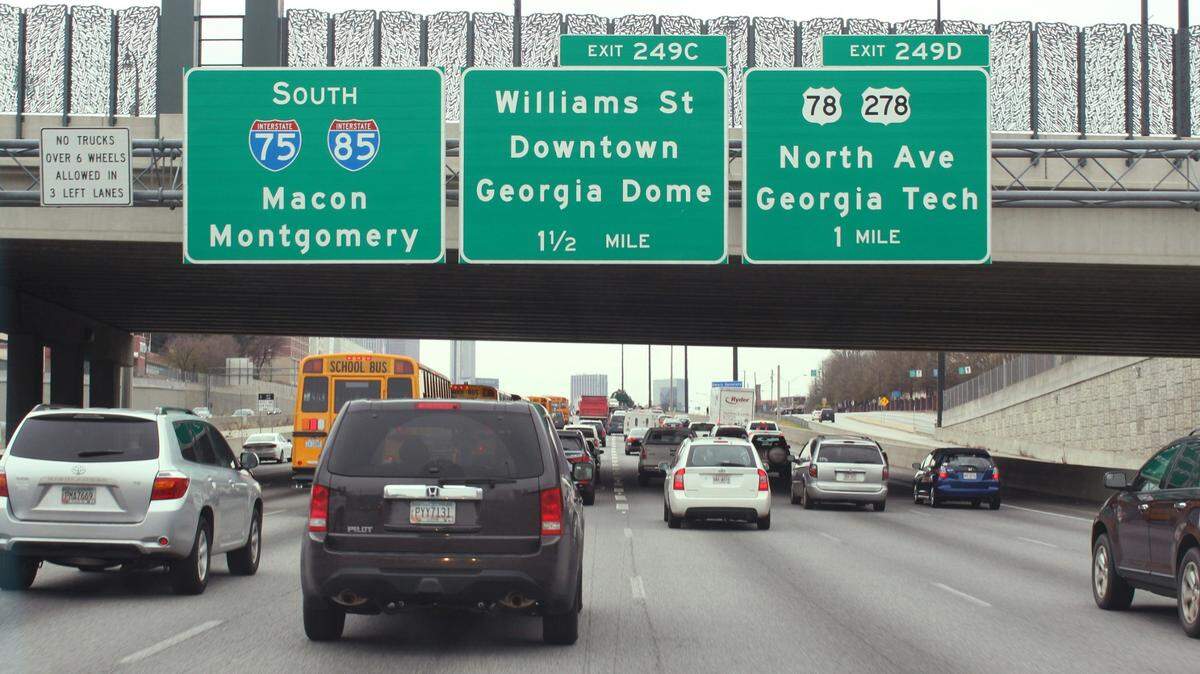
Though decades old, the song “Georgia on My Mind,” could scarcely be more relevant now.
The Peach State is now top of mind for many as it is expected to play an all-important role in the 2024 presidential election.
With its 16 electoral votes, the swing state could potentially push Vice President Kamala Harris or former President Donald Trump over the finish line.
With less than one week until Election Day, here’s what recent polls and early voting data reveal about the race in Georgia.
What polls show
According to a polling average compiled by FiveThirtyEight, an election analysis site, Trump currently holds a 2-point lead over Harris in Georgia.
The latest average by Nate Silver, a leading pollster, has the former president edging out Harris by almost two points — 49.3% to 47.4%.
Individual polls conducted in the state in October have found mixed results, with some placing Trump several points ahead and others indicating the race is dead-even.
For example, a YouGov poll found the former president leading the vice president by five points — 51% to 46%. Conducted between Oct. 1 and 25, the poll sampled 2,663 Georgia residents.
An AtlasIntel poll conducted between Oct. 25 to 29 found Trump leading by 3.4 points — 50.9% to 47.5%. The poll, which sampled 1,429 likely voters, has a margin of error of 3 percentage points.
And, in contrast, a Marist College survey indicated the candidates are deadlocked at 49% each. The survey, fielded between Oct. 17 and 22, sampled 1,440 adults in the state and has a margin of error of 3.5 percentage points.
Based on the recent polling, William Hatcher, a professor of political science at Augusta University, told McClatchy News, “Trump has a very slight advantage.”
But, he added, “It appears that Harris being the nominee has made the state more competitive … it is going to be very very close, if the polling holds up.”
What early voting shows
The early voting data reveals some noteworthy trends — though they should not necessarily be used to predict the final outcome, experts said.
As of Oct. 29, about 3.2 million early votes have been cast in the state, “shattering previous early voting performance,” according to Georgia’s secretary of state.
By comparison, at the same stage in 2020, 2.1 million early votes had been cast.
“It’s intriguing to note that even without pandemic-driven measures, we’re on track to meet or exceed that election’s high early voting numbers,” Sean Richey, a professor of political science at Georgia State University, told McClatchy News. “This could reflect heightened voter engagement or strategic mobilization efforts by both parties.”
Echoing this sentiment, Hatcher said that the state’s record early voting figures are likely due, at least in part, to increased turnout from Republicans.
In 2020, “Trump and his surrogates were more critical of early voting, mail voting, and absentee voting than they are this cycle,” Hatcher said.
In addition to the higher turnout, there is also a noteworthy gender gap in the early voting data.
Women, so far, have outpaced men in voting by a margin of nearly 12 points — 55.5% to 43.8%, according to the University of Florida’s Election Lab.
“Given polling and history, the fact that more women are voting early tends to benefit Harris,” Hatcher said.
This trend has also been observed in other swing states, including Michigan and North Carolina.
However, experts cautioned that early voting trends should not be overanalyzed.
Hatcher called the early voting data “difficult to read,” and Richey said it “can offer limited predictive value on the eventual outcome.”
In sum, Richey said, “the close polling margins and demographic composition of early voters suggest that no candidate has a clear edge at this stage. Instead, it seems likely that final outcomes may hinge on Election Day turnout and any last-minute shifts in undecided voters.”
“Especially when the race appears to be so close, a few variables that are difficult to measure ... ” — including turnout among key groups — “can make a huge difference,” Richard Barke, a professor of public policy at Georgia Tech, told McClatchy News.
This story was originally published October 30, 2024 at 5:33 PM with the headline "What do early votes, polls show about presidential race in Georgia, a key swing state?."