
Man in coma after cop tased him in water, watched him struggle for 40 minutes, suit says
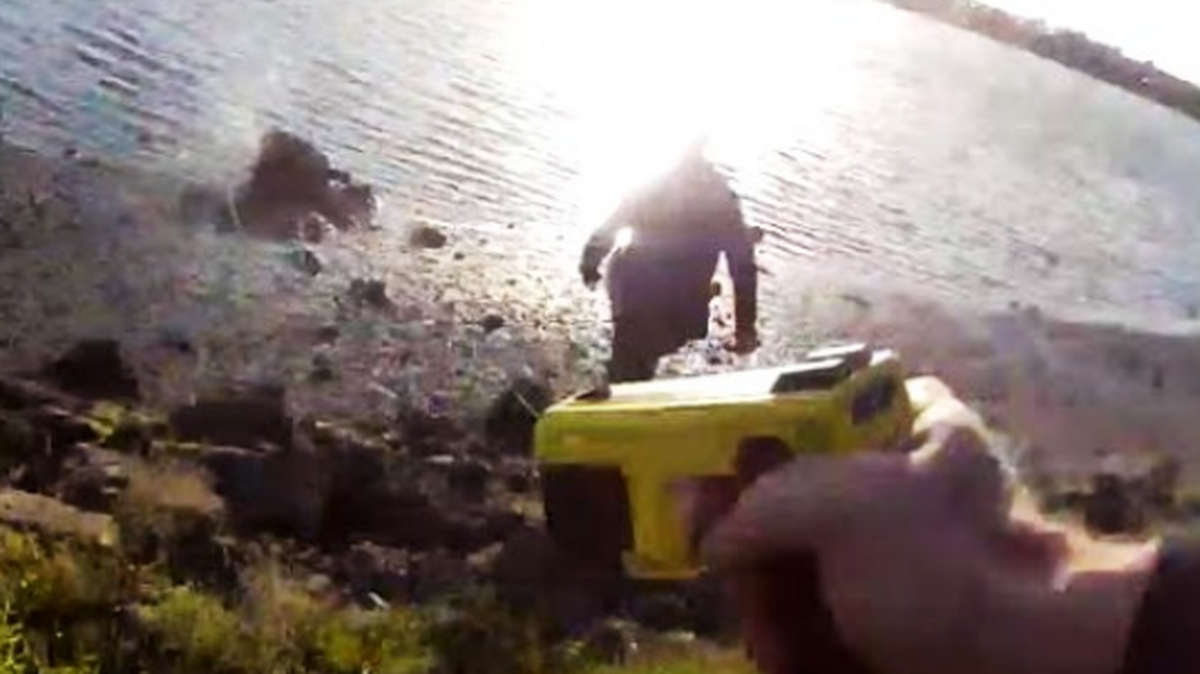
A California man has been in a coma on life support since April after a police officer accused him of having expired vehicle tags at a Bay Area park and repeatedly tased him in the waters of an estuary when he ran away, according to a newly amended federal lawsuit.
For about 40 minutes, the lawsuit says East Bay Regional Park District police officers and Alameda County sheriff’s deputies who arrived at the scene watched Deontae Faison “struggle and scream for help until he eventually fell unconscious” in the water.
The officers didn’t rescue Faison from the water until he drowned, went under and ended up 10 to 15 feet away at Martin Luther King Jr. Regional Shoreline park on April 5, according to an amended complaint filed Oct. 22.
They didn’t call for help until he was lying unconscious on the shore, the lawsuit says.
None of the officers administered CPR while Faison was unresponsive after being pulled from the cold water, which was about 50 degrees, according to the complaint. It took about 15 minutes for paramedics to arrive.
“The level of disregard and callousness the officers showed as they comfortably stood by and watched Deontae call out for help while flailing his arms in a desperate bid to avoid drowning is unforgivable,” civil rights attorney Jamir Davis of J. Davis Law Firm, who is representing the case, said in an Oct. 22 news release.
The officers are accused of not telling medical personnel that Faison had been tased in the water — as doing so has “potentially lethal consequences” — and only mentioning he drowned, according to the complaint.
Faison, a 35-year-old father of two sons, is suing the East Bay Regional Park District, Alameda County and the police officer accused of tasing him. The lawsuit was filed through a guardian.

“The Park District does not comment on pending litigation. Our hearts go out to Mr. Faison and his family,” public information supervisor Dave Mason told McClatchy News Oct. 22.
An attorney representing Alameda County didn’t immediately respond to McClatchy News’ request for comment.
Alameda County Sheriff’s Office public information officer Roberto Morales told McClatchy News on Oct. 24 that the office “does not comment on active claims or litigation.”
The police encounter at the park
On April 5, Faison and his friend got food at a Wendy’s and drove to Martin Luther King Jr. Regional Shoreline park to enjoy the warm day, according to the complaint.
Then, an East Bay Regional Parks Police officer arrived, activated his vehicle lights and ordered Faison and his friend to sit on the bumper of their car, the complaint says.
The officer, according to the complaint, assumed the car belonged to Faison and said the vehicle’s tags were expired.
He treated Faison, who is Black, differently than his friend, a white woman, the complaint says.
The officer threatened to have a fingerprint technician come to the park when Faison’s name didn’t appear in a system after Faison gave him a different name, according to the complaint.
“Deontae, not understanding why he was being harassed in the park and held for nearly 20 minutes, became nervous and upset,” the complaint says.
Faison panicked and ran off after more officers arrived, resulting in the officer who first approached him to draw his gun, according to the complaint, which says Faison wasn’t armed.
The officer uses the Taser
Out of fear, Faison ran toward the estuary, the complaint says.
That’s when the officer deployed his Taser, hitting Faison’s back as he neared the water, according to the complaint.
Faison collapsed, got up and walked into the water, the complaint says.
Then the officer tased him several times while he was in the water, causing him to collapse, according to the complaint.
“The repeated use of a Taser, particularly in water, was not only excessive but reckless — violating the very standards set by not only the Taser manufacturer but the district’s policies to protect lives,” said civil rights attorney Adanté Pointer, of Pointer & Buelna, who is also representing the case.
According to the district’s 2024 police policy manual, officers should avoid using a Taser “unless the totality of the circumstances indicates that other available options reasonably appear ineffective or would present a greater danger to the officer, the subject or others.”
This includes “Individuals whose position or activity may result in collateral injury” such as someone “located in water,” the manual says.
According to the lawsuit, the officer “purposefully left (him) helpless in the water” after tasing him, the complaint says.
An Alameda County Sheriff’s Office incident report provided by Faison’s legal counsel says that sheriff’s deputies responded to a report of Faison fleeing from a traffic stop and jumping into the estuary.
The East Bay Regional Parks District told deputies that it tried to contact the U.S. Coast Guard but water rescue resources were unavailable, according to the report.
The report says that East Bay Regional Parks District officers deployed a flotation device when he neared the shoreline, after Faison was in the water for about 30 to 40 minutes. It also notes that he went underwater, the report says.
After a police officer pulled him from the water, the deputy who wrote the report stated Faison appeared not responsive even after the EBRPD placed Faison in the recovery position.”
The Oakland Fire Department ultimately arrived and CPR was performed on Faison, who was taken to the hospital in an ambulance, according to the report.
At a news conference Oct. 22, Faison’s legal counsel played footage showing his encounter with police.
In tears, Faison’s son said what happened to his father has been “hard on the whole family.”
“I can’t talk to him. I could talk to my dad about anything,” he said at the news conference.
The lawsuit seeks to recover an unspecified amount in damages.
Faison “was left in a coma due to the officer’s overly aggressive and potentially fatal conduct,” Pointer said.
This story was originally published October 23, 2024 at 1:28 PM with the headline "Man in coma after cop tased him in water, watched him struggle for 40 minutes, suit says."
.jpg)