Deadly disease with no cure detected in Yellowstone mule deer for first time, park says
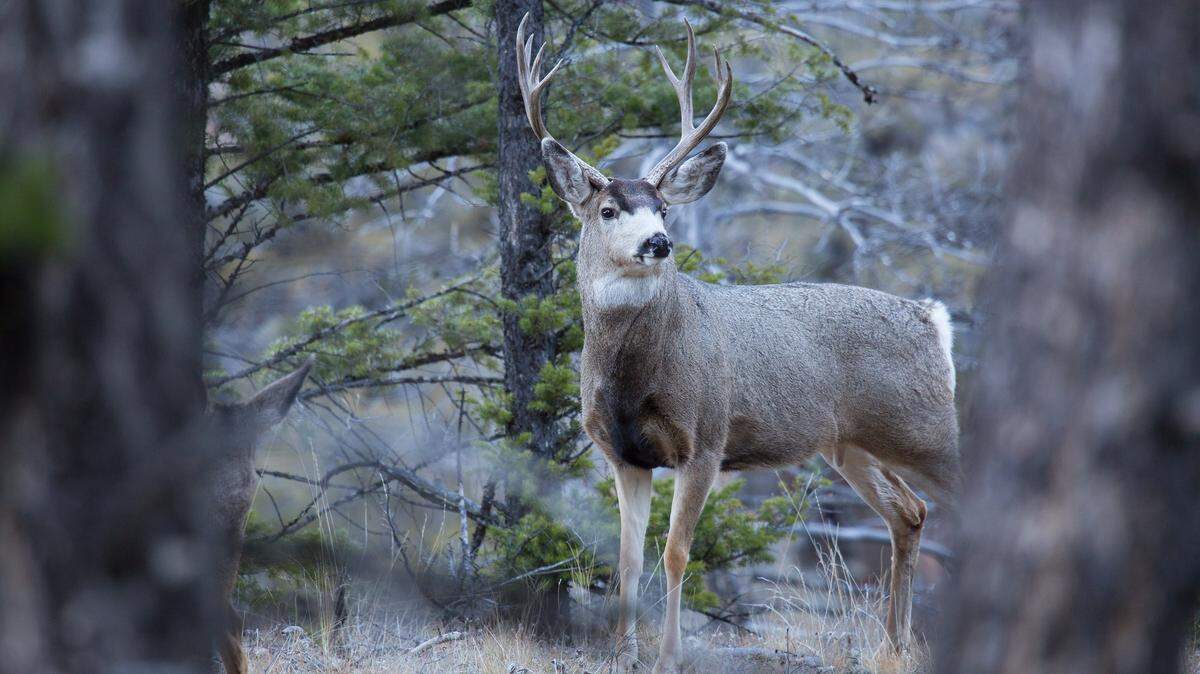
One of wildlife conservation officials’ most dreaded scenarios seems to be panning out in Yellowstone National Park.
A deadly contagious disease with no cure was detected — for the first time ever — in a mule deer buck that died in southeastern Yellowstone National Park, officials said in a Nov. 14 news release.
The buck had died mid-October on the Promontory, “a landmass that separates the South and Southeast arms of Yellowstone Lake,” officials said. Wyoming game and Fish Department staff had previously captured the buck for a population dynamics study in March 2023 near Cody, Wyoming and fitted it with a GPS collar, so officials were able to locate its body to collect samples which tested positive for chronic wasting disease.
What is chronic wasting disease?
Chronic wasting disease “is a contagious, fatal disease of deer, elk and moose caused by a malformed protein (prion) for which there is no vaccine or known treatment,” officials said. The malformed prion protein accumulates in the animals’ brain and other bodily tissues and causes “physiological and behavioral changes, emaciation and death.”
Animals infected with CWD will grow listless, lose weight, drink and urinate more, drool excessively and hang their head, officials said. It’s passed directly from animal-to-animal or indirectly when the animal comes into contact with the disease particles in the environment, such as in feces, soil or vegetation.
The disease is already found in most of Wyoming after it started spreading across the state in the mid-1980s, officials said. Wildlife conservation officials estimate about 10-15% of the mule deer near Cody — which migrate into southeast Yellowstone during the summer — are infected.
There are between 1,850 and 1,900 mule deer — also called blacktail deer — in northern Yellowstone during the summer, though most of them do not stay in the park all winter, according to the National Park Service. There’s less than 400 during the winter.
Mule deer are an “exclusively western species” seen in open-brush country throughout the western U.S.
Officials aren’t sure what the long-term effect will be on deer, elk and moose in the Yellowstone area. Once the disease gets established in a certain area, “there is no effective strategy to eradicate it,” officials said.
Yellowstone staff are working with state agencies, including the fish and game department, to identify areas that are at an increased risk for chronic wasting disease, officials said. Officials are also monitoring for the disease in living deer, elk and moose in the park and collecting testing samples off carcasses.
Park officials are also revisiting its 2021 surveillance plan for the disease after the recent detection and expect to complete it in 2024.
What should park visitors do?
“Most wild animals in Yellowstone are healthy and thrive in their natural environment, but sometimes wildlife can get sick just like people,” officials said.
Visitors should avoid touching or handling sick or dead wildlife — since “some disease-causing organisms can be passed between wild animals and people.”
Those who come across sick or dead wildlife in the park should notify a National Park Service employee as soon as they can. Park service employees who are trained in wildlife health know to use specific protective measures to deal with wild animals that might have died of disease, officials said.
Humans shouldn’t eat any part of an animal that might have had chronic wasting disease.
“There is currently no evidence that CWD can infect humans or domestic animal species. However, it is recommended that tissues from CWD-infected animals not be consumed,” officials said.
This story was originally published November 15, 2023 at 2:21 PM with the headline "Deadly disease with no cure detected in Yellowstone mule deer for first time, park says."