See heart-stopping moment sea creatures surprise crowd in Washington. ‘Perfect timing’
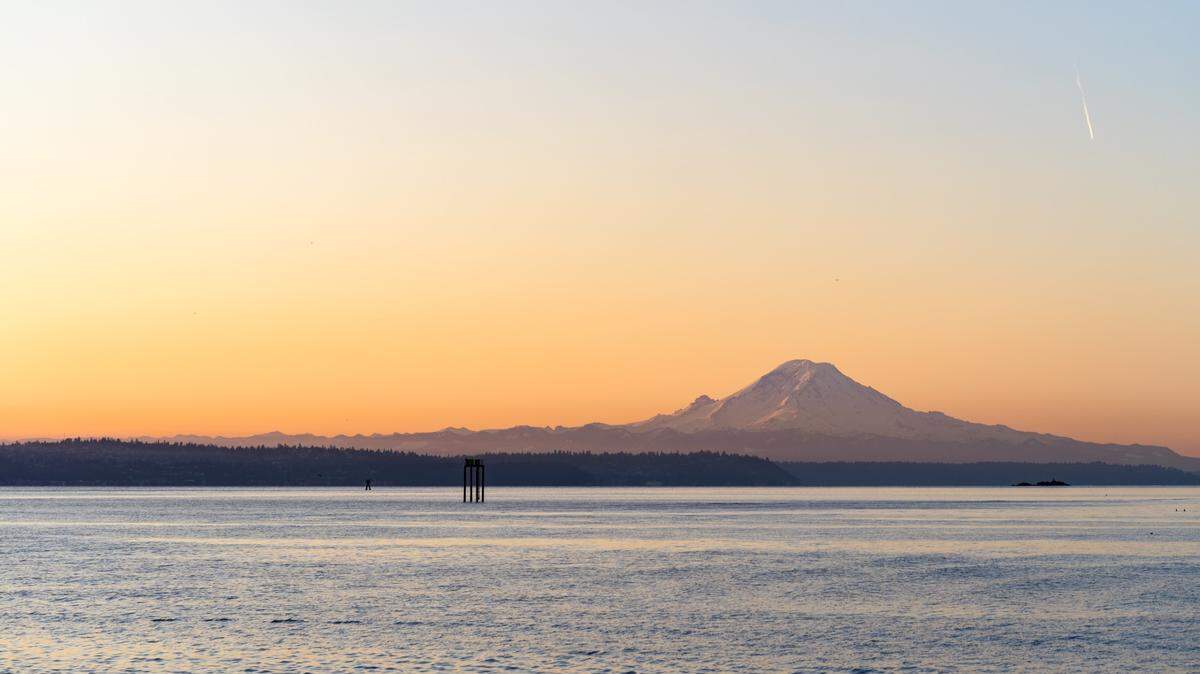
Kat Martin is an avid whale watcher. The northwest Washington resident often frequents Whidbey Island to catch a glimpse of the huge sea creatures.
Recently, Martin heard that a pod of southern resident orcas, known as the J pod, were near Seattle.
“I brushed it off, as I usually do,” she told McClatchy News in an email. “’Much too far south,’ I often say when the whales travel deep into Puget Sound.”
But on Nov. 7, Martin was awakened early when a friend texted her that the pod of killer whales was making its way to Vashon Island, an island in Puget Sound north of Tacoma.
“I bolted down the stairs and threw together what I needed in order to make the drive down to Seattle,” Martin said.
She got the ferry to Vashon Island, and upon arrival was joined by “nearly one hundred people” rushing to Point Robinson Lighthouse to catch a glimpse of the whales. Martin made it in time to spot the pod.
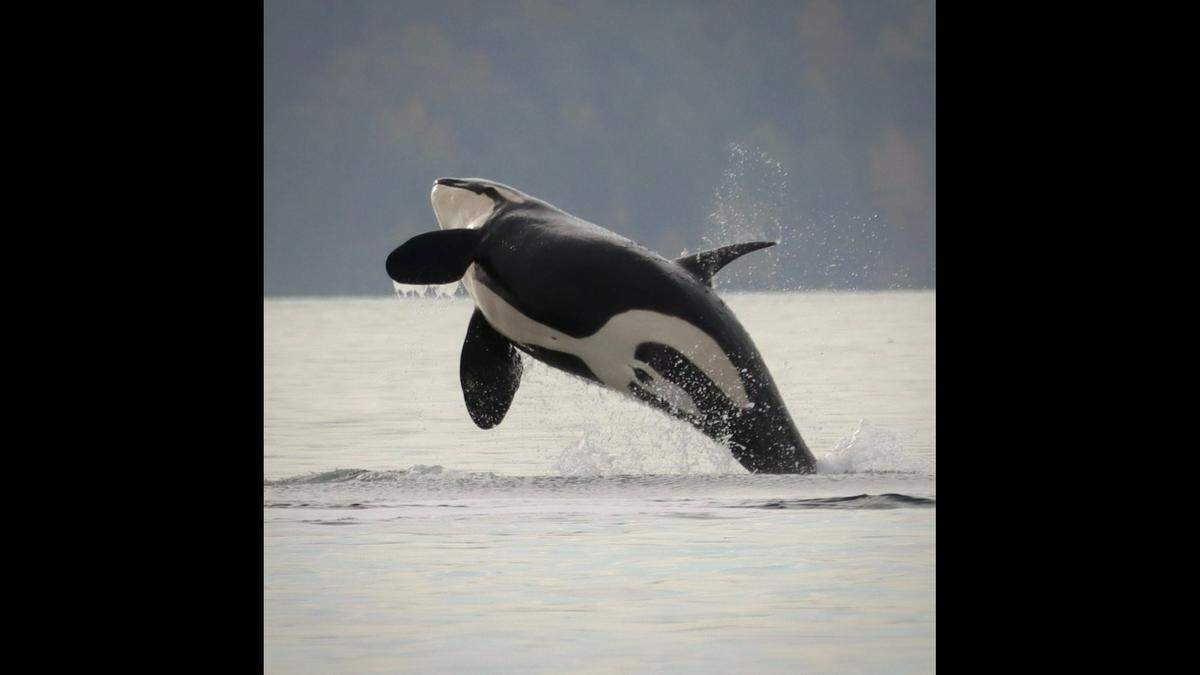
“As we watched the whales make their way south, they neared closer and closer to the shoreline,” she said. “When the whales finally passed by, I was certain I was going to drop my camera. The adrenaline rushing through my veins just made my heart stop.”
Martin said her encounter with the orcas was quick as the pod made its way south of the island. A mom and her son, known as J16 and J26, trailed the group, but when they caught up, the whales sped away.
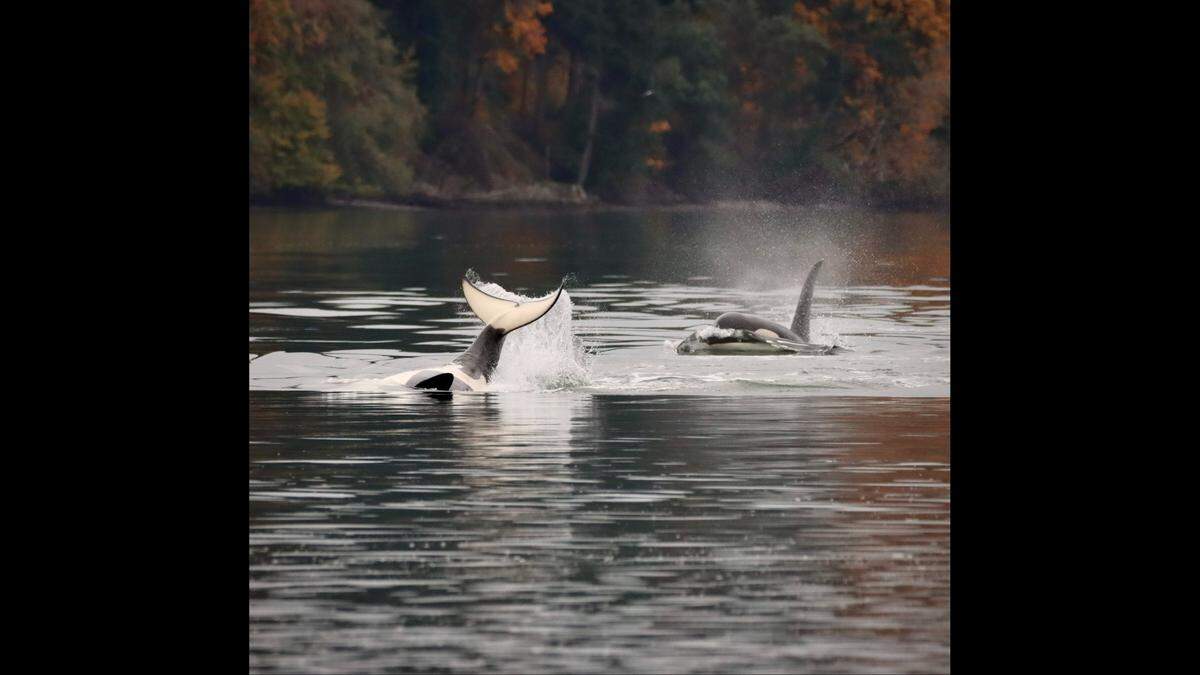
“One by one, they all swam by, wasting no time while they cruised. I couldn’t believe what I was being witness to,” Martin said. “The loud chuffs of breath from each whale drowned out even the most exuberant of beach-goers.”
After the whales left, Martin made her way back to the ferry landing where she heard that the pod was moving to the other side of the island. So she and some friends carpooled and made it to the opposite shore with “perfect timing.”
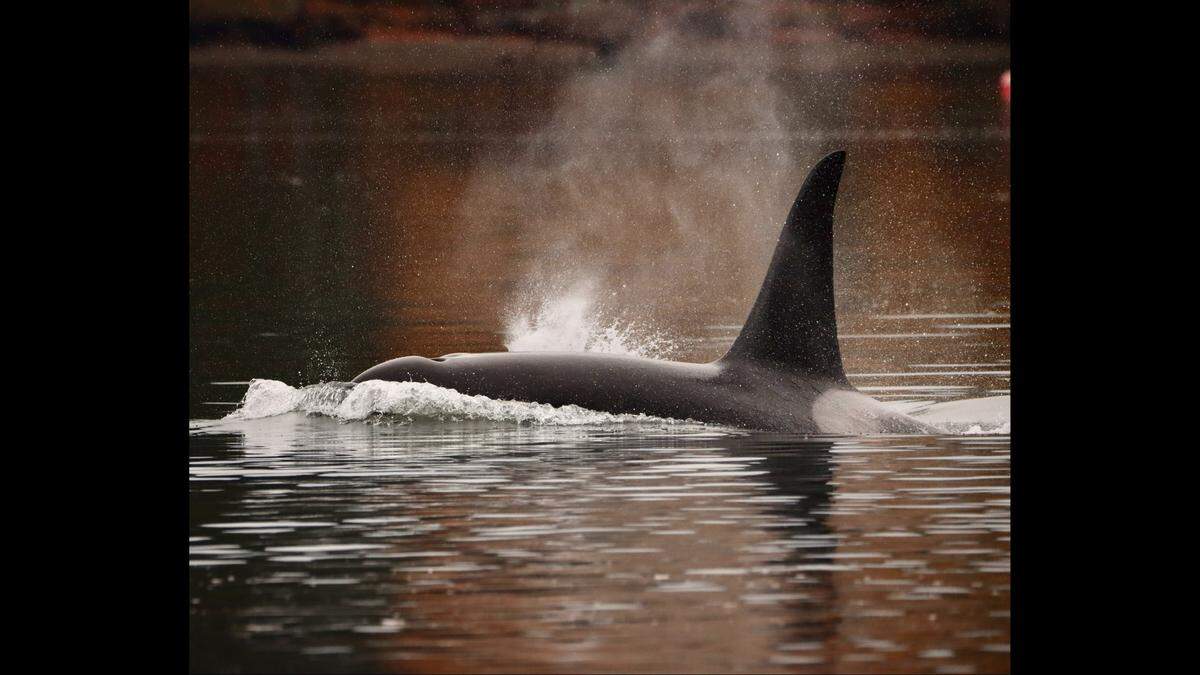
“As we rounded the corner and approached the beach, the leaders of the pod surfaced within feet of shore,” Martin said. “The whales surfaced in beautiful synchrony, as they traveled farther up the small body of water. Tail lobbing, spy-hopping, and circling around one another. You could feel the excitement not only from the whale watchers, but from the whales themselves.”
Martin continued following the whales as they moved along the island’s shore. At one point, the pod spent about an hour and a half circling in a harbor, swimming in tandem.
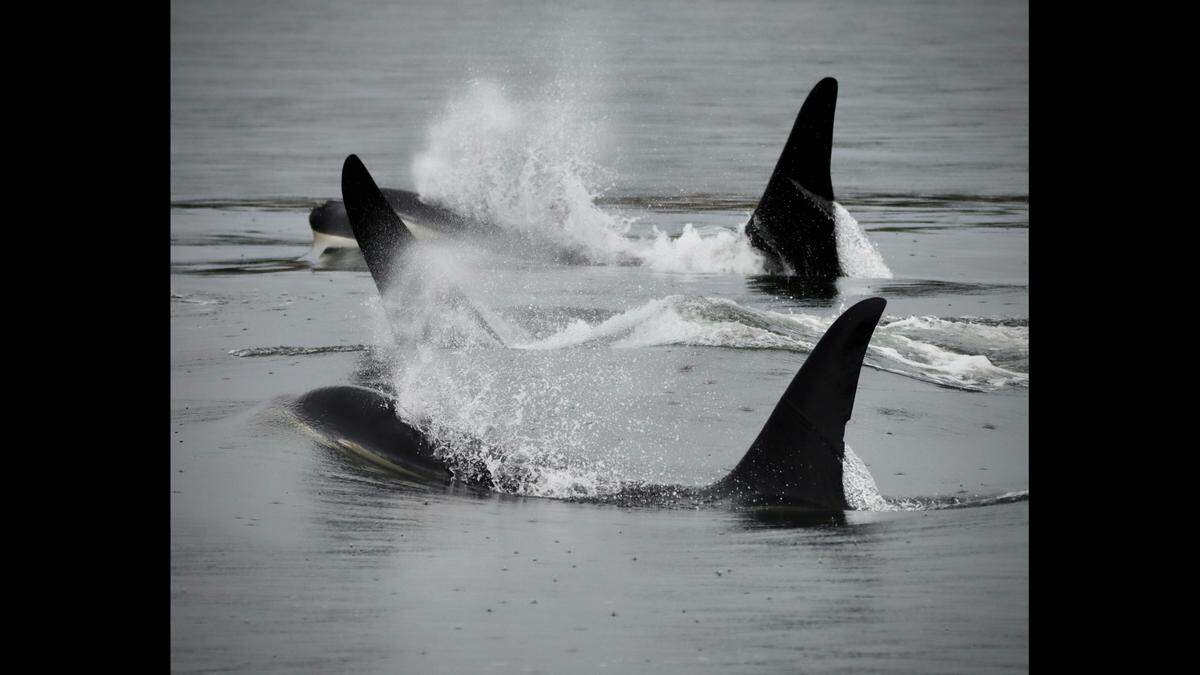
At the final stop of the day, Martin said she was left “in awe” as she watched the whales play and mingle for nearly two hours.
“This officially became close pass number three for me. I was ready to cry,” Martin said.
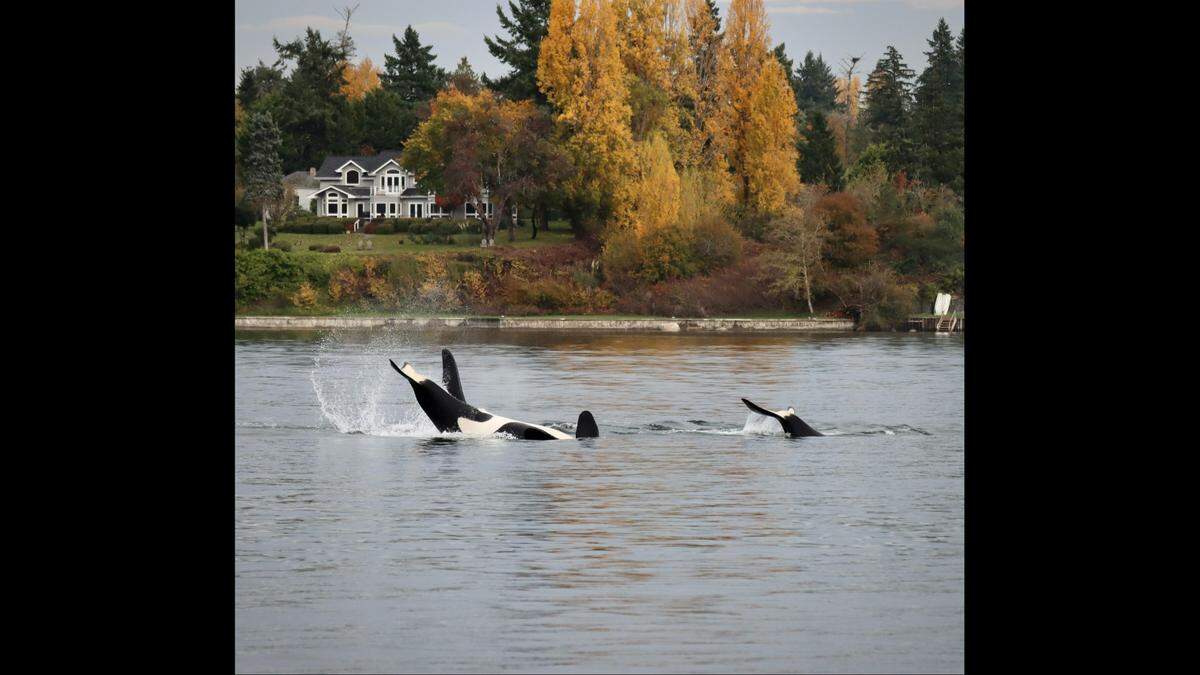
The J Pod is “one of the most recognized of the Southern Resident pods” of killer whales, according to the Orca Conservancy. The creatures are known to frequent the waters west of the San Juan Islands, the Southern Gulf Islands, the central and south Puget Sound, and the Georgia Strait.
Experts have identified 25 members between six matrilines within the pod, the conservancy said. Southern Resident orcas feed on fish, and they hunt individually but share their prey with their immediate families.
Killer whales are “the ocean’s top predator,” according to the National Oceanic and Atmospheric Administration. The black and white creatures are found in every ocean in the world, in open seas and coastal waters.
This story was originally published November 7, 2023 at 4:48 PM with the headline "See heart-stopping moment sea creatures surprise crowd in Washington. ‘Perfect timing’."