
Planet survives catastrophic end of its solar system. How did it escape destruction?
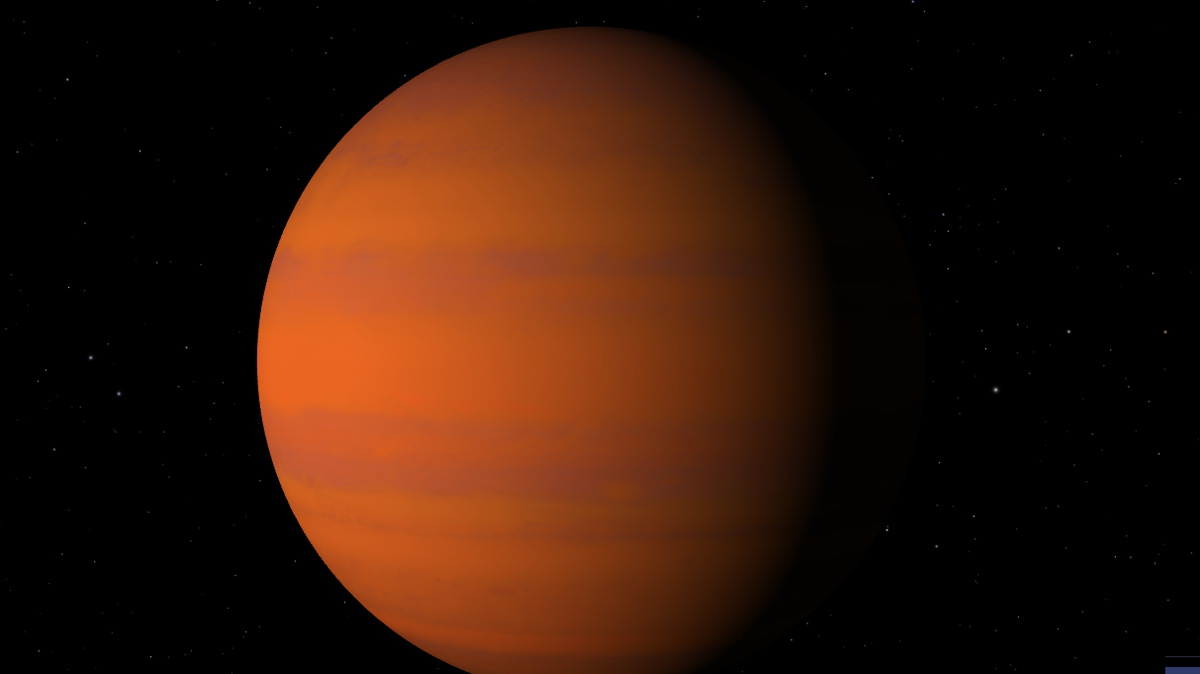
A large planet 530 light years away from Earth is mystifying scientists because it has somehow proved to be indestructible in the worst of circumstances, NASA says.
Called 8 Ursae Minoris b, it is orbiting a star “in its death throes,” which is the biblical end of days for a solar system.
However, 8 Ursae Minoris b continues to exist, as if a giant force field protects it from being ripped apart.
“(As) a swollen red giant, the star would have been expected to expand beyond the planet’s orbit before receding to its present (still giant) size,” NASA said in Sept. 19 report.
“In other words, the star would have engulfed and ripped apart any planets orbiting closely around it. Yet the planet remains in a stable, nearly circular orbit.”
So far, scientists have not settled on an explanation, though they have theories.
Among the possibilities are the planet is the offspring of “a stellar merger that either altered the evolution of the host star or produced 8 Ursae Minoris b as a second-generation planet,” according to a 2023 research paper published in Nature.com.
That means, the planet either survived the merger of two stars, or it was created when the gust and gas kicked up by the merger coalesced into a new planet, NASA says.
The planet, composed mainly of gas, has a mass equal to 1.31 Jupiters and takes just 93 days to orbit its star, NASA says. It was discovered in 2015.
“The discovery of this seemingly impossible situation ... shows that planet formation — and destruction — are likely far more intricate and unpredictable than many scientists might have thought,” NASA reported.
Stars expand into red giants as they “exhaust their nuclear fuel” and reach the end of their lifespan, scientists say. This swelling engulfs orbiting planets.
It’s a process that will happen to the Sun in 6 billion years, scientists say.
“The only chance for survival would be for an advanced civilization to migrate to a new planetary home,” NASA reports.
“Recent modeling suggests Earth probably won’t make it out intact,” scientists say. “But even if it does, all of the planets that survive will experience skyrocketing levels of energy from the expanding Sun, bathing their atmospheres and surfaces with intense radiation.”
This story was originally published September 20, 2023 at 3:36 PM with the headline "Planet survives catastrophic end of its solar system. How did it escape destruction?."