
See the farthest star ever detected — a million times brighter than the sun, NASA says
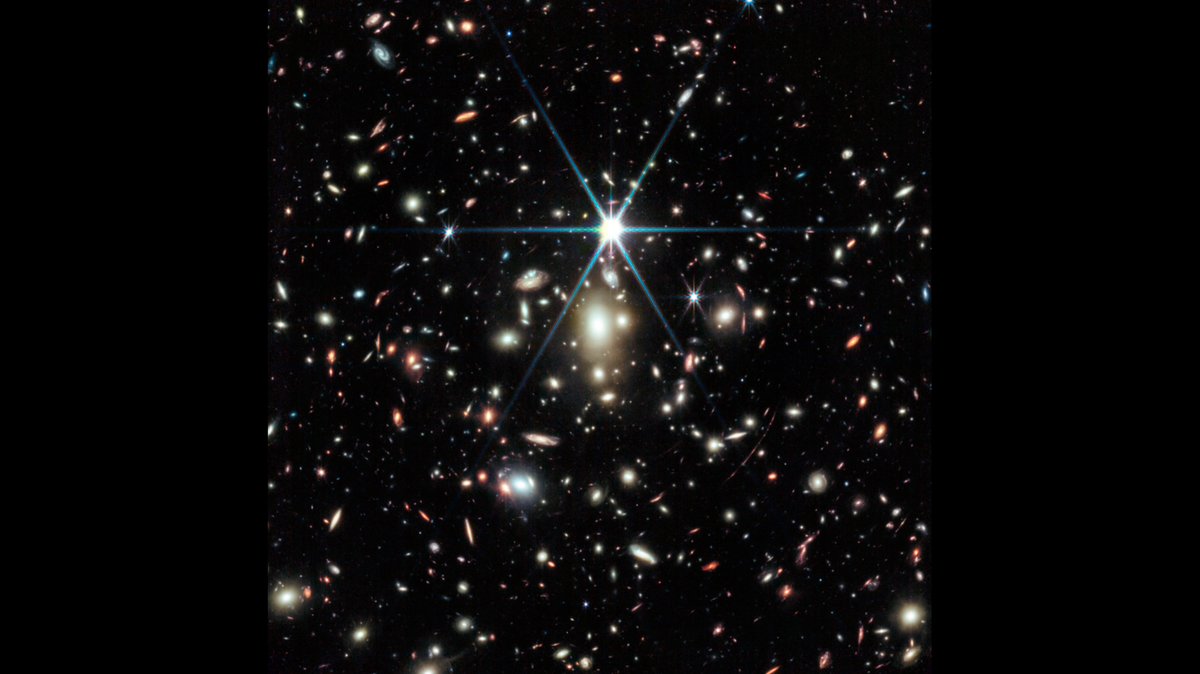
Behind a “wrinkle in space-time” lies the most distant star ever captured. It’s called Earendel, NASA says, and it’s dated “within the first” 1 billion years after the Big Bang.
New images from the James Webb Space Telescope show the distant star, which is visible because of a gravitational anomaly that magnifies the celestial body.
A massive galaxy cluster sits between us and Earendel, NASA said. Rather than obscuring the star with its size, it allows astronomers to see it.
“The galaxy cluster… is so massive that it warps the fabric of space itself, which produces a magnifying effect, allowing astronomers to look through the cluster like a magnifying glass,” according to a NASA news release about the new images.
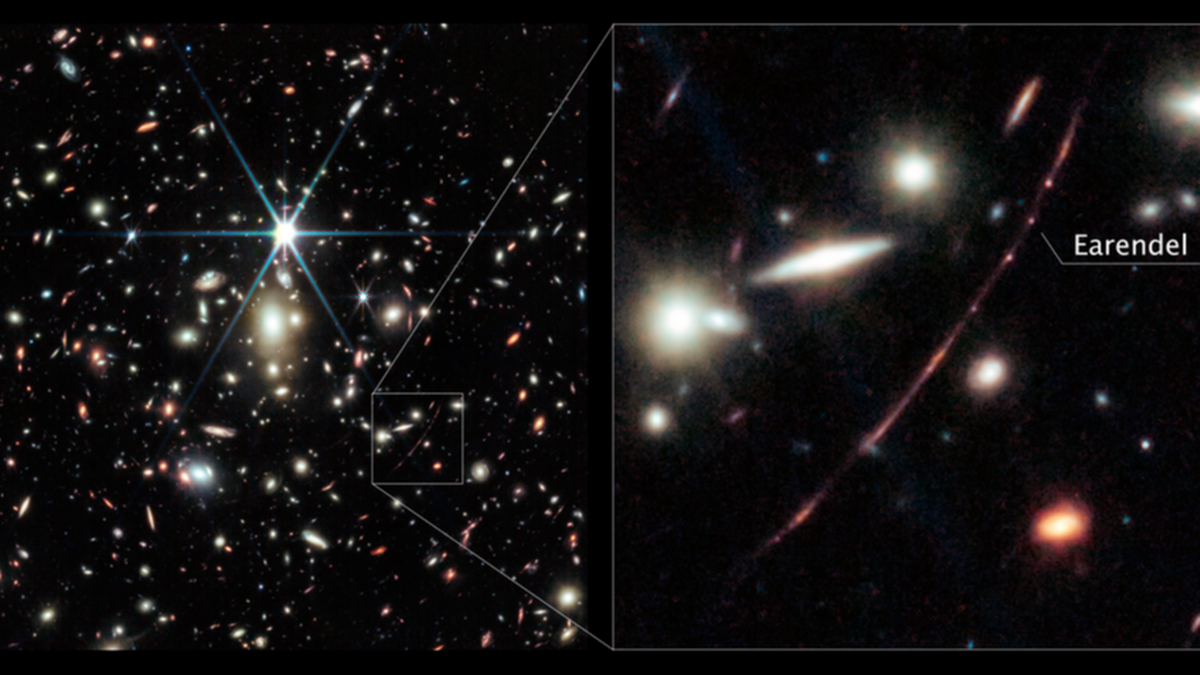
Researchers estimate the gravitational lensing magnifies the star by at least 4,000 times.
Brian Welch, a postdoctoral researcher at NASA’s Goddard Space Flight Center, told McClatchy News that the B-type star appears in different colors depending on the eye of the beholder.
“The star appears red in the images due to the effects of cosmological redshift – light traveling across the vastness of the universe gets stretched out, making objects appear redder than they otherwise would,” Welch said in an email. “If we could see this object up close (without the cosmological redshift effect) it would look slightly blue. But seen through the eyes of Webb, it does appear red.”
The star is more than twice as hot as the sun and about a million times more luminous, researchers say.
Before the discovery of Earendel, the most distant star detected was dated to about 4 billion years after the Big Bang.
The Hubble telescope first glimpsed Earendel in 2022, NASA said, but not much as information could be gleaned at the time. The newer Webb telescope can peer farther back into the universe and capture more information about what it sees.
For instance, astronomers were surprised to see that Webb captured what they think is a companion star to Earendel. Many large stars have cosmic partners, but Hubble couldn’t capture the cooler, redder star that researchers have spotted in Webb’s images.
“Webb is tuned to see redder wavelengths than Hubble, so it was able to capture much more information about the star,” Welch said.
Webb just celebrated its first image birthday this July, marking one year since President Joe Biden shared the first images the telescope produced. Scientists billed Webb as a successor to NASA’s Hubble Space Telescope, which has been in orbit since 1990.
Unfortunately, Earendel and its partner are almost certainly gone.
“The star (or stars) would be rather short-lived, and would almost certainly not survive to today,” Welch said.
The star’s light has taken about 12.9 billion years to reach Earth, according to NASA. Welch said it may have exploded in a supernova or collapsed into a black hole. Without knowing more information about its mass, it’s hard to know what outcome is more likely.
Earendel, whose name comes from “morning star” in Old English, is located in the Sunrise Arc galaxy, according to NASA. It appears to us “as it did when the universe was only 7 percent of its current age.”
This story was originally published August 10, 2023 at 7:01 PM with the headline "See the farthest star ever detected — a million times brighter than the sun, NASA says."