
Pets, bad indoor air and mites can create 'sick' Manatee homes
MANATEE -- Guy and Lisa Pessina of Snead Island love their furry children, including Cosmo and Midnight, a pair of cats, and Tucker, a dog.
But Guy Pessina, who, along with his wife, own All U Can Storage in Manatee County, was finding it hard to breathe at night when he slept in the couple's master bedroom.
After being tested for allergies by a physician, Guy Pessina discovered he was allergic to dust mites, which the doctor suggested were in the Pessina's bedroom carpet, said Lisa Pessina, who did not have an allergic reaction.
Close relatives of ticks and spiders, dust mites are too small to see without a microscope. They eat skin cells shed by people and they thrive in warm, humid environments, like Florida.
"He couldn't sleep," Lisa Pessina said of her spouse. "He was congested, coughing and sneezing. The problem was mainly in the throat and nasal passages."
No one likes to think that their home is "sick," but the Pessinas learned from their physician and, later, from Stefanie Overturf of Bradenton's Overturf's Floor & Fabric Care, that so-called sick homes are commonplace throughout Manatee County and the United States.
"We absolutely wanted to get to the bottom of the problem," said Lisa Pessina, who had met Overturf at a meeting of the Bradenton chapter of the Business Network International and happened to mention her husband's problems to her. "They cleaned the carpet in the bedroom and cleaned our mattress, which is what our doctor suggested and then sprayed both the carpet and the mattress with an allergy spray."
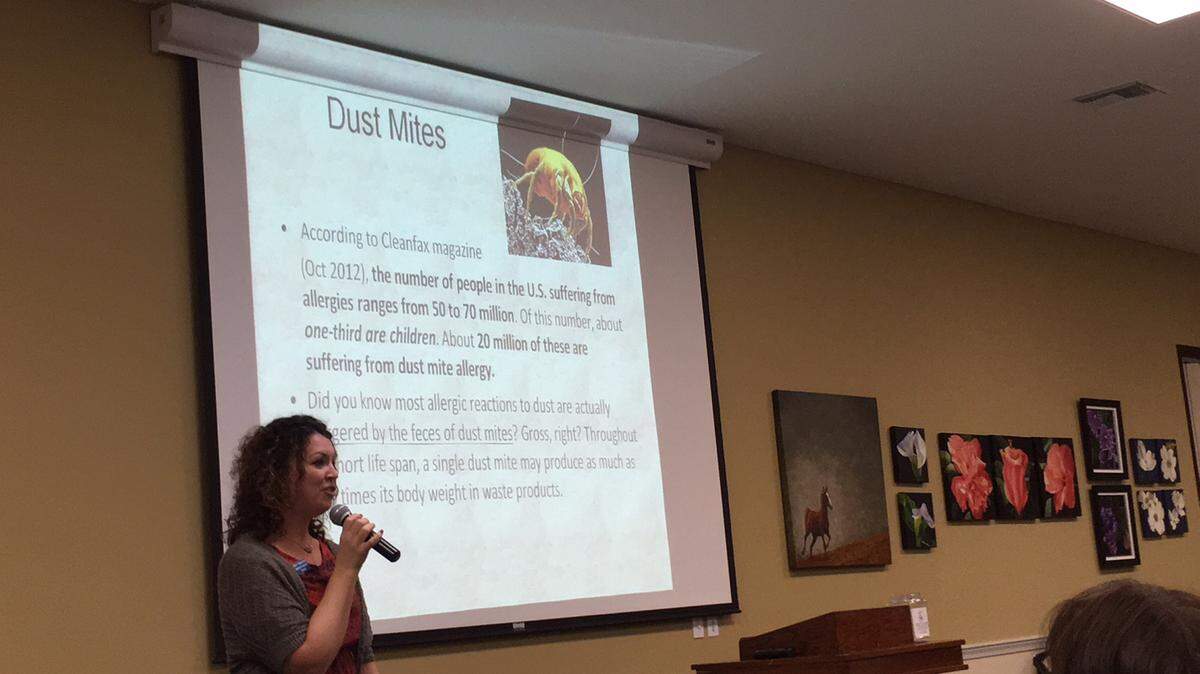
The Centers for Disease Control and Prevention states that from 2001 to 2011 the number of Americans with asthma grew by 28 percent. The American College of Allergy, Asthma and Immunology, in a study of households between 1976 and 1994, found a dramatic increase in positive allergy skin tests due to dust mites and pet dander, Overturf said last week during a speech she gave before the Bradenton Chapter of Successful Women Aligning Together, also known as SWAT.
Once hired by the Pessinas, Overturf first vacuumed their bedroom carpet with a high-efficiency particulate air filter vacuum, also known as a HEPA filter vacuum, that does not allow the dirt and allergens it picks up to get back into the air, Overturf said.
Then, Overturf cleaned the couple's mattress and bedroom carpet and sprayed both with a formula that neutralizes dust mite feces, she said.
Lisa Pessina reported a few days ago that her husband feels much better since the treatment.
Now that she has discovered her home was "sick," she has decided to take even more drastic steps.
"I have since decided to go ahead and remove the bedroom carpet and replace it with tile," Lisa Pessina said. "The goal is to have no place for dust to lay in or as little as possible."
3 ways to a sick house
The three basic ways that a home can make its occupants ill include poor indoor air quality, unchecked
dust mites and excess pet dander, Overturf said.
"Indoor air gets trapped," Overturf said. "Rarely does it get completely replaced."
Trapped air in homes accumulates pollutants, from clothes, shoes, bodies, hair, pets, garages and other sources, Overturf said.
"You are breathing that air over and over," Overturf said.
Furniture fabric and carpets can act as a filter for the air in a home, actually filtering out the pollutants, Overturf said.
"But, like any filter, it must be cleaned regularly to be effective," Overturf added.
Professional cleaning crews who use HEPA filter vacuums are able to pick up 99.97 percent of dirt and allergens which are .3 microns or larger from floor and fabric, Overturf said.
"According to the U.S. Environmental Protection Agency, the longest recommended interval between professional cleaning to maintain indoor air quality is 12 months," Overturf told the women at the meeting.
Dust mite allergic symptoms include wheezing; difficulty breathing; sneezing; running nose; itchy, red or watery eyes; nasal congestion; itchy nose, roof of mouth or throat, according to the Mayo Clinic.
Additional symptoms are postnasal drip, cough and facial pressure and pain.
Pet dander, which can also be picked up by the HEPA filter vacuum, is composed of tiny and even microscopic flecks of skin shed by the pet, Overturf said.
"It's not the actual hair or fur that causes the problem," Overturf added. "The proteins found in a pet's dander, skin flakes, saliva and urine can cause an allergic reaction or aggravate asthma symptoms in some people."
Pet hair or fur can also collect pollen, mold spores and other outdoor allergens, Overturf said.
"These allergens will not lose their strength for a long time," Overturf added. "Sometimes the allergens may remain at high levels for several months and cling to walls, furniture, clothing and other surfaces."
Symptoms of an allergy to pet dander include: swelling and itching in the membranes of the nose or around the eyes, redness of skin after being licked by the animal, coughing, shortness of breath or wheezing within 15 to 30 minutes of exposure to allergens, rash on face, neck or chest or a severe asthma attack by someone who has asthma, Overturf said.
Richard Dymond, Herald reporter, can be reached at 941-745-7072 or contact him via Twitter@RichardDymond.
This story was originally published January 11, 2016 at 6:40 PM with the headline "Pets, bad indoor air and mites can create 'sick' Manatee homes ."