
SCF student discovers Pink, a bacteria/antibiotic organism around Leffis Key
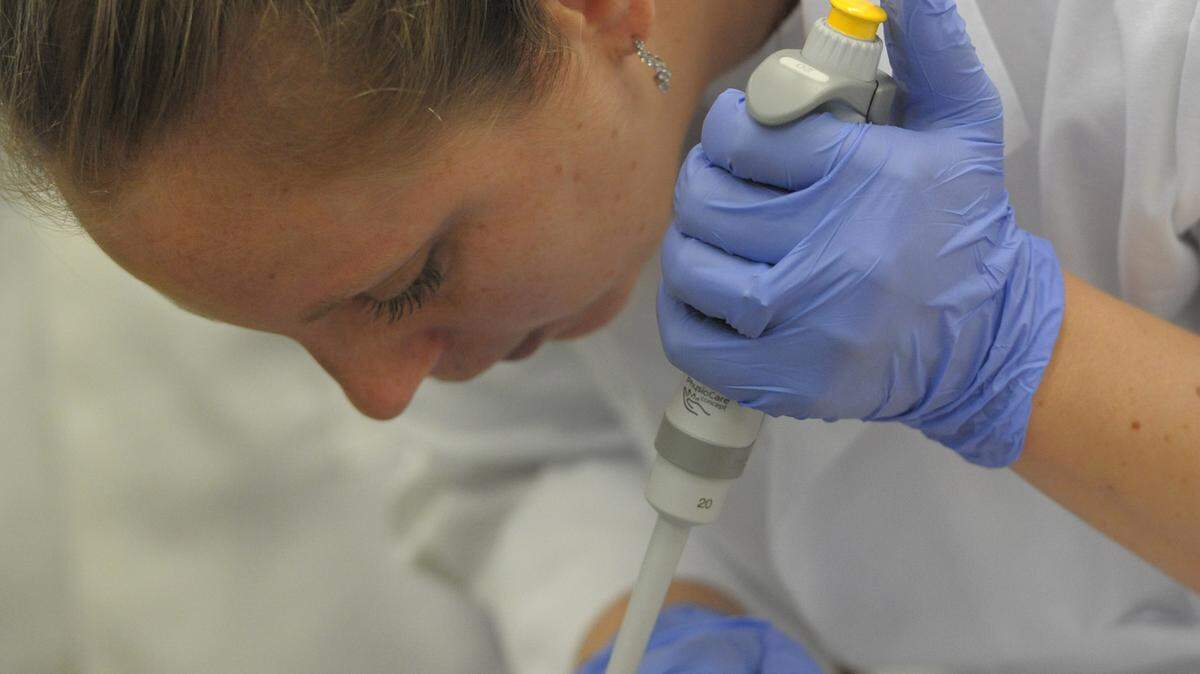
MANATEE -- They call it "Pink."
Named for its color when cultured in a petri dish, Pink is a never-before discovered single-cell organism that a State College of Florida Manatee-Sarasota student found in the mangroves around Leffis Key on Anna Maria Island.
Stephanie Morgan, 22, found the organism two years ago as part of a biotechnology research project at SCF. That discovery has since been added to the National Institute of Health's genetic sequence database. It is also being researched as a potential new medication to fight infections.
Pink is a bacteria that produces brightly colored pigment molecules that gives it its bright pink color. The antibiotics Pink produces help it fight off neighboring bacterial organisms in the environment as a part of its competition for nutrients. Those properties could make it valuable as a medication some day.
Morgan, who has since transferred to New College, is continuing to work on Pink to see what its future as an antibiotic could be.
Her work will be closely noted as scientists struggle to find antibiotics to combat resistant staph bacteria like Methicillin-resistant Staphylococcus aureus, also known as MRSA.
At New College, Morgan has worked to isolate and identify the pigment molecules produced by Pink. She determined the structure of the pigment molecule and also found the specific DNA sequence the bacteria uses to make this molecule in each cell.
"It's too early to tell if Pink produces a novel antibiotic," Morgan said. "While it's certainly possible, there is a lot of additional testing that needs to be done to confirm this."
Morgan credits her classmates and SCF teachers, including Biotechnology Program Manager Matthew Thomas and Microbiology Professor Eric Warrick, with helping her develop Pink. The discovery has lifted State College of Florida's reputation in the science community, said Jose Ors, chairman of Natural Sciences at SCF.
"To become known all over the world because of this would be a dream come true," Ors said of the school's roughly 5-year-old biotech program. "But, for sure, we are now known throughout the state of Florida. Not many two-year programs, in fact not many four-year institutions have a program like this. This is a program that is fairly unique for this area."
Leading to Pink's discovery
The story of Pink really begins in 2011 when SCF decided to start a biotechnology program to help develop a workforce for local employers, Thomas said.
"The Roskamp Institute was an early proponent of the program, as was Lakewood Amedex, a pharmacy company trying to bring novel antibiotics to the market," Thomas said.
SCF biotech graduates have worked at Roskamp Institute, which researches neurological diseases, and three graduates currently work at Rapid Pathogen Screening in Lakewood Ranch, Thomas said. Rapid Pathogen Screening develops point-of-care testing for ophthalmologists. The company manufactures a test for conjunctivitis that can be administered in a physician's office.
As the biotech program got rolling, microbiologist Warrick wanted to inspire students to do field research, and so asked them to go into their neighborhoods and collect samples.
"Eric changed the culture here," Thomas said. "He helped students see that science is more than one experiment or technique. He wanted them to see the breadth of how science is done. Stephanie Morgan was one of his students. She had high aspirations and the ability to get there."
After Morgan isolated the organism as part of Warrick's microbiology lab, Thomas took the organism into his biotech class to sequence the DNA.
"My class worked with the DNA from Pink and isolated parts of it," Thomas said. "It was a class of 12 students all helping out; Stephanie had provided an opportunity for a large number of students to get involved."
Even though its future has not yet been written, Pink has already achieved fame.
Since it is new, its DNA sequence has been accepted into Genbank, the National Institutes of Health genetic sequence database. Genbank began in December 1982, with 606 sequences. The repository, which is part of the International Nucleotide Sequence Database Collaboration, now has more than 188,372,017 sequences, 10 of which were contributed by SCF for Pink.
Morgan's inspiration
Morgan, who had attended Bayshore High School and participated in the dual enrollment program at SCF, said she was inspired by Warrick's "neighborhood experiment" at SCF, which was officially called Small World Initiative Microbiology.
"I specifically chose Leffis Key because I wanted to collect a sample from a marine environment that I thought might contain a diverse survey of bacterial organisms," Morgan said. "I had retrieved samples from mangroves at a different location in the past that had some interesting organisms and was looking to repeat that success at Leffis Key."
She knelt down in the mangroves and put her sterile test tube into the water.
"I collected a bit of sand, soil and goop, and then it was taken back to the lab to dilute the samples down in sterile water and grow them in petri dishes on top of nutrient agar," Morgan said.
She began to study this organism which revealed this unusual pink glow.
"After sending the DNA off and getting the sequence data in return, I was able to use a tool called BLAST (Basic Local Alignment Search Tool) which compares my sequence to all of the known sequences in the National Institutes' database," Morgan said. "Nothing was coming up as a good match, so this was pretty exciting as it was the first indicator that Pink might be something novel."
Morgan is proud of the discovery and her work with SCF's biotechnology program.
"Pink will always be special to me as it has been a project that I have had a very large part in, and I hope that eventually I'll get to name it as a new species," Morgan said.
Richard Dymond, Herald reporter, can be reached at 941-745-7072 or contact him via Twitter@RichardDymond.
This story was originally published February 26, 2016 at 6:41 PM with the headline "SCF student discovers Pink, a bacteria/antibiotic organism around Leffis Key ."