
Big changes coming to USF Sarasota-Manatee. School wants to hear from you
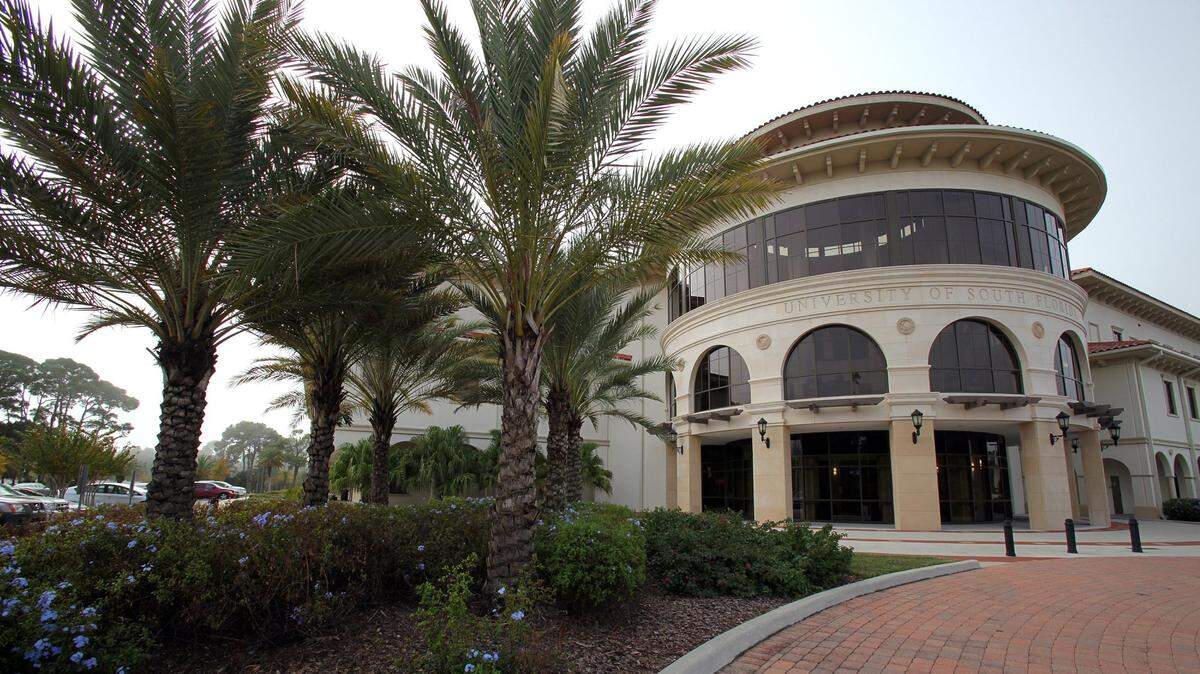
The University of South Florida is changing, but not without input from students, faculty and interested residents.
Gov. Rick Scott signed the Florida Excellence in Higher Education Act on March 11, the beginning of an effort to consolidate three USF campuses — Sarasota-Manatee, Tampa and St. Petersburg — under one accreditation. It also created a task force to help with the transition, which should be completed by July 1, 2020.
The USF Consolidation Planning Study and Implementation Task Force will answer questions and accept input during a town hall meeting Tuesday.
USF Sarasota-Manatee will host the meeting at Selby Auditorium, 8350 N. Tamiami Trail, in Sarasota, from 3 to 5 p.m.
“I think the growing pains are primarily going to be structural, you know, who owns what,” said Karen Holbrook, regional chancellor for the Sarasota-Manatee campus. “Do we lose anything in the process versus how much do we gain. It’s really important that we stay who we are for our community and for our students.”
Holbrook, a task force member, said the community has a lot to gain from consolidation, or “reunification.” There was one institution before USF St. Petersburg earned its own accreditation in 2006, followed by USF Sarasota-Manatee in 2011.
The most obvious benefit, she said, is access to more programs and resources. USF Sarasota-Manatee currently offers 17 bachelor’s degrees and seven master’s degrees.
By comparison, Tampa offers 72 bachelor’s degrees and 99 master’s degrees.
According to a recent report, local business students currently have access to classes in business administration, accounting and finance.
The same students will later have access to courses in real estate, international business, sport and fitness management, entrepreneurial studies and managerial economics.
“If they want to take a course in St. Pete or Tampa, they can seamlessly travel to any one of those schools after consolidation,” Holbrook said.
Huron Consulting Group created the new report, offering an initial plan while leaving room for suggestions and revisions. Its biggest finding was a need to avoid the “duplication” of colleges across each campus.
There are currently 24 duplicated programs for bachelor’s degrees and 11 for master’s degrees. If the current plan moves forward, there can only be one college for each field of study, meaning one campus will serve as the “home” of a particular college, and the other campuses will become a “host” for the college’s programs
The campuses also had vastly different resources and populations as of 2017-2018.
- Sarasota-Manatee: 2,127 students and 82 instructional faculty.
- St. Petersburg: 4,908 students and 139 instructional faculty.
- Tampa: 43,542 students and 1,806 instructional faculty.
Though the local campus is smaller than its counterparts, Holbrook said, it offers unique resources. The chancellor pointed to Sarasota-Manatee’s College of Hospitality and Tourism Leadership.
“I think their worry might be, if you blend in these other two institutions you might lose some of the credibility that you’ve earned already,” she said, referring to USF Tampa. ” But we’re so small — we don’t delude anybody.”
It’s also important to maintain the identify of each campus, according to the consultant’s report, which cited the need to prepare students for their local workforce. Each campus has its own programs and cultures, and that won’t completely change with consolidation.
The projected workforce needs in Sarasota-Manatee are health care, insurance and hospitality, along with technology and cybersecurity.
Though some will be renamed or restructured, the campus won’t lose its existing programs, Holbrook said, adding that her faculty and students have much to gain in the transition.
She did, however, acknowledge their concerns. The consultant’s report said USF faculty expressed “uncertainty regarding the future,” especially when it comes to new guidelines for tenure and promotions.
“Perceived inequities” are another source of anxiety, stoked by a fear that Sarasota-Manatee could receive less than its counterparts.
The local campus also has to grapple with recruiting and higher admission standards, along with a transportation solution for students who may take courses at the surrounding campuses.
Despite a host of logistical challenges, Holbrook said the end result is a stronger university.
“We’re not the same three that we were when we split off,” she said. “We are three very much distinctive pieces, and so coming back together is a lot more difficult than it was to separate.”