
Voters OK'd higher property taxes for schools. Watching how it's spent splits board
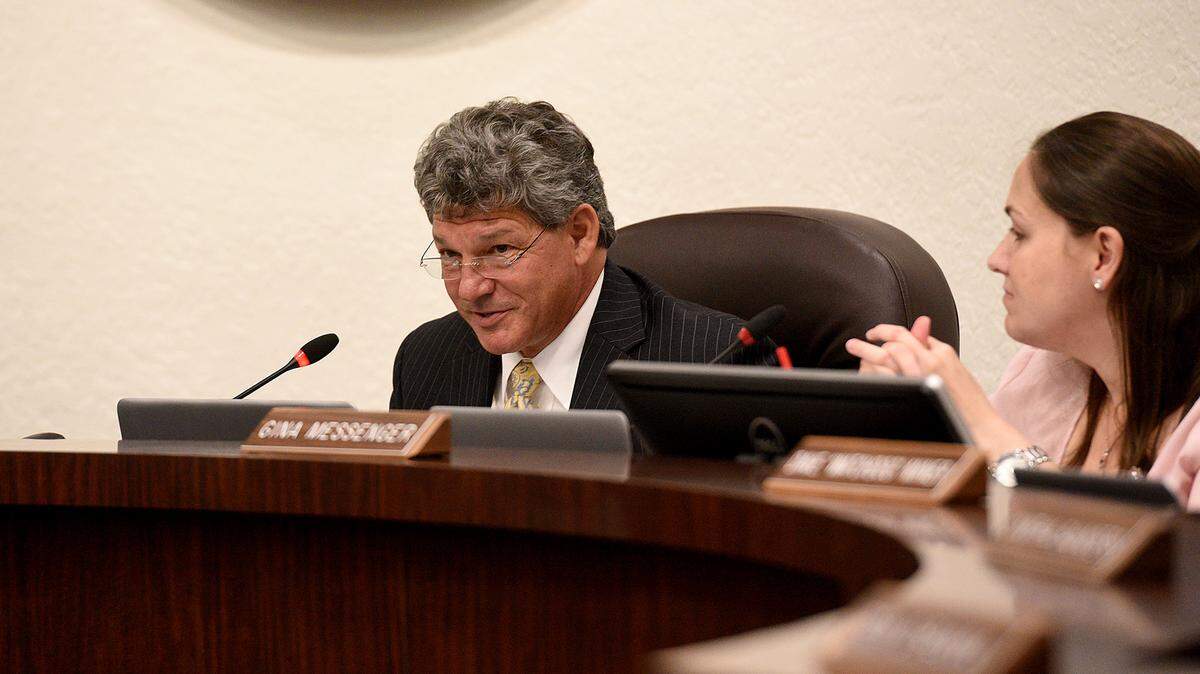
At its Tuesday meeting, its second ever, the Citizens' Financial Advisory Committee will hammer out its future plans and expectations, which were recently brought into question during a school board meeting in Manatee County.
A major responsibility of the committee is to oversee money collected through a one-mill increase on property taxes. Though the school board voted in February to expand the committee's roles, a majority of the members voted on June 12 to roll back the group's financial oversight, sparking pushback from the board's chair.
"I believe they are reacting to one or more individuals in the administration that quite frankly would probably prefer that we do not have an oversight committee, because they don't want anybody looking and providing oversight into what they're doing " Chairman Scott Hopes said in a follow-up interview.
Board member Charlie Kennedy made a successful motion to form the committee on Jan. 23, almost two months before the referendum passed. His motion said the committee would "perform duties as referenced in Resolution 2017-11 and other duties as assigned by a majority vote of the School Board."
Resolution 2017-11 outlined how the new property tax funds could be used, and how the district would assure responsible use of the money. Among other uses, the money will be used to give teachers and other employees a pay raise.
"Provided the millage increase for Manatee County Schools is approved, a financial oversight committee appointed by the School Board shall issue an annual report to insure fiscal stewardship of the funds," it states. "In addition, the committee shall identify relevant outcomes and report results to the community."
The board voted unanimously on Feb. 13 to expand the committee's responsibilities. Before its roles were constricted at the last school board meeting, the committee had several duties beyond the referendum, including:
- Oversight, review of financial reports and monitoring the use of sales tax revenue.
- The periodic review of financial reports, statements and audits as presented by school board staff or outside agencies.
- A review of other areas of financial concerns brought forward by a committee member, a member of the public, the superintendent or school board members.
Kennedy then made a motion to refocus the committee's efforts at the most recent school board meeting.
"I should have thought this out in February when we finalized this, but after that first committee meeting it's like wow, this thing, in my opinion, this thing's already gone off the rails," he said during the board meeting.
Giving the committee a chance to review "other areas of financial concern" as identified by "school board members" would be a major flaw, Kennedy said, because the school board is supposed to make decisions as a body, not as individuals.
He said the "periodic review of financial reports, statements and audits" was too vague, and that monitoring the use of sales tax revenue was already a responsibility of the district's independent Audit Committee.
"My goal in this motion is to focus the committee on their intended purpose and what we told the community before the referendum what their job was going to be, and nothing more," Kennedy said.
He withdrew the motion, allowing board member Dave Miner to make a similar motion with slightly different wording. The motion passed with a 3-2 vote, directing committee members to oversee the receipt and disbursement of millage revenue. The committee will also issue an annual report on its findings.
Hopes said the board took one night to undo a plan that took several workshops and meetings to create. He outlined his frustration in a June 13 email to fellow board members.
"While I believe we made progress last night in a number of areas, we continue to digress around complex issues," Hopes wrote. "I believe this is a result of communications through third parties and a lack of effort to gain understanding or get clarification."
Beyond the board
The committee's 15 volunteers seem equally torn on whether they should have oversight beyond the one-mill referendum.
Committee member Larry Simmons is a veteran educator who served on the school board for more than a decade. Speaking at the June 12 board meeting, he said giving the committee broad oversight would burden district staff.
Many of the earlier duties, he said, are covered by the Audit Committee.
"If you ask the committee to be redundant with things that you're doing, that's wasting their time and the resources of this school system," he said.
Several current board members echoed Simmons' concerns.
The Audit Committee, Hopes argued, is responsible for reviewing money that was already expended, whereas the committee should oversee money before it gets spent.
Committee member Garin Hoover, a retired attorney and a real estate broker for Hoover Realty, argued in favor of broad oversight.
The committee can only make recommendations to the school board. It has no authority to make decisions, so the district should embrace a review of its finances as a whole, Hoover said.
"I don't see why you would want to limit the scope," he said. "What could it hurt? What harm could come from looking at things from a budgetary point of view?"
In a follow-up interview, committee Chair Robert Christopher shared a neutral point of view. He said some committee members may want more oversight than others, and that some board members "might have anxiety that the committee might be inflammatory or counter to undermine them in re-election or something like that."
The committee's next meeting, scheduled for Tuesday afternoon, includes a discussion about the group's focus and charge, along with a presentation of the draft charter.
"We need to get the waters calm between the board and the committee," Christopher said. "That's got to be done before we take off on this thing."
History repeats itself
The board's last meeting was a repeat of discussions held during the committee’s formation.
Though they voted unanimously to give the group broad oversight before rolling back their decision, board members expressed similar opinions during a series of past board meetings.
On Jan. 23, Miner "voiced concerns regarding the establishment of a finance committee as presented by Chairman Hopes," according to the meeting minutes. Specifically, Miner felt the draft plan was not consistent with language in the referendum.
He made a motion to create the committee and make its sole responsibility the oversight of referendum money. Without a second, board member John Colon made a motion to form the committee and adopt the broader responsibilities, but his motion also failed for lack of a second.
Kennedy followed with a successful motion to create the committee, giving it oversight of referendum funds and leaving open the possibility of "other duties as assigned by a majority vote of the school board." Miner cast the only dissenting vote.
A board meeting on Feb. 13 sparked more debate about the committee's roles. While reviewing the list of other possible roles, Miner made an unsuccessful motion to remove the section on "oversight, review of financial reports, and monitoring the use of sales tax revenue." He received a second from Kennedy, but the other three members voted against Miner's motion.
He later made a motion to remove No. 5 on the list: "A review of other areas of financial concerns that may be brought forward by a committee member, a member of the public, the superintendent or the school board members."
The motion failed for lack of a second. Board members then voted unanimously to approve the expanded list of responsibilities with only a minor amendment suggested by Vice Chair Gina Messenger, adding the word "millage" to a section on referendum revenue.
"I'm really taken aback because we had multiple meetings around the development of and purpose of the Citizens' Financial Advisory Committee, which was in the resolution, which we took to the votes," Hopes said at the recent board meeting.
This story was originally published June 18, 2018 at 12:01 PM with the headline "Voters OK'd higher property taxes for schools. Watching how it's spent splits board."