
Judge rules death penalty still applies in two Bradenton murder cases
BRADENTON -- A judge has ruled the death penalty remains a potential sentence for two accused murderers in separate high profile cases in Bradenton.
Circuit Court Judge Diana Moreland ruled that the death penalty was never completely invalidated by a recent Supreme Court decision. The judge said the previous capital sentencing statute still served as a deterrent, warning Devin Chandler and Terez Jones of the punishment they could face if they committed first-degree murder.
Moreland issued similar orders in both cases, denying the defense motions to strike the state's intent to seek the death penalty and to find the death penalty is no longer a potential sentence.
Chandler is charged with two counts of first-degree murder and armed robbery in the fatal shooting of brothers Khasem Yousef, 23, and Faares Yousef, 17, on Labor Day in their family's convenience store in Palmetto..
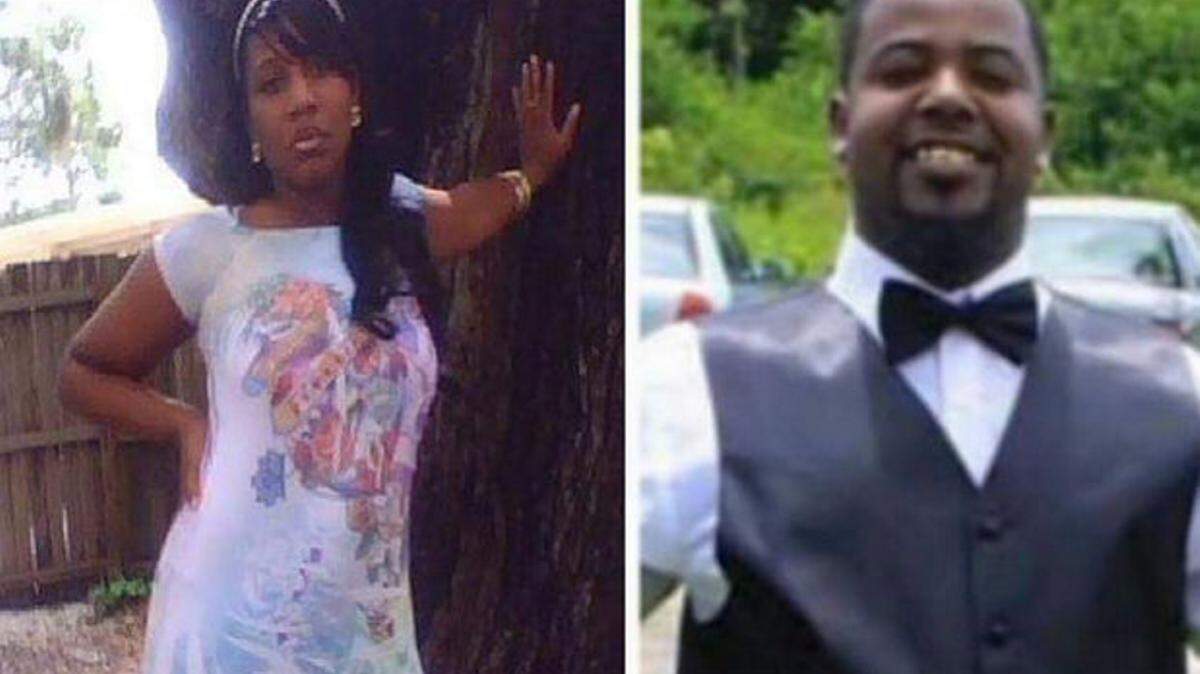
Jones, 33, along with Jimmie McNear, 19, and Trey Nonnombre, 19, were indicted on two counts of first-degree murder in the July 9 fatal shootings of Esther Deneus and her boyfriend, Kantral Markeith Brooks, both 29, during a home invasion at their Bradenton residence.
If convicted of first-degree murder, Jones and Chandler will each face the death penalty or life in prison.
Chandler had attempted to change his plea to a plea of guilty but Moreland denied accepting his plea until the issues surrounding the state's intent to seek the death penalty were resolved.
Florida's death penalty, which was reestablished in 1976, had been in limbo after the U.S. Supreme Court ruled Jan. 12 in Hurst v. Florida that it was unconstitutional for a judge, and not a jury, to make the final decision to sentence a murderer to death.
Assistant Public Defender Franklin Roberts and Assistant State Attorney Art Brown argued the issues surrounding the death penalty before Moreland during a hearing on Feb. 24. Brown argued that the motions be continued until after March 11 when the state legislature session ended.
Moreland cited another Supreme Court decision from 1977, Dobbert v. Florida, and said the state had the right to give notice of its intent and that at the time of the slayings the death penalty was an option. Both attorneys had been asked to submit written briefs on the Dobbert decision.
After reviewing those briefs, Moreland issued her written ruling in both cases on Thursday.
On March 7, Gov. Rick Scott signed into law House Bill 7101 making the necessary changes to Florida's capital sentencing statute addressing the concerns raised in Hurst v. Florida.
"Contrary to the general premise of defendant's pending motions, Hurst did not completely invalidate the death penalty in Florida; rather, the Supreme Court deemed the procedure used to arrive at that penalty constitutionally flawed to the extent that the 'capital sentencing scheme' did not require the jury to make the critical findings necessary to impose the death penalty," Moreland wrote.
"As in Dobbert, this court finds the recent change in Florida's capital sentencing legislation, via enactment of HB 7101, to be procedural (not substantial) as it simply alters, in compliance with Hurst, the methods required for determining whether the death penalty is warranted," Moreland wrote.
Jessica De Leon, Herald law enforcement reporter, can be reached at 941-745-7049. You can follow her on Twitter@JDeLeon1012.
This story was originally published March 16, 2016 at 11:29 PM with the headline "Judge rules death penalty still applies in two Bradenton murder cases ."