
Police body-camera bill in Florida gaining legislative, public support
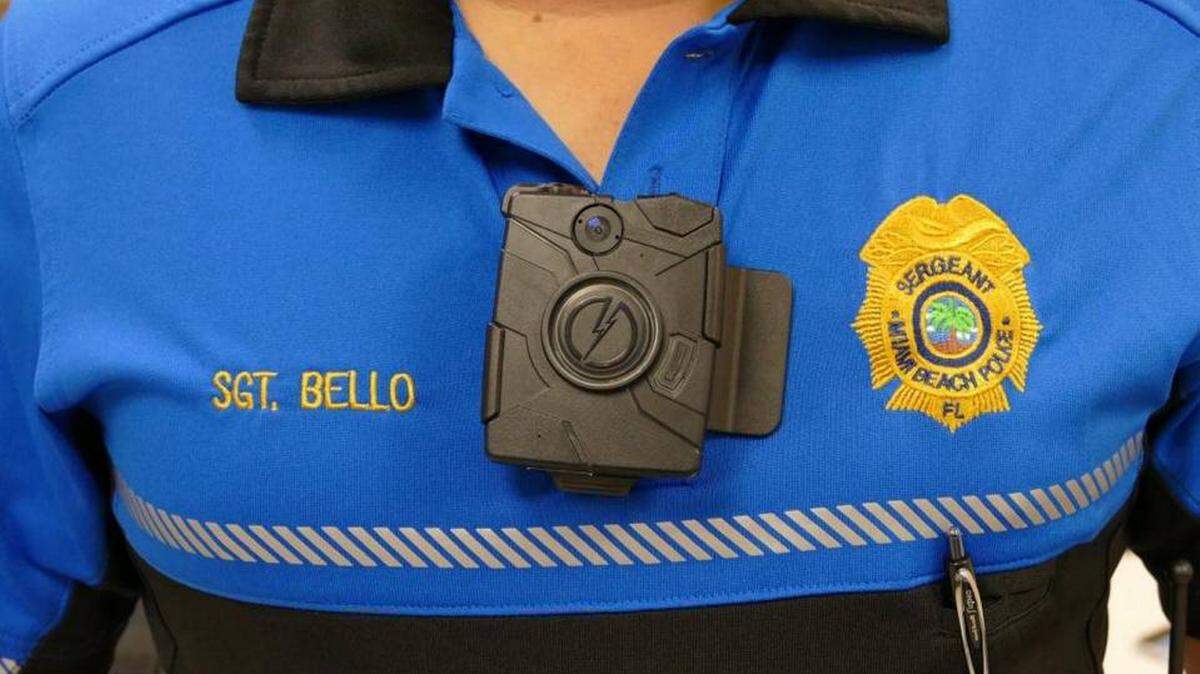
TALLAHASSEE -- Police departments in Miami-Dade and Broward counties -- and throughout Florida -- that choose to equip their officers with body cameras will be required to have policies in place regulating officer training, use of the devices and the footage they capture, under legislation that's been revived for the 2016 session.
After earning unanimous favor in the House last spring, the proposal stalled in the Senate amid the chaotic end to the 2015 legislative session.
As officer-involved shootings and instances of police abuse nationwide have been in the spotlight, body cameras have grown more common as a way to more accurately document officer interactions with the public.
Florida lawmakers say requiring agencies to have policies will better ensure that when the devices are used, they're used appropriately and consistently.
Broward County state Rep. Shevrin Jones, D-West Park, said House Bill 93 -- which unanimously passed the House Criminal Justice
Subcommittee during its first hearing last week -- is meant to ensure "the citizens and the police are held accountable and kept safe."
"If you look at the news, if you look at a lot of what's taking place right now, you'll find there's a lot of pointing-fingers taking place -- whether from the citizens' standpoint or from the police aspect," said Jones, who's co-sponsoring the bill with state Rep. Alan Williams, D-Tallahassee.
The proposal has backing from a variety of law enforcement groups, such as police chiefs, county sheriffs and the Florida Police Benevolent Association.
Jones' measure doesn't go so far as requiring the use of body cameras by the state's more than 300 police agencies, because Jones said that would impose a costly, unfunded mandate on state and local agencies.
"Some of the agencies don't have the capacity to do it," he told reporters. "I think our agencies are responsible enough, and I think a lot of them are moving in that direction to bring body cameras to their agencies."
Less than 10 percent of the state's police agencies would be affected by the legislation, according to a legislative analysis, because most haven't purchased the technology.
In Manatee County, the sheriff's office does not currently outfit its deputies with body cameras.
"We're kind of monitoring the situation, and we haven't made any final determination," sheriff's office spokesman Dave Bristow said. "We're looking what other agencies are doing... a lot of things go into it. It's not just one thing."
According to Bradenton police Capt. William Fowler, the Bradenton Police Department is researching the use of body cameras.
"We're looking at different policies to put in place, however, we're in the initial research phases of doing so," Fowler said. "We're already looking at the policies. We're also looking at the equipment and considering the different types of storage of the information."
Like Bristow, Fowler said there's a lot that goes into the decision behind obtaining body cameras.
"There's a lot of other things that go with body cameras other than just recording," Fowler added. "There are internal policies that we have to put in place before we implement the use... there's just so many different things we have to do before we put them on the streets."
Eighteen agencies statewide -- including Miami, Miami Beach and Customs inspectors at Miami International Airport -- use officer body cameras, while another 10 -- such as Tampa police -- have pilot programs in place to test them.
About one-third of police agencies nationwide use body cameras.
State Rep. Gayle Harrell, R-Stuart, said requiring "appropriate use of body cameras" will help protect individual privacy.
"The protections that are here and the need for the policies and procedures -- the need for the whole examination of this -- is extremely important to protect privacy of individuals," she said.
Last spring, Gov. Rick Scott signed a law exempting certain body-camera footage from being disclosed under Florida's public records law.
Body-camera footage taken in a home, hospital, mental health institution or other place where privacy is reasonably expected can be released only by the law enforcement agency or the people in a video.
Jones' bill now goes to the House Appropriations Committee.
The Senate companion for the 2016 session, SB 418, was introduced by state Sen. Chris Smith, D-Fort Lauderdale, but hasn't been scheduled for a hearing yet.
The body-camera bills are among several initiatives advocated for by the legislative black caucus following the police-involved shooting death of Corey Jones in Palm Beach County last month.
Corey Jones was shot dead at 3 a.m. Oct. 18 on an Interstate I-95 off-ramp after his car broke down. A Palm Beach Gardens police officer, Nouman Raja, was on duty in plain clothes and driving an unmarked police van when he stopped to investigate what he thought was an abandoned vehicle. Jones was shot three times.
Raja's vehicle had no dash camera and he wore no body camera. Family advocates and some lawmakers say that had Raja done so, the footage could have revealed exactly how and why Jones was killed.
Jones' bill as drafted, though, wouldn't have helped in that instance because Palm Beach Gardens police don't own or use body cameras.
This story was originally published November 4, 2015 at 12:00 AM with the headline "Police body-camera bill in Florida gaining legislative, public support ."