Was a fire at SeaPort Manatee intentional? Jury reaches verdict in arson case
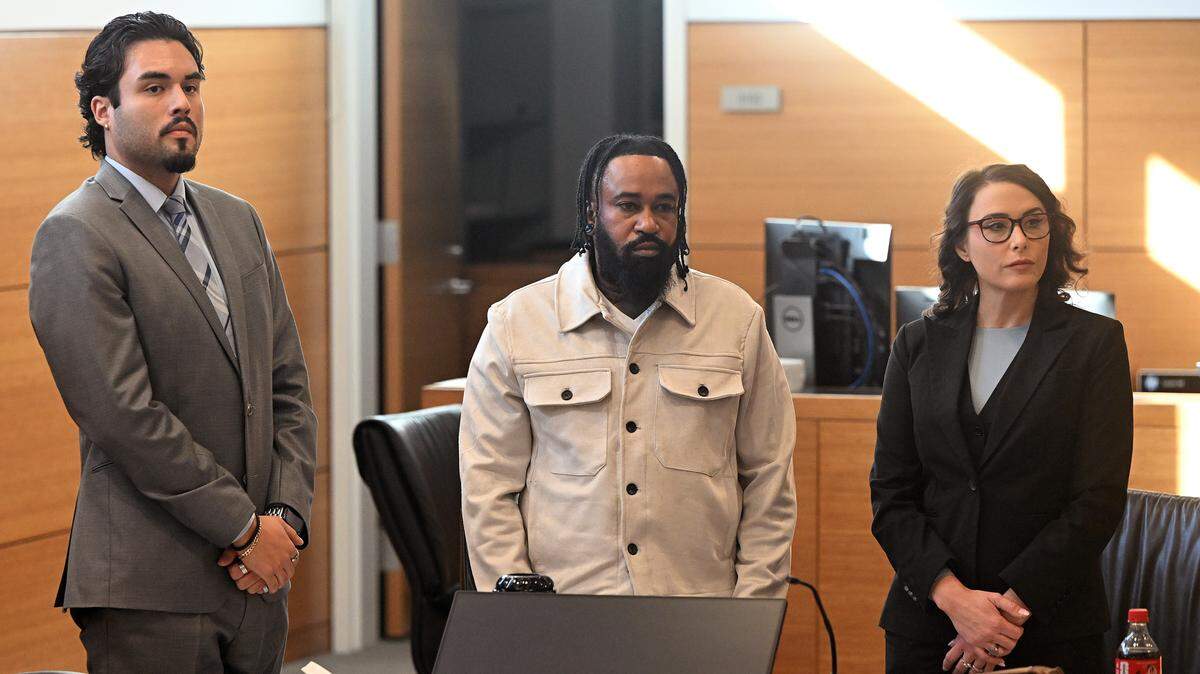
A Manatee County jury acquitted a Palmetto man accused of intentionally setting a fire at SeaPort Manatee that destroyed his truck and damaged his employer’s property.
Anthony Johnson, 41, faced three counts of second-degree arson stemming from the early-morning blaze on June 29, 2023, which prosecutors said began inside his pickup and spread into a port warehouse and a commercial tractor.
However, Johnson’s defense argued there was no proof that Johnson set the fire on purpose.
Jurors returned not-guilty verdicts Friday after a two-day trial before Circuit Judge Frederick Mercurio at the Manatee Judicial Center, court records show.
At trial, jurors heard competing accounts of the events leading up to the fire.
Prosecutors accuse Palmetto man of setting truck fire
Prosecutors argued Johnson intentionally set the fire, relying heavily on SeaPort Manatee surveillance and what they described as financial pressure as a motive. They said video showed Johnson’s movements before and after his truck was parked near the warehouse, with smoke becoming visible shortly after he left the area.
In opening statements, Assistant State Attorney Dickey Hough told jurors smoke became visible shortly after Johnson drove away in his assigned semi tractor.
“Within a couple of minutes of his truck pulling out of the location where the fire happened, or the fire happens, you see the smoke start to come out of there literally within two minutes,” Hough said.
Fire investigators testified the blaze originated inside Johnson’s 2013 Dodge Ram and spread into a nearby metal warehouse used as a mechanic’s shop by his employer, Agunsa Manatee Trucking, damaged the building and a commercial tractor parked inside. Prosecutors said the three damaged properties were considered separate “structures” under state arson law, forming the basis for the three charges.
Lab testing finds no fire accelerants
Port security officer Christopher Marshall said he discovered the fire more than an hour after it began and recorded a cellphone video showing Johnson’s truck engulfed in flames and fire spreading into the warehouse roof.
Lt. Paul Snyder, a state fire marshal, testified the fire was intentionally set and originated inside the truck, though laboratory testing did not detect any chemical accelerants.
Prosecutors pointed to Johnson’s financial troubles as a motive, telling jurors his bank accounts showed negative balances for months leading up to the fire and that he faced pressure from a loan tied to the truck.
Investigators testified the truck’s physical damage insurance had been removed months earlier. Johnson told authorities the change occurred when his wife switched the policy, accidentally leaving the vehicle insured for liability only. Prosecutors said the lapse increased Johnson’s loan payments and financial strain, and Hough told jurors investigators believed Johnson thought his employer’s property insurance would cover the damage because the fire occurred on site.
Defense says no proof of arson
The defense countered that theory, arguing it made little sense for Johnson to intentionally destroy a vehicle that was not insured for physical damage.
The defense also argued the state failed to prove Johnson set the fire. Defense attorney Courtney Benson told jurors that no surveillance footage showed anyone igniting the truck and no witness saw Johnson start the fire. While SeaPort Manatee is heavily monitored, she said, the specific area where the truck was parked was outside the cameras’ view, leaving the state to rely on inference rather than direct proof.
“You’re not going to see this fire be set on video,” Benson said. “There are no eyewitnesses that will testify that Mr. Johnson set this fire.”
Benson also challenged the state’s conclusion that the blaze was intentionally set, arguing investigators treated the absence of an obvious accidental cause as proof of arson. She pointed to the defense’s expert analysis, which raised the possibility of an electrical failure inside the truck and concluded the fire’s cause could not be determined.
“This is a case of perception versus reality,” Benson said.