Ashley Benefield sentenced to prison after Manatee judge denies new murder trial
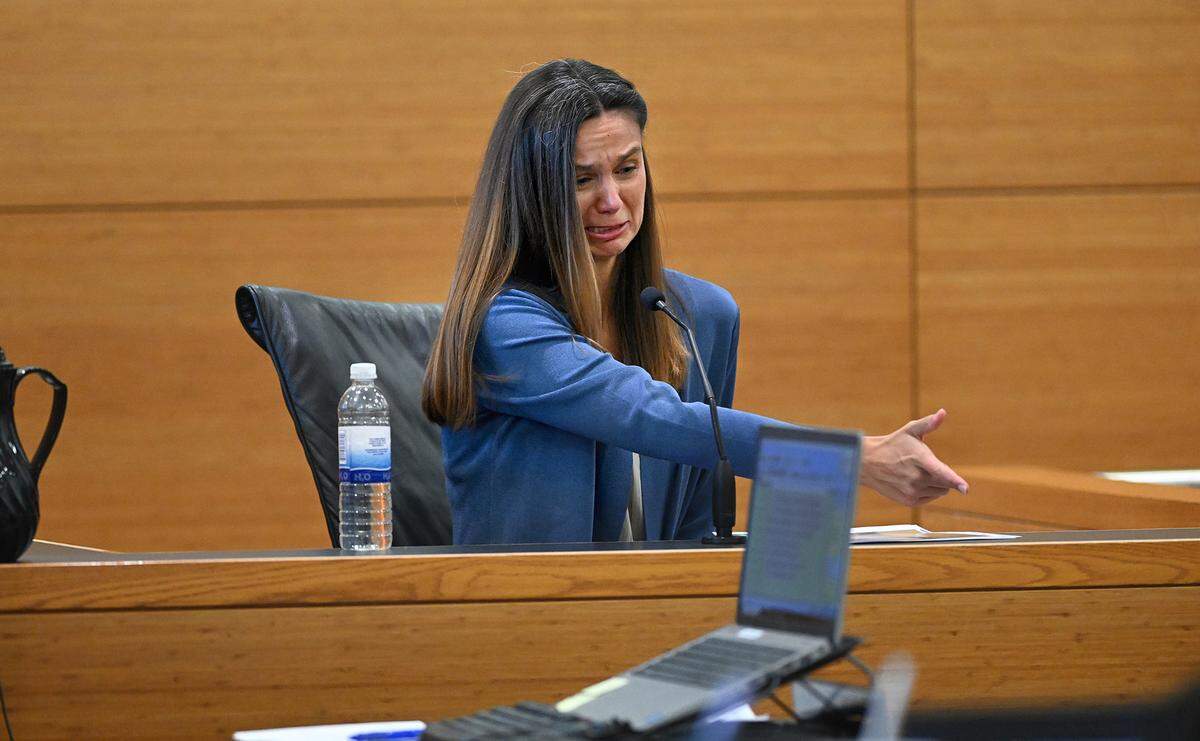
Ex-ballerina Ashley Benefield was sentenced Tuesday to 20 years in prison for the 2020 shooting death of her husband following more than a month delay over juror misconduct claims in her high-profile trial.
Circuit Court Judge Matt Whyte handed down the sentence days after rejecting Benefield’s request for a new trial. On Nov. 27, Whyte ruled against claims from Benefield’s defense team that alleged juror misconduct.
Whyte sentenced Benefield to 20 years in prison with credit for time served followed by 10 years of probation. Upon her release, Benefield will also have to undergo a mental health evaluation within 60 days and complete any mental health treatment deemed necessary.
Benefield faced up to 30 years in prison. Manslaughter with a firearm carries a minimum mandatory of 11.5 years in prison.
During Tuesday’s sentencing hearing, Doug Benefield’s family urged Whyte to impose the maximum sentence.
Victim’s family claims ‘cold-blooded murder’
Tommie Benefield highlighted his cousin’s professional achievements and their broader impact, calling Doug’s death a “theft” not just from their family but from society. John Wesley Benefield Jr. asked the court for the “longest possible sentence” for what he called the “cold-blooded murder” of his brother.
Both family also spoke about the profound impact Doug’s death has had on his daughter from a previous marriage, Eva Benefield, who lost her mother years earlier and is now left without either parent.
Eva delivered an emotional witness impact statement during the hearing, highlighting the devastating toll her father’s death has had on her life. She recalled the growing sense of dread she felt the morning of Sept. 28, 2020, when she woke up to no messages from her father, a rare and unsettling occurrence that filled her with unease.
“Anytime my dad didn’t answer, it sent me into a spiral. My brain automatically went to thinking something terrible happened,” Eva said.
When the afternoon passed without a response from her father, Eva’s sense of dread deepened. Her fears were confirmed when an uncle called to deliver the devastating news: her dad had been shot the night before.
“Is he OK?” Eva said she asked.
“No.”
“She did it, didn’t she?” Eva said — already suspecting her stepmother’s involvement in her father’s death.
Eva addressed Ashley Benefield directly in court, asking her a series of questions: “Why did you end my dad’s life knowing he was my only living parent? Why did you willingly take away your daughter’s father? You somehow managed to orphan not one, but two young girls.”
Benefield defense requests shorter sentence
Ashley’s defense team advocated for Whyte to consider a downward departure, a legal mechanism that allows judges to impose sentences below the state’s minimum guidelines in certain circumstances.
As part of their arguments during the hearing they had psychologist Dr. Barbara Russell testify that Doug Benefield exhibited traits “consistent with narcissistic and antisocial personality disorders,” describing him as lacking empathy and unable to take responsibility for his actions. Russell said there was a pattern of escalating threats and aggression from Doug in the weeks leading up to the shooting, saying that Ashley was “under extreme duress” and was in “survival mode” at the time of the incident.
The defense maintained throughout the trial and subsequent hearings that Ashley was a victim of domestic abuse.
But prosecutors and members of Doug’s family disputed this. The state called into question Russell’s ability to be impartial, pointing to her participation in “We Stand with Ashley” demonstrations and allowing her client to live with her. The family, meanwhile, took issue with the defense’s characterization of Doug.
Eva told the court that her father was a kind, generous man. “My dad was the opposite of what you attempted to portray.” she said to the defense. “His generosity is what got him killed.”
In his ruling, Whyte acknowledged the complex dynamics between the couple, noting that “whatever lens you view this case from can really affect how you view the players, the results, the participants and the outcome.”
However, Whyte rejected the defense’s request for a downward departure, finding that the case did not warrant reduced penalties.
.png "image (1).png")
The sentence follows the jury’s previous decision to convict Benefield on the lesser charge of manslaughter rather than second-degree murder, which could have put Benefield in prison for life.
Benefield’s July trial for second-degree murder saw emotional testimony and sharp disagreements between the prosecution and defense. Jurors deliberated for nearly seven hours, initially reporting they were deadlocked before returning with a manslaughter conviction.
Benefield’s defense attorney Neil Taylor called the manslaughter conviction a compromise at the time and said his client was “not looking for a compromise.”
Benefield sentenced in Black Swan murder
Benefield, 32, and her attorney filed several legal motions after a jury found her guilty of manslaughter in July following seven hours of deliberation. Among the motions filed by the defense was a request for a new trial and a request to interview jurors. After closed-door interviews with jurors, Whyte declined the defense’s motion for a retrial, clearing the way for Benefield’s sentencing Tuesday after it was initially delayed in October.
The basis of Taylor’s motion largely hinged on a juror who they alleged failed to disclose two items of personal history relevant to the case. First, the defense alleged that the juror was a past victim of domestic battery. Second, the defense alleged that the juror’s ex-husband had sought multiple restraining orders against her on behalf of himself and their child.
Taylor argued at the time that these domestic violence allegations against the juror “mirror key elements in the state’s case,” as he said Ashley Benefield filed for several similar injunctions against her husband.
“Given the parallels” between the juror’s alleged concealed history and “the facts of this case,” Taylor wrote in the motion that he would have asked to remove the juror if this information had been disclosed.
While Taylor’s motions resulted in Benefield’s sentencing being delayed nearly a month and a half while Whyte mulled over whether to grant Benefield a new trial, the judge ultimately denied the motion.
In his Nov. 27 decision, Whyte wrote that the juror interviews “failed to substantiate the allegations of juror misconduct during deliberations.” He determined that the claim of a juror allegedly concealing a personal history of domestic violence during jury selection was either a result of the defense’s “lack of diligence” or would not have led to the juror’s removal even if disclosed.
The defense also alleged that a juror brought a cell phone into the jury room and used it during deliberations, citing comments made by a YouTube user during a court livestream. The user, identified as “That-Hoodie Guy,” claimed to have insider knowledge of the jury’s decision-making process. However, Whyte concluded that the juror interviews did not produce any evidence to support this claim.
According to court records, all jurors testified that they neither brought cell phones into the deliberation room nor saw any other jurors with phones. They also denied observing anyone isolating themselves for an extended period during deliberations, Whyte wrote in his decision.
Manatee murder makes national headlines
The trial garnered national attention, gaining widespread media attention and drawing coverage from true-crime outlets like CBS’ “48 Hours,” ABC’s “20/20” and NBC’s “Dateline.”
During the trial, Benefield, who had already undergone a Stand Your Ground Hearing in July 2023, conceded alongside her defense attorney that she did shoot her husband but argued self-defense throughout the trial, saying she was a victim of domestic violence and was in fear for her life when Doug Benefield attacked her and that she was “forced to shoot him.”
Throughout the trial, the prosecution painted a different version of events, arguing that Benefield was a master manipulator who put on a “ruse” for her husband, law enforcement and the court system with one goal in mind: obtaining sole custody of their then 2-year-old daughter.
Assistant State Attorney Suzanne O’Donnell argued at the time that Benefield used domestic violence allegations as a way of attempting to game the system to achieve this goal. O’Donnell reiterated that point during Tuesday’s closing arguments.
“This entire trial has been about demonizing Doug Benefield and making the defendant the victim when, in fact, it was the opposite,” O’Donnell said.
Taylor told the Bradenton Herald Tuesday afternoon that he plans to file an appeal. Taylor also said he plans to file a post-sentencing motion for release on bond, arguing that Benefield should be allowed to remain free while her legal team pursues an appeal.
This story was originally published December 3, 2024 at 11:03 AM.