How did Manatee official avoid a sobriety test after crash? Here’s what DUI lawyers say
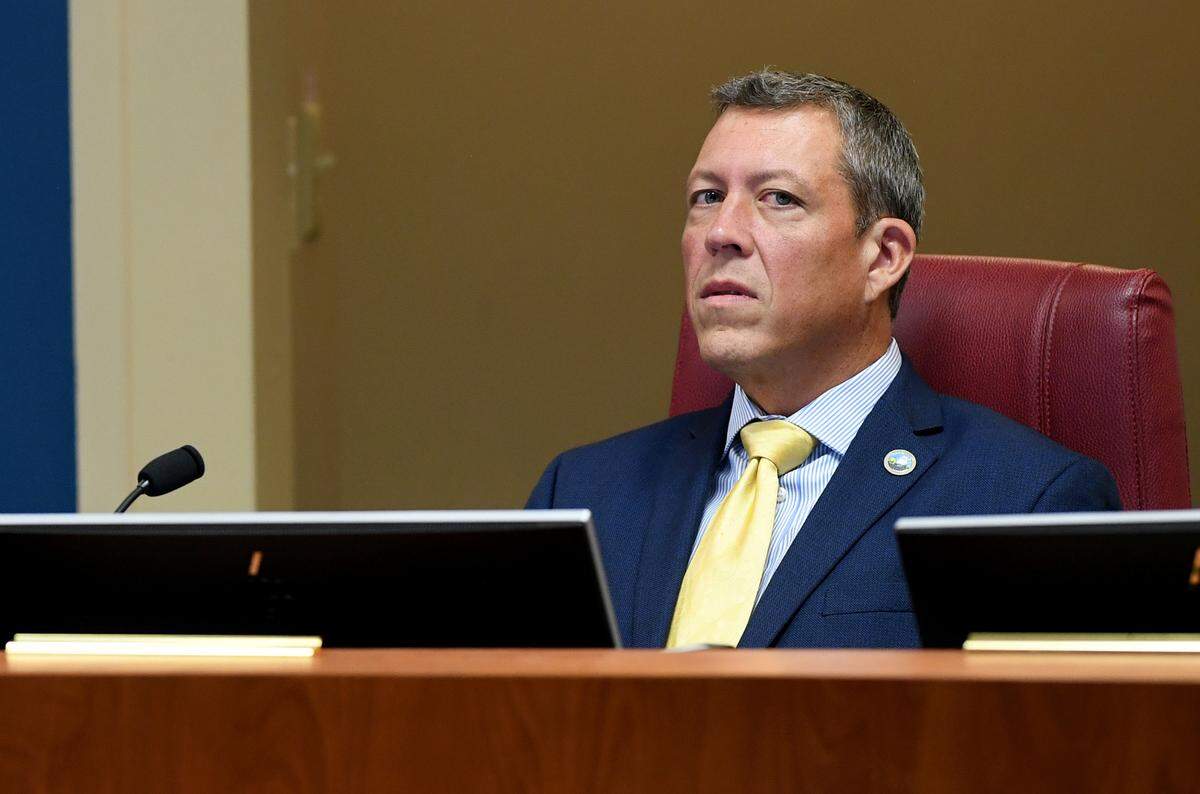
Experts say Manatee County Commissioner George Kruse likely received special treatment when deputies declined to charge him with a DUI following an alleged drunken crash last month.
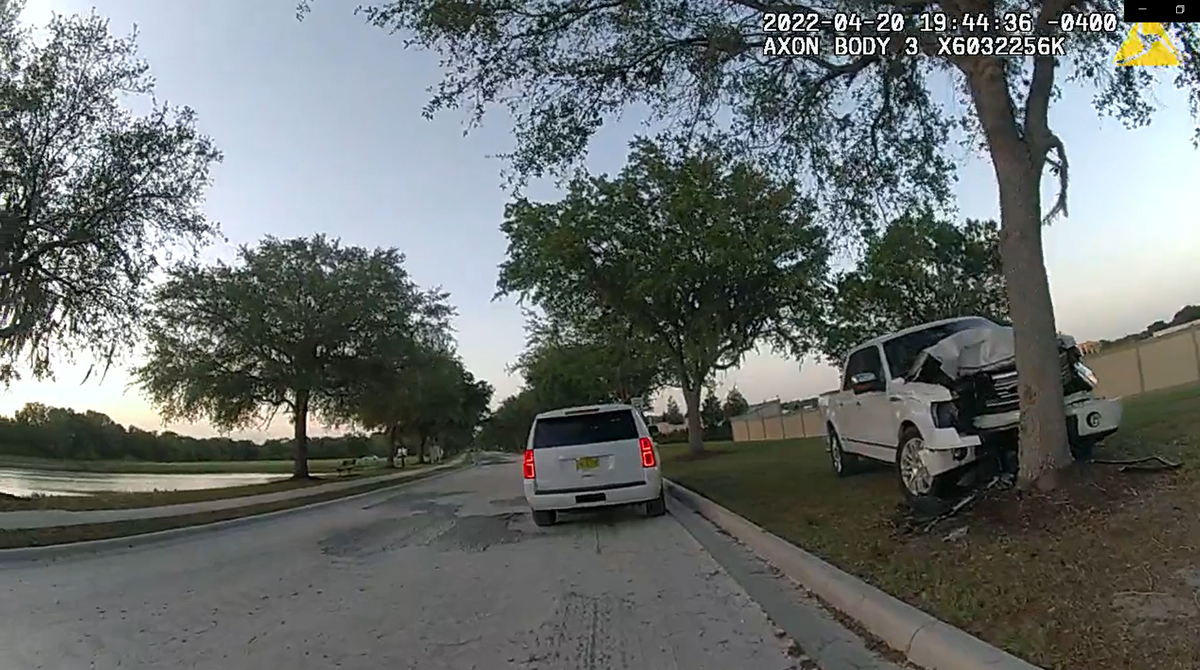
Investigators with the Manatee County Sheriff’s Office believed Kruse was under the influence of alcohol when he slammed his pickup truck into a tree just inside his subdivision, but they did not conduct a field sobriety test.
Given the evidence, DUI attorneys who reviewed the video of the investigation called that decision “unusual.”
“There’s no doubt in my mind that he was treated in a way that an ordinary citizen would not be treated,” said Tom Hudson, who has defended DUI cases in Manatee County for 20 years.
“It’s a very unusual case. It’s almost like law enforcement didn’t want to pursue the DUI and they gave him a break,” said Ajay Pallegar, another DUI attorney with 15 years of experience. “He’s very lucky. He’s very fortunate.”
Kruse, 46, denies drinking before the accident and has not been arrested in connection with the April 20 crash.
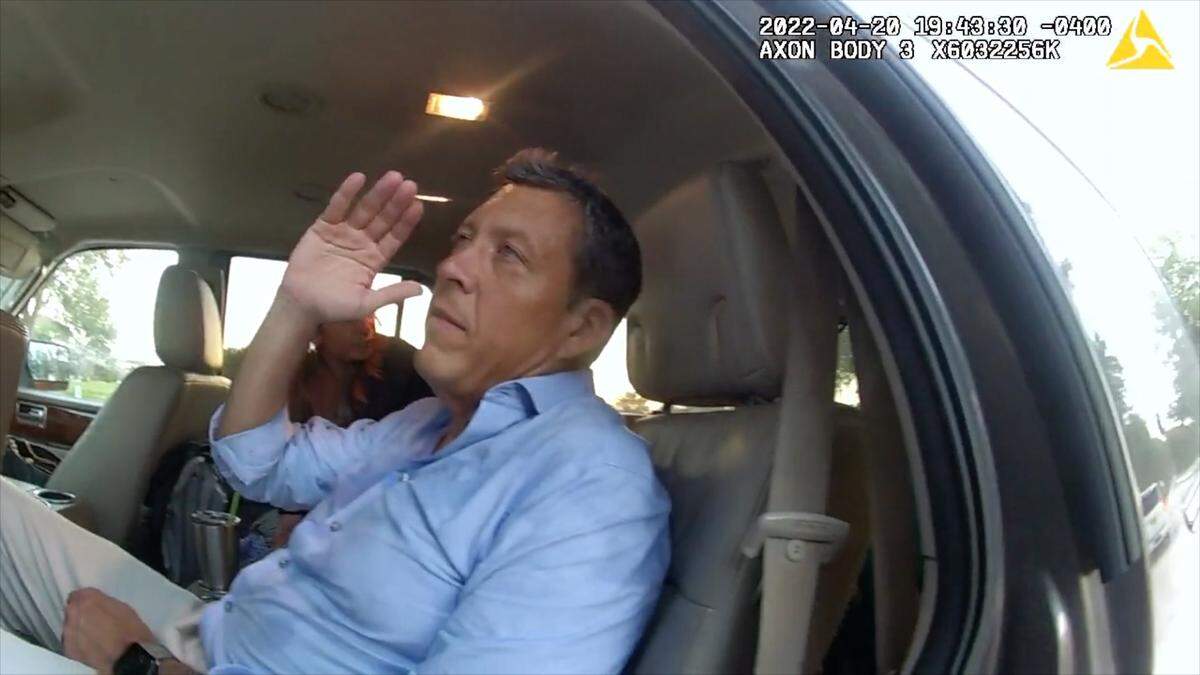
The moments following the crash were captured in a 911 call and the investigating deputy’s body camera footage. At one point in the bodycam video, the deputy tells Kruse’s wife that he is aware of the commissioner’s role in county government and that a DUI investigation would “put everyone into a crappy scenario.”
Deputies say they needed more evidence
The deputy was working an off-duty detail in the Greyhawk Landing Community Development District when several drivers stopped to tell him about the crash.
By the time he arrived at the scene, Kruse had moved to the back seat of his wife’s vehicle. Kruse’s wife, Jessica, can be heard on the 911 call ushering the commissioner out of his truck.
“Hey. Hey. Are you OK? I need you to get in my car. I need you to get in my car right now,” she said.
“There is no reason he should have been driving,” the deputy later told Jessica Kruse. “The benefit here is that nobody out of the seven people that stopped and told me about this, nobody stayed to say he was in the car.”
“Had that been the case, my traffic unit would have been here and worked the case, worked the DUI, and he would have gone to jail because he was obviously impaired.”
Under Florida Statute 316.193, a law enforcement officer must be able to prove that the DUI offender was “driving or in actual physical control of a vehicle” while intoxicated.
Without an eyewitness, deputies declined to pursue a field sobriety test to determine whether Kruse’s blood alcohol content was above the legal limit. Instead, Kruse was cited for a public traffic accident and allowed to go home.
In a statement provided to the Herald, Sheriff Rick Wells said his investigators needed more time to find out who was driving the truck.
“Review of this traffic crash revealed additional evidence that was not available on the evening of April 20th. It was important for us to examine this additional evidence and determine who was in physical control of the vehicle when the crash occurred, and to what extent the driver was impaired,” Wells said.
DUI attorneys question lack of sobriety test
“The dude freaking crashed into a tree. He’s drunk. I just can’t do a DUI because no one can put him behind the wheel,” one deputy explained to another on bodycam video. “When I got here, he was in his wife’s car.”
While being questioned, Kruse admitted he was operating the vehicle when it crashed. In interviews with the Herald, legal experts questioned why that statement and his behavior didn’t lead to a sobriety test.
“You can hear him with slurred speech, and they obviously observe that he’s intoxicated. That’s when (the deputy) has to start the DUI investigation,” Pallegar said.
“(The deputy) had enough information to believe that Commissioner Kruse was impaired and he was driving the vehicle. He should have never let (Kruse) leave the scene of the accident,” said Michael Barfield, a Sarasota-based paralegal with experience in DUI cases. “You’ve got an admission that he was driving — directly from his mouth — on camera. That’s a major, major red flag.”
“I can confidently say that if it were any other ordinary citizen in those circumstances, they would have been in jail that night,” Barfield continued.
The crash investigator may have followed the law based on the evidence available at the time, said Colleen Glenn, a Bradenton-based DUI defense attorney who has practiced law for nearly 20 years.
“If the deputy honestly believed that he couldn’t put (Kruse) behind the wheel of the car, then legally he couldn’t have held him at the scene,” Glenn explained. “Without beginning a criminal investigation, he wouldn’t be able to hold him.”
Despite failing to administer a sobriety test, deputies said Kruse had shown several signs of impairment on the scene.
“George appears to have glassy eyes, slurred speech, clammy wet skin, and droopy eyelids,” an investigator wrote.
911 calls puts Kruse behind the wheel
In a follow-up report, the sheriff’s office said the 911 call that was triggered by the Ford Sync Assist system in Kruse’s 2013 Ford F-150 Platinum helped confirm he was the driver.
After detecting the crash impact, Kruse’s truck dialed emergency services and opened an audio line in the vehicle. In a recording of that call, Kruse tells an operator he was driving when another vehicle cut him off, forcing him to swerve out of the roadway.
Kruse has not been charged with a DUI, but the State Attorney’s Office is reviewing the case and could issue a formal charge at a later date. Speaking with the Herald last week, Kruse said he trusted law enforcement officials to complete a proper investigation.
“At the end of the day, it’s under investigation and I have to let that run its course,” said Kruse. “They’re going to conduct their investigation and when they come to their conclusion, I will deal with it at that time.”
Kruse was elected in 2020 to a four-year term as an at-large commissioner on the Manatee Board of County Commissioners.
What is Florida law on DUI investigations?
316.193 Driving under the influence; penalties.—
(1) A person is guilty of the offense of driving under the influence and is subject to punishment as provided in subsection (2) if the person is driving or in actual physical control of a vehicle within this state and:
(a) The person is under the influence of alcoholic beverages, any chemical substance set forth in s. 877.111, or any substance controlled under chapter 893, when affected to the extent that the person’s normal faculties are impaired;
(b) The person has a blood-alcohol level of 0.08 or more grams of alcohol per 100 milliliters of blood; or
(c) The person has a breath-alcohol level of 0.08 or more grams of alcohol per 210 liters of breath.
This story was originally published May 10, 2022 at 11:42 AM.