Many questioned how this Bradenton cop got his job. He has since quit while under investigation
Former Bradenton police Sgt. Gregory Pryor, a former colleague of Chief Melanie Bevan when they both worked in St. Petersburg, was a questionable hire when he joined the Bradenton Police Department.
First hired in 2016 as a dispatcher, Pryor was sworn in as a law enforcement officer about eight months later, in February 2017.
Pryor resigned from the Bradenton force last year, while under criminal and internal affairs investigations that he had made improper requests for overtime pay.
Pryor had been fired from the Tampa Police Department in 2014 after an internal affairs investigation found he had driven drunk on Interstate 75, before crashing into a semi-truck.
Pryor flashed his badge and told Hillsborough County Sheriff’s Office deputies that someone named “Jacob,” whom he had just met at a bar, had been driving, not him.
Deputies tried repeatedly to get Pryor to tell them what really happened. But instead, they said, Pryor became belligerent, telling them he had expected “professional courtesy,” adding: “So much for the brotherhood.”
The data recorder in Pryor’s personal Chevrolet Avalanche would later prove that no one else had been in the SUV, which had hit speeds of about 100 mph before crashing, records show.
The State Attorney’s Office in Tampa formally charged Pryor with providing law enforcement officers with false information and obstructing a law enforcement officer without violence. The charges were later dismissed after he completed a diversion program.
The incident didn’t stop Bevan from hiring Pryor in 2016 for a job in Bradenton.
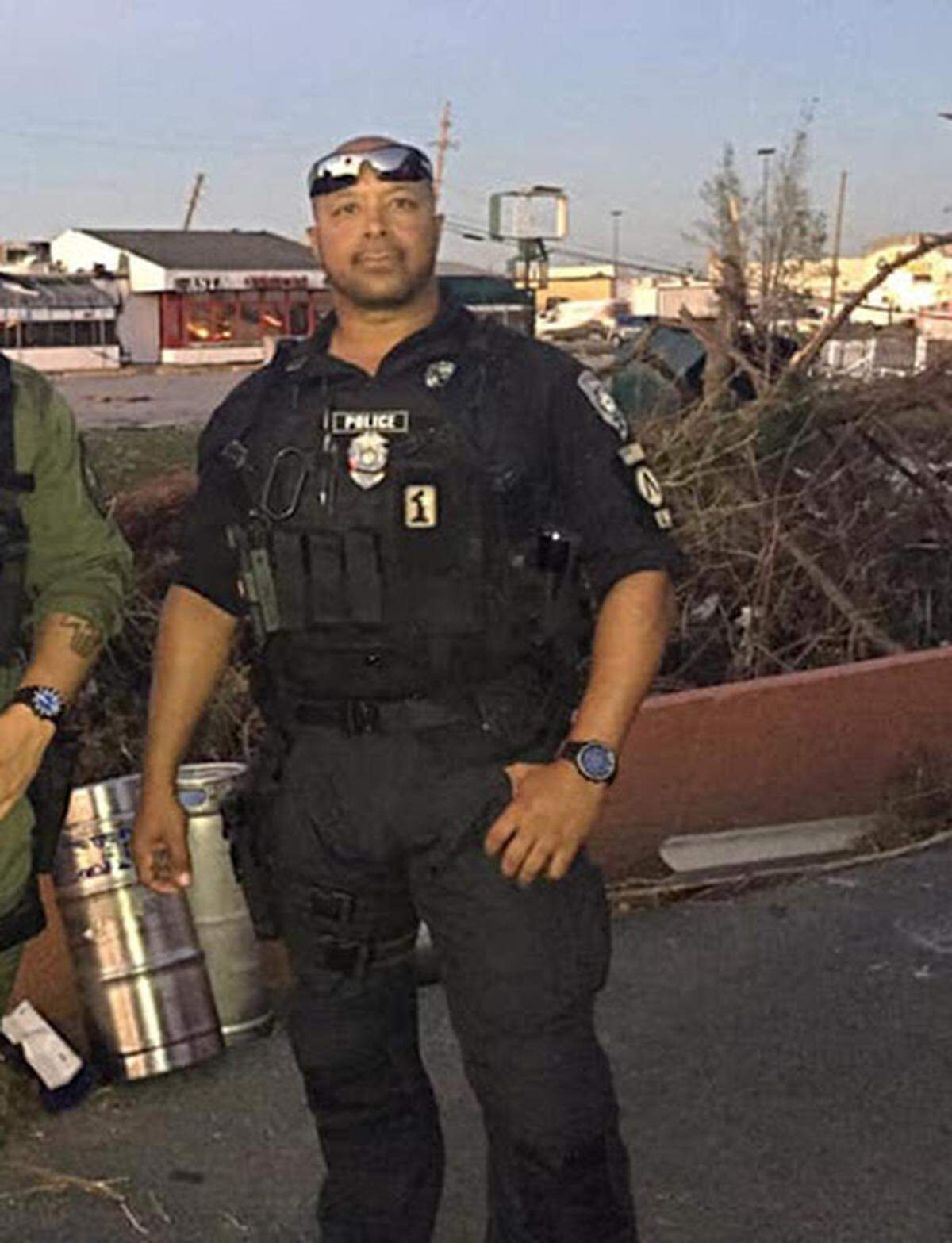
The two knew each other from their time at the St. Petersburg Police Department, and Bevan thought he had been “an excellent officer” when he had served under her in a unit she had created.
It was a decision questioned by some within the department.
But just more than two years after he was hired, Pryor, who had recently been promoted to sergeant, was once again the subject of internal affairs and criminal investigations by his department.
Pryor resigned on June 2, while still being investigated about allegations that he had submitted overtime slips for traffic details even when he wasn’t there, or during times that overlapped with his regular schedule.
The criminal investigation, which was closed on Oct. 4, found insufficient evidence that Pryor had not been doing Bradenton police work during time he could not account for, though he did not appear to be where he was supposed to be, according to the investigative report.
The internal affairs investigation, closed on Oct. 5, concluded that Pryor had violated three general orders: falsification of records, conduct unbecoming an officer and failing to follow department procedures.
Bradenton chief defends hiring former colleague
Bevan on Wednesday defended hiring Pryor.
“Hindsight is 2020,” she said. “He was eligible. We went through a thorough vetting process. He did an exemplary job in our communications center and then even on the road up to the point, he scored well and was recommended to be promoted. He did a great job.”
Bevan admitted to being disappointed by what transpired.
“I am disappointed anytime my officers and personnel do anything that gets themselves in trouble or puts any negative light on the agency,” she said.
The Bradenton Herald last year began looking into why Pryor was under investigation and had suddenly left the department, but the internal affairs report only recently became public. Bevan did not sign off on the report — and the findings it sustained — until Dec. 19, although the investigation had been completed months earlier.
The case was not reviewed by the state attorney’s office, although Bevan said she did contact the state attorney’s office and was told the police department needed to come to its own conclusion on whether there was probable cause for criminal charges.
“The state attorney doesn’t independently review our investigations unless we come forward with what we think is probable cause and we didn’t have probable cause in this occurrence,” Bevan said.
Officer falls under investigation in Bradenton
The Bradenton police investigation of Pryor started after his supervising lieutenant noticed that he had submitted a conflicting overtime slip for March 21, 2019, for a traffic detail being funded by the Florida Department of Transportation, according to the internal affairs report. He claimed to be working the overtime detail from 4 till 9 p.m. but his regular shift had not ended until 5 p.m.
When his overtime for that month was audited, administrators found a discrepancy between the three grant-funded details he had worked, the overtime slips he submitted for those details and the hours he was actually working, according to the internal affairs report.
Professional standards investigators set aside the administrative portion of their investigation, and a criminal investigation was launched on April 11. Pryor was prohibited from working any more of the FDOT-funded details, according to personnel records, and the department says it withdrew the payments Pryor had already received for working those details.
The department also discovered “that Pryor was intentionally turning off his in-car GPS system multiple times during his shifts,” records say. This occurred during about 42 hours between March 1 and May 29, 2019, when his laptop was logged off the system.
Assistant Chief Paul McWade “was aware that my computer was being turned off and why it was being turned off,” Pryor later explained during his July 17 internal affairs interview.
McWade, who was hired by Bevan when she took over the department, also came from the St. Petersburg Police Department. McWade, who commands the operations division, is one of Bevan’s two assistant chiefs.
Officer denies wrongdoing
Pryor said that just because his computer was off didn’t mean he wasn’t doing any police work, including the grant-funded traffic details, since they include an educational component, according to a transcript of that interview.
“I assumed he approved. I mean, if he knew I was turning it off. I mean, he was well aware that I was turning it off,” Pryor said. “It was turned off because of people harassing me is why and following me and stuff.”
On Dec. 2, 2018, Pryor said, he was asked by McWade to come to his house because one of the department’s Humvees had broken down. Because he was dressed in uniform and in his patrol car, Pryor claimed that McWade knew he was working a traffic detail when he went to his home and helped him take the Humvee to a mechanic in Sarasota. It took them several hours, because it kept breaking down along the way and then McWade took him to lunch afterward.
On Jan. 11, 2019, Pryor said he was an hour-and-a-half late to his assigned traffic post because McWade had asked for his help in getting quotes for new ballistic helmets, shields and AR-15’s for the school resource officers.
The purchase of AR-15’s for use in Manatee County schools has never been made public. The Bradenton Herald has been unable to confirm that they were actually bought, despite multiple requests to the department.
The Bradenton Police Department refused to provide records for all new equipment purchased for SRO’s, claiming an exemption to Florida’s public records law. Bevan has argued that taxpayers have no right to know what weapons school resource officers are carrying on school grounds, claiming it would compromise security.
Pryor told internal affairs investigators that the department was getting funding through the Bradenton Blue Foundation, which was created by the police department and the Manatee Community Foundation in 2017. Bevan sits on the foundation’s board of directors and McWade manages the money as the foundation’s treasurer.
On March 1, 2019, Pryor said he left his post an hour early and drove up to Hillsborough County to pick up uniforms for the honor guard, after being asked to by McWade. Again he claimed McWade knew that he was working a traffic detail at the time.
For March 21, 2019, the day when an investigation into possible double-billing was triggered, Pryor could not provide an exact accounting of his time, but claimed that he must have stayed late, or come in early, as the department was transitioning to the use of Glock 9 handguns. He said he may also have been helping another officer with a project.
Pryor claimed that his lieutenant had approved him leaving early and “flexing” the time. She told internal affairs investigators that she had given no such approval, and believed Pryor was lying.
Assistant chief denies officer’s claims
Some of Pryor’s defense was corroborated by McWade, who shares a close friendship with the officer.
McWade, however, claimed that he was unaware that Pryor was working a traffic detail when he called him to his house for help with the Humvee, asked for help completing the purchase of equipment for the SROs, and to go pick up the honor guard uniforms, according to the internal affairs report.
But McWade said he could see why Pryor would take it as an order since it came from the assistant chief of police. Had he known. McWade said he would have had Pryor submit for regular overtime, comp time or flex time or would not have asked for Pryor’s help.
Pryor insisted his supervisors, including McWade, knew and that it was “common practice” for other police work to be done during the FDOT-funded traffic details.
“No, it’s not common practice,” McWade said. “Otherwise, I would have corrected it so he wouldn’t have lost his career.”
Pryor also provided internal affairs with copies of screenshots of text messages between the two to support some of his claims.
McWade said he was aware that Pryor felt like he was being followed or harassed, but couldn’t remember if it was before or after the internal affairs investigation started that Pryor told him about shutting off his computer.
Bevan believes there was poor communication on Pryor’s part.
“I grab folks all the time to take care of things. If they are working a grant assignment and supposed to be conducting a specific duty, it’s really on them to let me know,” Bevan said.
Ultimately, it was his responsibility to tell McWade that he was working a grant-funded detail when McWade asked him for help with another task, she said.
“I don’t think friendship played into anything,” Bevan said.
Second chance after crash
Bevan defended her decision to hire Pryor during an interview with the Bradenton Herald in 2016, saying that she was giving him a second opportunity because he had paid for his mistake. It was a decision that was supported by Mayor Wayne Poston, who is also the city’s police commissioner.
But Pryor didn’t acknowledge that “mistake” in a job application with the Bradenton Police Department.
When asked his reason for leaving the Tampa Police Department, Pryor responded: “Dismissed due to a misinterpretation of a temporary medical condition.”
According to the Tampa police internal affairs investigation, Pryor claimed he didn’t know what happened when deputies arrived after the crash because he had suffered a concussion. The probe concluded that claim was a lie, after investigators reviewed his medical record and evidence from the crash.
“Nothing in the medical report indicates that Officer Pryor was not lucid during the initial investigation or that he was not capable of telling the truth,” the Tampa internal affairs report stated.
Pryor had been lucid enough to call and carry-on conversations with a 911 dispatcher and an On-Star representative, the report noted. He also called a wrecker to tow his SUV, and called his wife to pick him up. He also remembered to take a bag with his gun out of the vehicle before leaving with her.
In a cover letter submitted with his resume to Bradenton police, Pryor wrote: “I also understand that perception is reality and the importance of maintaining a professional appearance and demeanor throughout the day to day operations.
This story was originally published February 7, 2020 at 5:00 AM.