
Manatee History Matters: Powel Crosley Jr. built an engine for war
In 1939, Powel Crosley Jr. felt the time was right for Americans to have the option of a small inexpensive car.
His first model was a tiny two-seater powered by an air-cooled two-cylinder engine. Two years later, he started production, using the same engine, of the Crosley Watersprite, a small family boat built in Miami.
In 1942, production was redirected to support the war effort. As the war continued, the need arose for a small, light engine to power generators in PT Boats (fast boats armed with torpedoes) and amphibious vehicles. Crosley learned about an engine made from brazed-together stamped metal sheets, and he bought the patent.
Soon after, he began production of what would be known as the Cobra engine. The engine was named not for its ferocity, but for the copper used in the brazing process -- Cobra being a shortening of copper brazed. As an engine for a generator, it proved successful. One test model ran for 50 days around the clock without any problems.
Crosley did well producing the small reliable engine during the war. When the war drew to a close, he saw the Cobra engine as an ideal power source for his return to car manufacturing.
The engines were light and fuel-efficient, as well as reliable, when operating at a steady speed in a generator. The problem came with installing them in a car where the engine would have to operate under varying speeds and conditions. Lack of reliability and less-than-stunning performance plagued the early Crosley cars. Despite a "sports" model, they were not known for their speed.
One partial exception, a Crosley Hot Shot, did win the first endurance race at Sebring, but only because the number of laps required was based on engine size. After several years of trying to make the Cobra engine work in a car, Crosley's engineers designed a new version with a heavier, more reliable cast iron body.
Unfortunately, this improved engine came too late as his sales had already been waning. As the big auto companies shifted from producing for the war to producing for home, Crosley Automotive sales fell further and the production of Crosley cars stopped in 1952.
While the end of automotive production was a blow to Crosley, it was a boon elsewhere. Lightly used Crosley cars and trucks began to appear for low prices around the nation. It was from this resource that a new phenomenon developed in the world of powerboat racing.
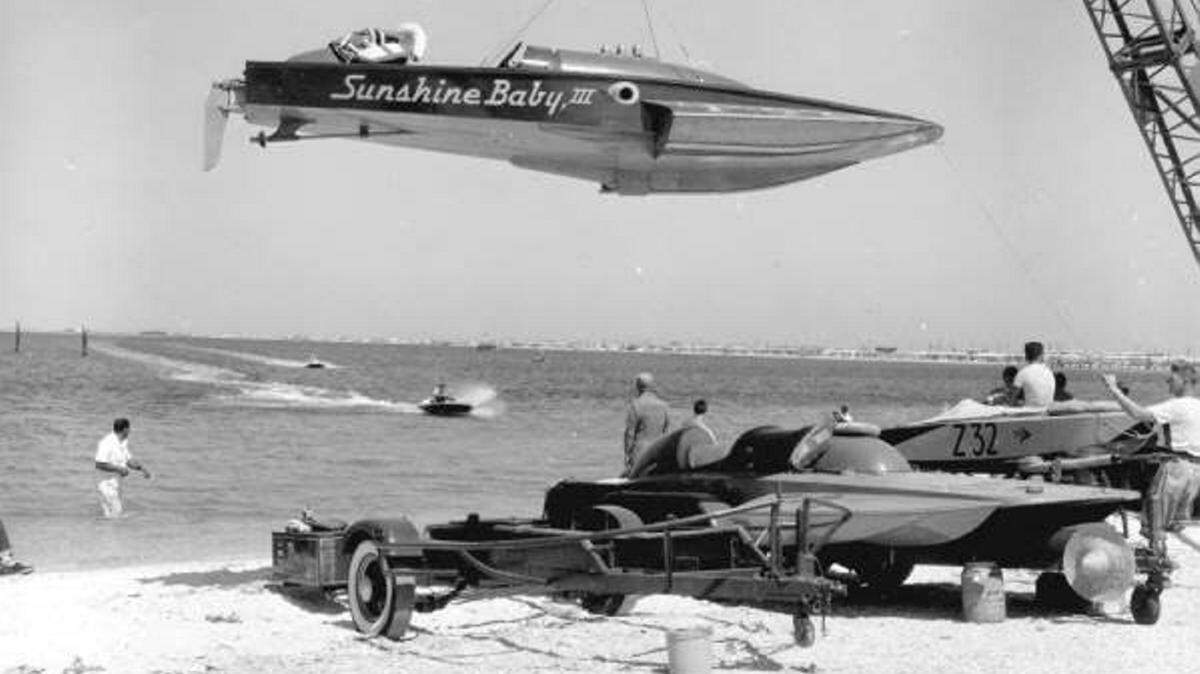
It was called the Y, or 48-inch class. They were 9-foot-long hydroplanes, boats designed to just skim along the surface of the water, equipped with tiny engines up to 48 cubic inches. The small size and light weight of the Crosley engines made them ideal for this purpose. With an engine weighing just over 100 pounds, these little boats could reach speeds of more than 70 mph.
Some of the best hulls for the class may have been built in Texas, but the best racing happened in Florida. At the Miami Marine Stadium and out of Yacht Clubs in Sarasota, St. Petersburg and Tampa Bay, they competed. In fact, there were several times that the champion for the class was determined by races in Florida.
Despite his prewar Crosley Watersprite and owning power yachts himself, Crosley didn't return to manufacturing boats after the war. He probably never saw his little Cobra engine win championships in the diminutive racing machines as he didn't return to Seagate, his Sarasota home, after 1939.
To find out more about Florida's maritime history, visit the Florida Maritime Museum at 4415 119th St. W in Cortez. We are open 9 a.m.-4 p.m. Tuesday through Saturday with free admission. We can also be reached at 941-708-6120 or through our website, FloridaMaritimeMuseum.org.
For more information about Powel Crosley, visit our sister sites, Manatee Village Historical Park, Palmetto Historical Park, the Manatee County Agricultural Museum and the Manatee County Historical Records Library, as well as the South Florida Museum and the Manatee County Central Library.
John Beale, education and volunteer coordinator at the Florida Maritime Museum, lectures at the museum and around the county on various topics related to Florida's maritime history. He also teaches traditional skills at the Florida Maritime Museum. Contact him at John.Beale@manateeclerk.com or 941-708-6120.
This story was originally published May 10, 2016 at 11:34 PM with the headline "Manatee History Matters: Powel Crosley Jr. built an engine for war ."