
Snead Island residents claim selective code enforcement all too real in favoring the wealthy
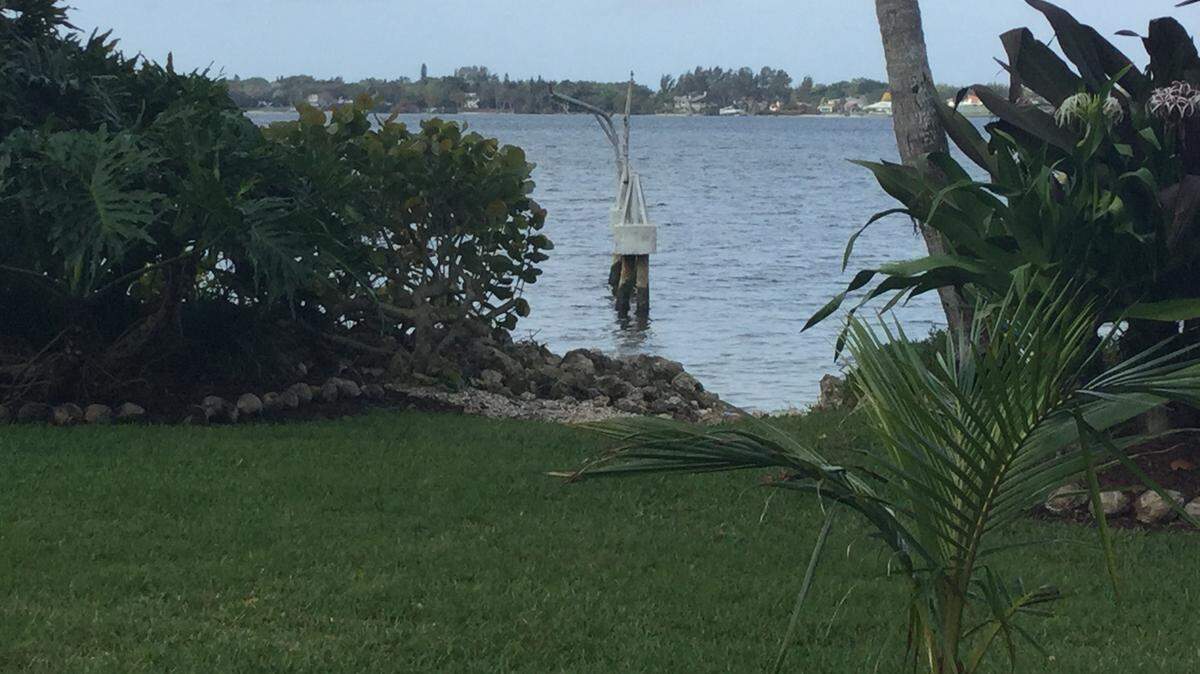
PALMETTO -- When a Snead Island resident in the Andress subdivision tore down a community dock and minimized access to the Manatee River that was granted to all homeowners by the original land owner in 1972, residents turned to Manatee County for answers. After years of wrangling over the dock, which was torn down a few weeks ago by a neighbor after the county denied a demolition permit, residents remain without resolution.
Robin Schofield recently moved into the neighborhood and as part of her purchase received documentation of the original easement that grants all residents a 50-foot-wide access line to the river, as well as the construction and access to a community dock. Schofield said the same neighbor who tore down the dock, identified by county code enforcement document as Gregory Patterson, choked off the easement down to just a few feet using vegetation and riprap. Patterson owns the property adjacent to the easement.
In terms of the community dock, historical photographs show that it has existed since the 1950s. It has been taken down a time or two by storms, but the neighbors always pitched in to rebuild and maintain it. Last May, Schofield asked the county about Patterson's intentions to demolish the dock when she learned from neighbors about the ongoing dispute. Almost three months later, John Parks, senior review specialist, wrote back to Schofield: "According to our county attorney's office and (Building and Services Development Director John Barnott) ... this is a private civil matter in which the county has no role."
It's a story the county has maintained since 2010 when Patterson, whose own dock was adjacent to the community dock, first attempted to tear it down through the county but was denied the permit. But in early March, Patterson had the dock torn down anyway, according to a code enforcement report.
Prior to that demolition, Schofield reached out to the county back in October asking for specific land development codes relating to the legal designation of the community dock. One week later, Parks responded with the same argument: "There is nothing I can add or answer to your inquiry."
Parks reiterated the county's position and added, "I would be ill-advised to respond any further. I imagine this is quite frustrating, but I do not feel I have any authority to say anything more."
Schofield shifted her focus to Patterson's own dock, which is just to the south of where the community dock once stood. Pulling county records, she said Patterson's dock was either expanded or built larger than what was permitted. Her inquiry to Barnott was followed up with promises of answers, but more than a week passed before a second email was answered on Nov. 9. Barnott wrote he still did not have the answer, "but my staff will look at this. Their case load is substantial and they will look at it when they can."
The Bradenton Herald received a similar answer when inquiring about this situation and asking for documentation to back up the county's decisions. Barnott responded to the Herald inquiry April 4, saying, "I will discuss this with staff and get back to you on this. Don't expect an answer this week."
In a follow-up email April 8 to check on the county's progress to answer four or five basic questions, Barnott wrote, "We have not looked at your request to begin to answer. The priority of this request is low. Our workforce is tasked with a substantial amount of work."
Despite a potential violation of a public records request, Barnott continued, "We will begin to look at this next week with no promise of when we will give you an answer."
According to other documents obtained by the Herald, a code enforcement officer finally met with Patterson after the demolition occurred without a permit. In the officer's report, he found that Patterson didn't need a permit because the community dock was an unlawful structure. The report states "Patterson was merely correcting a code violation."
The county has not yet provided documentation that shows any prior determination that the community dock was unlawful. In fact, several attempts to have the county make that determination met with refusals to do so. A code enforcement officer's report indicates Patterson's dock was looked at but reported that the dock wasn't unlawful "because it had been there for awhile."
Schofield questioned that determination and asked the county to explain the grandfather process. She asked if Patterson's dock was lawful "because it had been there for awhile," then why was the community dock not given the same consideration when it has existed since the 1950s? She was not given an answer.
County officials have ceased to communicate with the taxpayers of the Andress subdivision. Several more emails dated from February through March were sent to the county from Schofield and other residents, but those e-mails were not answered.
"It's nothing short of selective code enforcement to state that too much time has elapsed to make a correction on someone else's dock, but that decades of time was not a consideration in the legality of the community dock," said Schofield. "Hard-working middle-class people like all of us in this neighborhood are tired of being abused by wealthy people who just take whatever they want away from those who are unable to fight them."
At this point, Schofield said she just wants information on what her neighborhood can do to build a new dock, but those questions have been ignored.
Patterson could not be reached last week for comment.
Mark Young, Herald urban affairs reporter, can be reached at 941-745-7041 or follow him on Twitter@urbanmark2014.
This story was originally published April 10, 2016 at 9:09 AM with the headline "Snead Island residents claim selective code enforcement all too real in favoring the wealthy ."