
Christmas at Southeastern Guide Dogs means a lot more four-legged friends
PALMETTO -- It seems Santa Claus and the puppy stork team up every holiday season to inundate Palmetto's Southeastern Guide Dogs with more furry packages of cuteness than any other time of year.
While the concept has a nice magical flair, Jacqui Garvey, whelping and canine care manager, said it's not much of a mystery.
"Just like any other animal, including humans, the breeding dogs get frisky as the heat of summer turns into cooler weather," said Garvey. "While the number of puppies we have at one time fluctuates, this time of year is pretty predictable that we'll have a lot more than usual."
Puppies destined to serve as future guide or service dogs are kept onsite for 10 weeks before going home with volunteer puppy raisers, who will teach the dogs basic commands before they return to Southeastern for more intensive training and evaluation at about 18 months. Litters are constantly cycled through various training stages at Southeastern, beginning with sensory training at just 3 days old. Early training includes introducing the puppies to various sights, sounds, smells and textures under their paws.
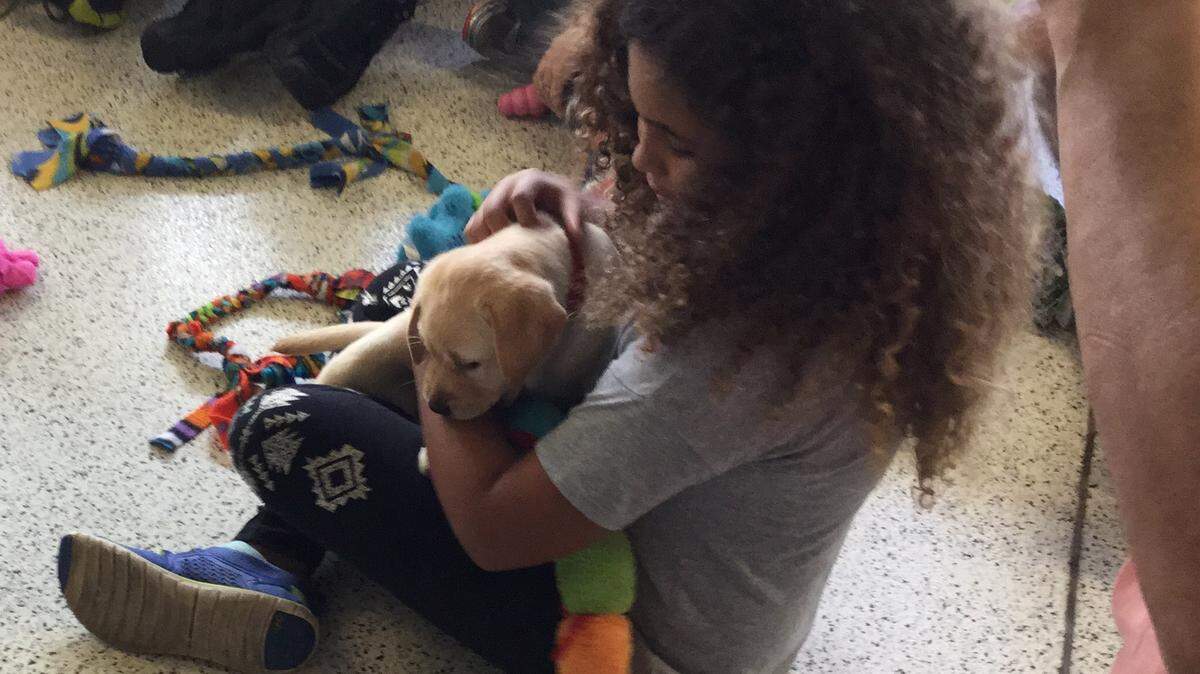
At 6 weeks old, the puppies graduate to more intense training that includes their first multi-human contact in the "puppy-hugging" room. There, up to 20 people donate $10 a person to play with, hug, stimulate and help introduce even more sounds and smells to the quickly growing pups. Puppy hugging takes place five days a week, and Garvey said a puppy-hugging session has never been canceled for a lack of people.
"A lot of people think that we are doing them a favor by letting them come and play with the puppies, but it's the other way around," said Garvey. "They are actually doing us a favor because this introduces the puppies to a whole new set of sights and smells -- and that's good for their training."
On average, about 40 puppies are going through training before going to puppy raisers. There are 60 now, and if it takes a village to raise a child, it takes an army to raise that many puppies -- an army of volunteers.
"We definitely call on our volunteers this time of year," said Garvey. "We bring in more volunteers and ask them to really step things up."
Sixty puppies isn't the most Southeastern has had in early training. Southeastern has had more than 100 at least once, and is planning on that as a minimum once the new state-of-the art puppy kennel under construction is completed. The existing facility has three birthing rooms for dogs who average about three litters to Southeastern over their breeding lifespan. The new facility will have 12 whelping rooms.
Puppies at Southeastern come from a "colony" of breeder dogs also hosted by volunteers. When the time is right for breeding, the dogs are matched through the organization's genetics lab to keep blood lines pure, and the males and females are brought together onsite. The mother will return again to Southeastern when it is time to give birth, and the puppies remain with the mother for the first several weeks while they go through basic training.
Southeastern has 23 females and 10 males in its colony with 33 breeder hosts. Ruth Lando, Southeastern's media relations associate, said they hope to substantially grow the breeder colony to a total of 80. Breeder hosts must live within 75 minutes of the Palmetto facility and be willing to bring their dog to Southeastern "when nature calls," she said.
Southeastern trains guide dogs for the visually impaired, as well as a variety of service dogs, including dogs for veterans suffering from post-traumatic stress disorder. It costs about $30,000 to train one dog but sponsors, donations and volunteers enable the dogs and the training to be provided free to those in need.
The breeder host waiting list is about six months long, but once the new facility opens, that waiting list will disappear and breeder hosts will be in demand as Southeastern continues to expand its operation and ability to help those in need of guide or service dogs. Like the volunteer puppy raisers who help other people without likely ever meeting them, Lando said: "Hosting a breeder gives families the opportunity to change many lives through the puppies they have."
For more information on puppy hugging, becoming a breeder host, puppy raiser or volunteer at Southeastern, visit guidedogs.org.
Mark Young, Herald urban affairs reporter, can be reached at 941-745-7041 or follow him on Twitter@urbanmark2014.
This story was originally published December 24, 2015 at 4:44 PM with the headline "Christmas at Southeastern Guide Dogs means a lot more four-legged friends ."