
Tiger Bay Club members discuss state of homelessness in Manatee County
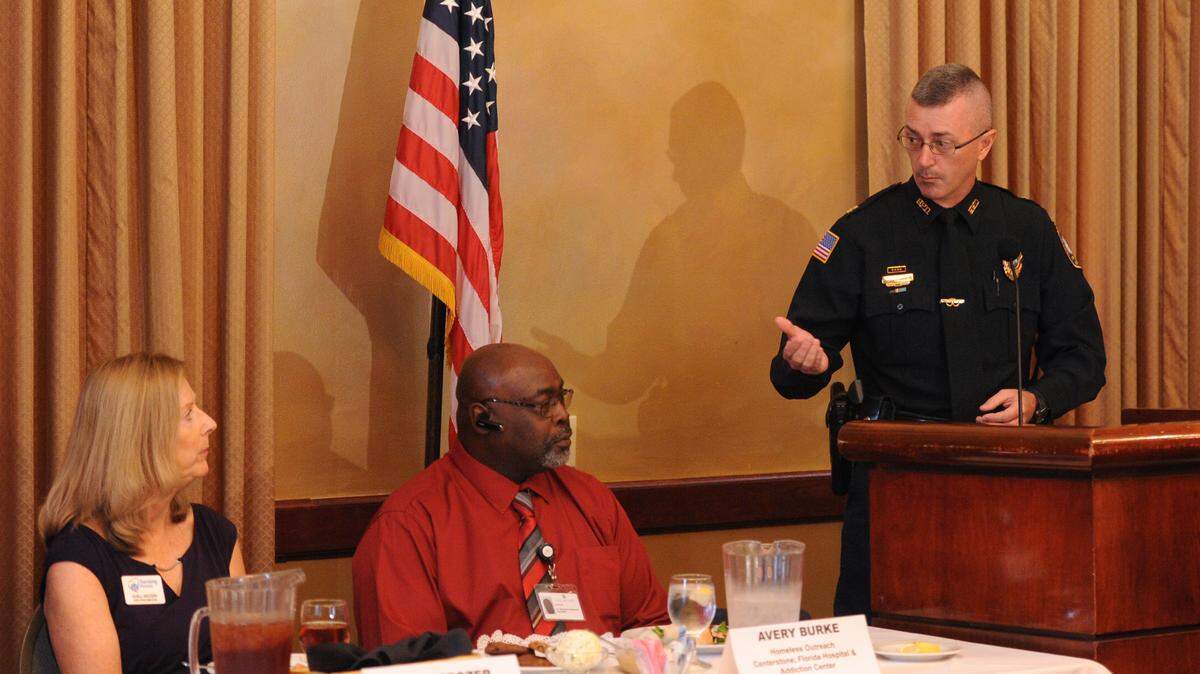
BRADENTON -- Solutions to homelessness in Manatee County may not be as elusive as some think, but the focus needs to turn toward long-term answers, according to speakers at Thursday's Manatee Tiger Bay Club at Pier 22.
Speakers included Turning Points Executive Director Adell Erozer, Centerstone's Avery Burke and Bradenton Police Capt. William Fowler.
"Basically they are you and me," said Erozer, describing the typical homeless person. One definition is an individual or family who has been homeless for one year or has had homeless episodes over three years. Another definition is for anyone who lacks a fixed and adequate nighttime residence.
But putting a definition on the homeless was always difficult and continues to get harder as the face of the homeless change from what old movies used to call "bums" to faces of women and children and working men.
"Ten years ago, 90 percent of the homeless were men," said Erozer. "Now it's half and half."
The Manatee County School District tracks the number of homeless children at 2,000, but Erozer said you can add more than 1,000 to that number due to the number of women in shelters with children too young to attend school.
Burke works with Centerstone's homeless outreach program where they go out and make contact with the homeless to determine what services they need to get off the street. That program is 12 years old and the expectations of finding a percentage of homeless who are mentally ill or fighting substance abuse addiction exists, but there is more to the story.
"The homeless picture is much bigger than we envisioned," said Burke. "We found that homelessness isn't just a street thing. We found out there is more to it. There are doctors, lawyers and business people on the street that went through something in their lives where they turned away from society. We found a camp on the beach that was filled with veterans. We have to find ways to help beyond the short-term services because what happens after we are able to get them into a facility for three or four days and they are released?"
Fowler said police are often the first point of contact for the homeless and if there isn't a criminal situation involved, Bradenton police officers act as a referral service for many "to get them the help they need. What we see are a lot of women and they are the most vulnerable because they have a lot of men around them. There are cases of sexual abuse and sometimes it's violent. It's the same for the children who are homeless."
Fowler said when he was a patrolman, he dealt with a homeless man on a daily basis who turned out to be a retired U.S. Army colonel who was a Korean and Vietnam veteran. Fowler said when the man retired, he just couldn't be around people anymore.
"There are homeless who commit crimes of opportunity like walking past an open vehicle and taking property to sell," said Fowler. "But there are also homeless who stay to themselves and mind their own business. As police, we have to make sure everyone's rights are protected so that makes it hard, even when we have ordinances because there are people who just need help."
Erozer, along with others, have continued to call on the formation of a homeless task force made up of all segments of the community. When asked Thursday about the formation of such a committee, Erozer said, "There isn't one and it's exactly what I've been asking for. The communities making headway have something like that. But it will take everyone. If one person isn't at the table that needs to be, it won't work."
Mark Young, Herald urban affairs reporter, can be reached at 941-745-7041 or follow him on Twitter@urbanmark2014.
This story was originally published December 3, 2015 at 3:32 PM with the headline "Tiger Bay Club members discuss state of homelessness in Manatee County ."