
Manatee County developers, consumers could have to pay higher county impact fees
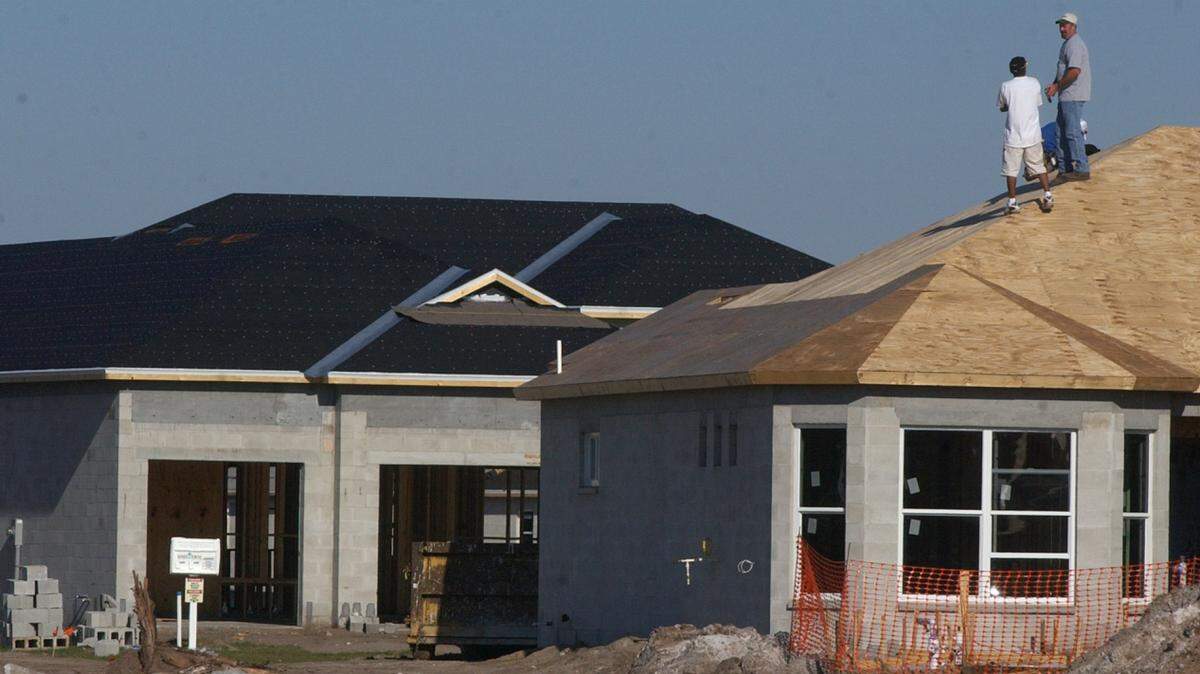
MANATEE — Manatee County developers will find out Thursday just how much more in impact fees they will have to pay for their developments.
During Thursday’s land use meeting, which starts at 9 a.m. in commission chambers, commissioners will decide whether to increase impact fees and by how much. If adopted Thursday, the new fees would become effective April 18, 2016.
County Administrator Ed Hunzeker is recommending the commission raise impact fees by only 90 percent of the amount recommended in a study by consultant TischlerBise, rather than the full amount. Should the commission elect to adopt his recommendation, it would amount to a 29 percent increase in total revenue from the county impact fees, or $4.2 million a year. Adopting it at the full recommendation would be a 43 percent increase in total revenue generated over current rates, or $6.2 million.
At the rates collected today, impact fees generate $14.5 million a year.
“If there is a glitch anywhere, I don’t want to be in the giving back business,” Hunzeker said Wednesday, explaining why he is recommending raising fees by less than the full amount. “You don’t want to go that big that it will disrupt the market. I don’t think it is our intent to disrupt the housing market.”
Hunzeker added that they also need to take into consideration what the surrounding counties levy in way of impact fees.
“You don’t want to be off the market,” Hunzeker said.
Impact fees are collected on newly constructed residential, retail and commercial development and can be used to help pay for new schools, roads, parks, public safety, law enforcement and libraries.
Developers have been vocal at recent meetings, speaking out against the recommended increases in county impact fees and the reinstatement of school impact fees.
Another option would be a gradual raising of fees, such as at 80 percent of the recommended amount, then 90 percent, then 100 percent over three years. If the commission votes to approve anything less than 70 percent of the recommended fee amount, the county would actually bring in less revenue from impact fees than today.
If the county got another revenue source such an infrastructure sales tax, Hunzeker said, then the county could leave the impact fees at 80 percent of the study amount. A half-cent sales tax would generate about $27 million annually, Hunzeker said, with about 90 percent of the revenue from such a tax spent on maintaining existing assets.
“At the end of the day, we still have to build this stuff,” Hunzeker said. “We still have roads to be built to deal with new growth.”
If the commission votes to raise impact fees recommended by the study, Manatee County will go from one of the Gulf Coast counties with the lowest fees to a county with some of the highest. At a Nov. 10 work session, this gave some commissioners pause.
Currently, for a new single-family, detached 2,000-square-foot, three-bedroom home, the maximum fee Manatee County levies is $11,846, which places the county on the lower end of the spectrum. But if the county approves the increase recommended by the consultant, which includes new fees such as one for libraries, Manatee County’s maximum fee would increase to $22,167, which would include school impact fees.
In February 2007, before the recession, total impact fees charged on a three-bedroom, detached home was $9,005, which excluded the administrative fee. For the same home at the 90 percent of the study amounts, the fees, which excluded the recommended administrative fee, could range from $6,415 to $9,302 depending on the area of the county.
“That’s a pretty big hit in the market,” said Dan Schlandt, deputy county administrator.
The school board has passed a resolution calling for reinstating school impact fees, which will come before the commission for approval in January.
A developer’s proposal
Calling the recommended increase in impact fees an “inequity” in a Nov. 25 letter to Commission Chairwoman Betsy Benac, Carlos Beruff, owner of Medallion Home, suggests that impact fees stay at current levels and “the county require a ‘true-up’ for new homes that close for less than $289,000,” according to the letter.
Beruff used Fishkind & Associates Inc. of Orlando to “study at what price point a new home sale becomes fiscally neutral in Manatee County.” According to the report, the price point of fiscal neutrality for a new home sale under the proposed higher impact fees is $226,000, where under the current impact fees a new home sale that closes at $289,000 is fiscally neutral.
“A new home that closes at $289,000 has zero fiscal impact on Manatee County because the revenues it creates to the benefit of the county cancel out the expenses incurred by the county as a result of this household formation,” Beruff said in the letter. “Currently, 91.4 percent of Medallion Home Manatee County sales exceed $289,000 and are thus creating net revenue increases for the county; not draining the county fiscally as some would have you believe.”
Beruff said the “true-up” solution “gives the county the ability to ensure they mitigate against new home sales that do not carry their own fiscal weight, and provide for punitive measures in dealing with non-compliant builders.”
By possibly increasing impact fees, Beruff said, “it’s unfortunate that as a community we’re trying to solve problems with old methods. ... This method is unfair because it is a targeted tax against an industry that creates high paying jobs, and is the primary cause of increases in county tax rolls.”
Claire Aronson, Manatee County reporter, can be reached at 941-745-7024. Follow her on Twitter @Claire_Aronson.
This story was originally published December 2, 2015 at 4:59 PM with the headline "Manatee County developers, consumers could have to pay higher county impact fees ."