
It was a long way from Tipperary to Manatee County for the Fogarty clan
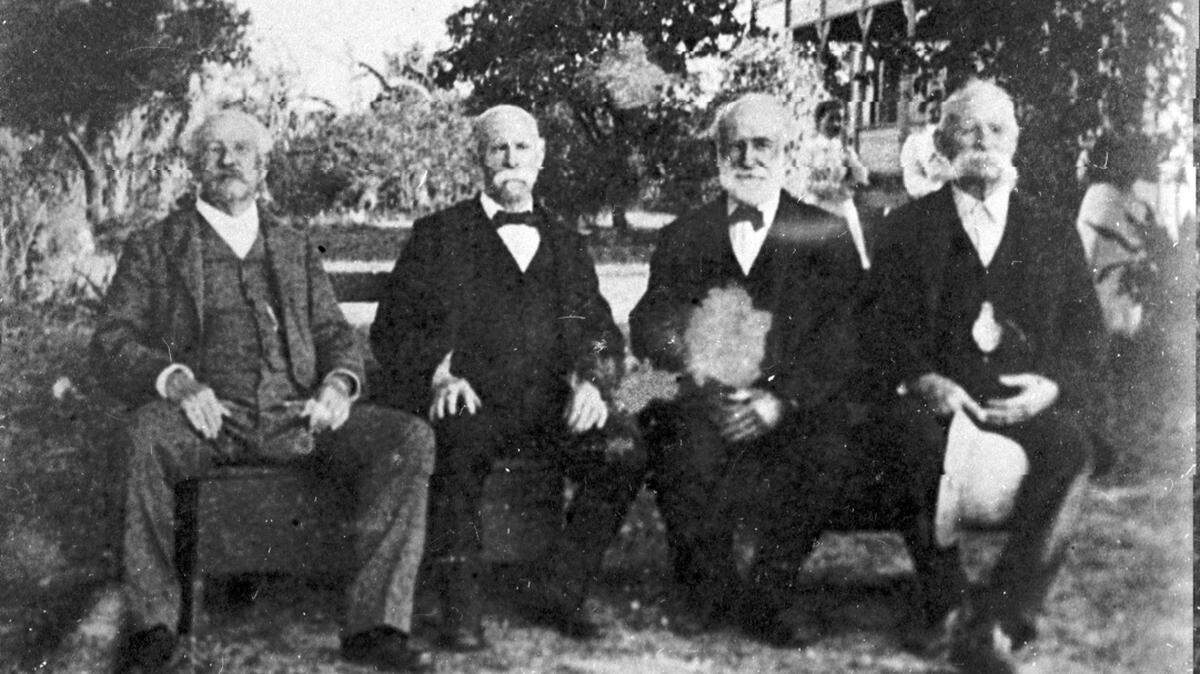
No, this story is not about the Great War, as some would guess from the title. It's the story of how far a family came in their journey to claim the American Dream, and a tangible piece of their legacy which has been preserved for future generations.
The story, as we know it, began with the Irish Potato Famine. In 1836, Patrick and Eliza Fogarty immigrated with their three sons; John, Bartholomew or "Tole", and William. They came from County Tipperary, Ireland, to the United States escaping the dismal conditions of their homeland to find new opportunities abroad. While the family initially immigrated to New York, within a few short months they had tired of the climate and moved southward to St. Augustine, Fla., where they remained for 11 years.
However, Patrick was the restless sort; and in 1847 he moved the family to Key West. While there, amongst the bustling docks and trade ships, the buzz of the gold rush in California lured Patrick away in search of adventure and fortune; leaving Eliza alone to raise the children, which had now grown to five in number.
During Patrick's adventure in 1851, he took ill and died far away from his family, never finding his fortune. Eliza supported the family by running a boarding house. But she eventually decided to return the family to New York, in 1856, to enable her daughter Julia to pursue an education. The eldest son, John, returned to Key West having trained as a carpenter's apprentice, and sailor. Brother Tole, began training as a ships carpenter alongside him in 1858.
During a fishing trip, in 1865, a storm blew the vessel Grover G. King off its northbound course from Key West. Now a sea captain, John Fogarty sailed into the mouth of the Manatee River for protection. When the storm lifted, Fogarty liked what he saw. The wide river, natural harbor, abundant wildlife, large schools of fish, and woods thick with oak and cedar convinced him this was the place to live and to turn his family's boatbuilding trade into opportunity.
The year 1866 would mark the start of the boat-building industry in Manatee County; when John and his brothers, William and "Tole," moved from Key West to settle in Manatee County. In the years before automobiles and railroads, coastal communities depended on boats as their main form of transportation
and commerce. The family developed a thriving business constructing smacks, schooners, sloops and yawls as well as smaller boats.
The Fogartys claimed land grants totaling 135 acres between what today is Manatee Avenue and the Manatee River, between 26th and 37th Streets West. The area became known as Fogartyville and included homes, a general store, bakery, small dairy, two churches, a cemetery, warehouses, wharves and buildings for the construction of ships and boats. In all, seven Fogartys became ship captains and sailed ships from the Manatee River and Tampa Bay throughout the world.
At the age of 19, Tole's son, Bartholomew, or Capt. Bat as he became known, built his first ship. For the next 60 years, Capt. Bat constructed hundreds of sailing ships, power vessels, small boats and skiffs the way his father and uncles taught him.
The structure housing his last boat works was closed at his death in 1944. In 1993, Captain Bat'sgrandson, Charles Fogarty, died, and his sisters-in-law, Margaret Niesiobedzki, and Patricia Blickensderfer, gave the building to the South Florida Museum. Restorers opened the building to find its contents preserved as if in a time capsule: half-hull models, wooden patterns and molds, tools, equipment and belt-driven machinery, just as Capt. Bat left them. Through the combined effort of the museum, the Manatee County Historical Commission, the Florida Maritime Historical Society, and the Fogarty family, the boat works and its contents were preserved, moved to Manatee Village Historical Park, restored by volunteer labor and opened to the public in 1995. Additional equipment and tools from the boat works are on display at the South Florida Museum.
Today, you can enter Capt. Bat's workspace and see how it used to be done. During select special events, you might even witness the old kerosene motors driving antique woodworking machinery which dates back to the 1870s. The Fogarty Boat Works stands as a monument to the enterprising spirit of those who came from far away to find opportunity, grow our country, and settle our community.
Phaedra Carter is the supervisor at Manatee Village Historical Park and native of Manatee County who is dedicated to the preservation of our local heritage.
This story was originally published November 17, 2015 at 11:16 AM with the headline "It was a long way from Tipperary to Manatee County for the Fogarty clan ."