
He survived a Speedo. 20 years later, Sarasota dolphin is still making waves
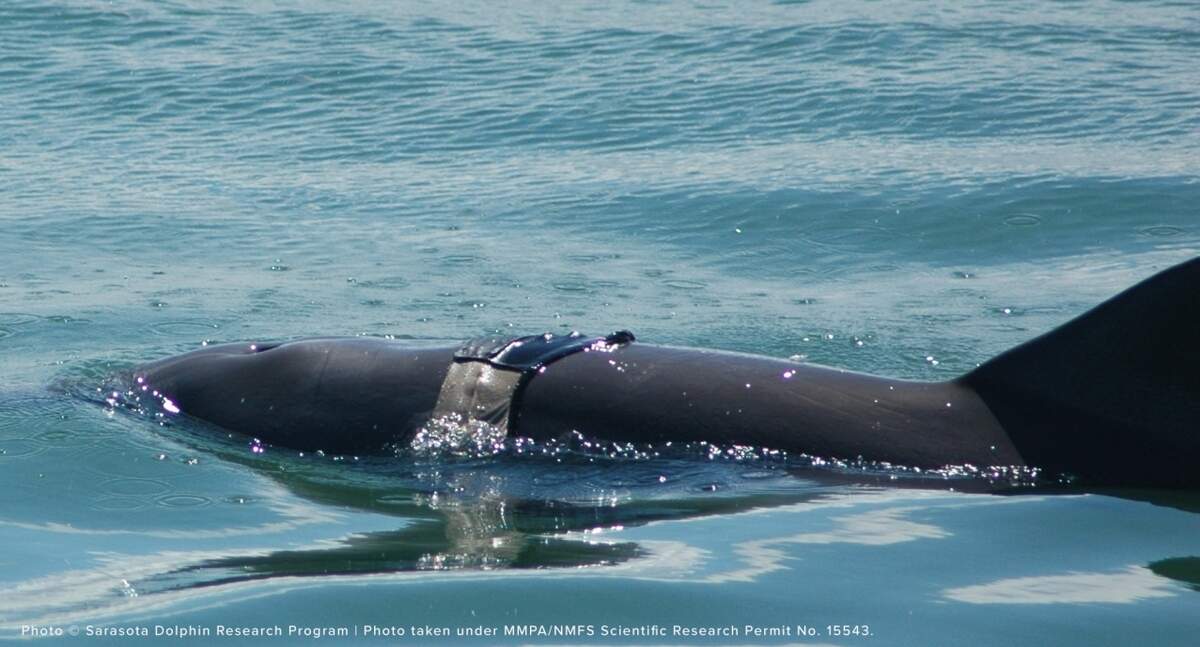
Two decades ago this summer, a bottlenose dolphin made international headlines after he was spotted swimming through Sarasota Bay wearing an extra-large men’s Speedo.
The dolphin, named Scrappy, was found caught in the swimsuit, unable to escape as the fabric cut deep into his soft, gray skin.
Today, Scrappy is still alive, still swimming in Sarasota Bay — and thanks to researchers who freed him — helping tell a much bigger story about dolphin conservation.
Born in 1998, Scrappy owes his life to researchers at the Brookfield Zoo Chicago’s Sarasota Dolphin Research Program, who identified the mammal in distress and rescued him. But for newly-appointed director Katie McHugh, his rescue symbolized more than a heartwarming headline; it exemplified the long-term benefit of wildlife rescues.
That’s why Scrappy’s story has resonated with the Sarasota community for so long. He’s a living, breathing example of how one small mistake can put that animal’s life on the line — and how expert intervention can save them.
“Rescue and intervention cases … really do pay off more than you think, so it’s not just the warm fuzzy feeling of saving that individual, but it really is helping to support them,” McHugh told Suncoast Searchlight. “These are pretty slow-growing, long-lived animals, so every one that we can keep alive in the bay in their local communities is really helpful.”
The Sarasota Dolphin Research Program has observed six generations of dolphin pods since 1970, and recently retired director Randy Wells has seen them all. Wells co-founded the program, overseeing the nonprofit for more than 50 years before retiring on July 1 and handing the reins over to McHugh.
Though technology evolved in the two decades since Scrappy’s incident, the nonprofit’s mission hasn’t wavered. It studies dolphins and other marine animals to provide life-saving data to the public and operates an educational space to spread the word. The organization tracks about 170 dolphins in Sarasota Bay.
Fourth of July weekend will put a lot of boats on the water, so the program is urging the public to be cognizant of their aquatic neighbors.
Pollution and human interference have damaged the health of dolphins in the bay, though Wells said the nonprofit strives to find ways to keep the local marine community thriving.
“A lot of people don’t recognize that these animals are their neighbors,” Wells said. “A lot of them, they and their families, have lived here a lot longer than the humans and their families, and so it becomes more of a shared environment and not just anonymous gray bodies.”
Saving Scrappy from the Speedo
Scrappy didn’t don a Speedo to make a fashion statement.
When the team at Sarasota Dolphin Research Program noticed an unusual object stuck between his blowhole and front fins, they kept a closer eye on him for weeks.
Dolphins don’t have backward mobility, so Scrappy couldn’t easily maneuver out of the Speedo. Dolphin skin is so tender that even a soft piece of fabric can cut through it and put their life at risk.
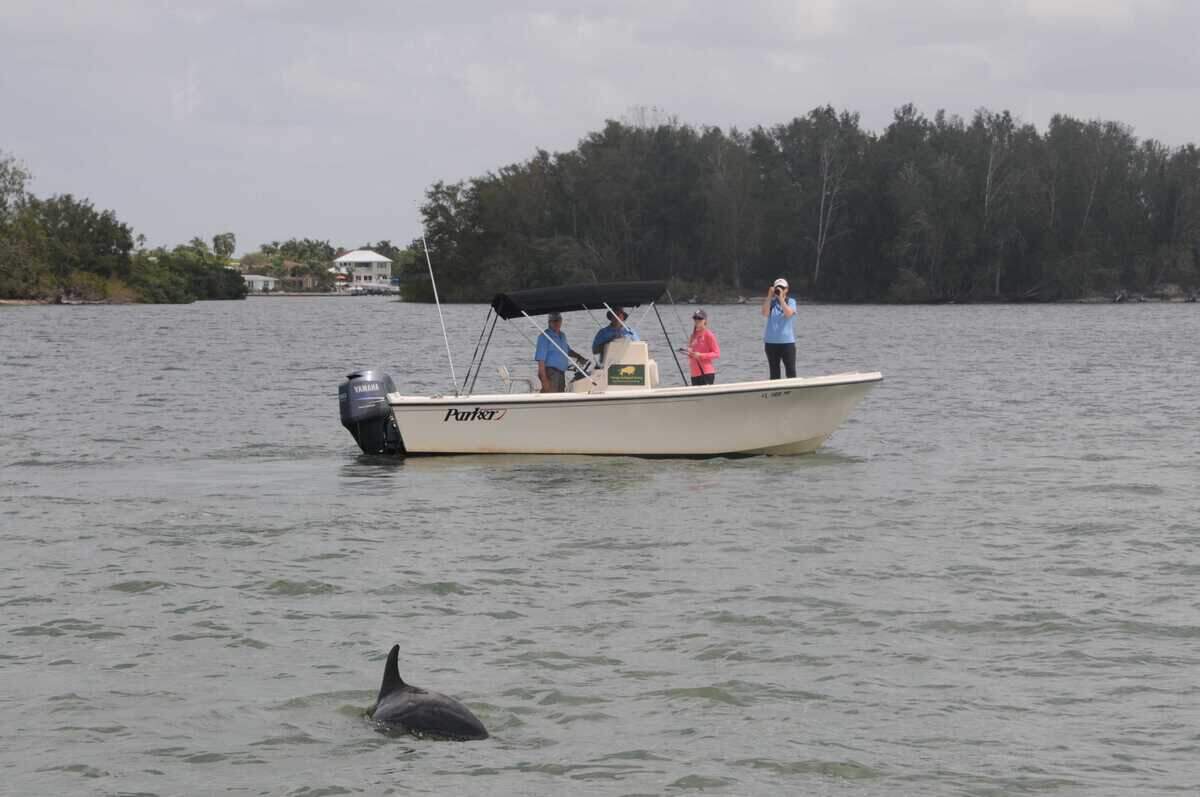
Once researchers realized it wasn’t coming off, they sent out a rescue team.
It was on Aug. 3, 2006, the hottest day of the year, and Scrappy didn’t make things easy. As a young and agile male dolphin, Scrappy swam in waters about 10 to 14 feet deep and didn’t like to sit still.
Two failed attempts later, a brutal Florida thunderstorm began rolling in. It was their last chance to save Scrappy before the inclement weather.
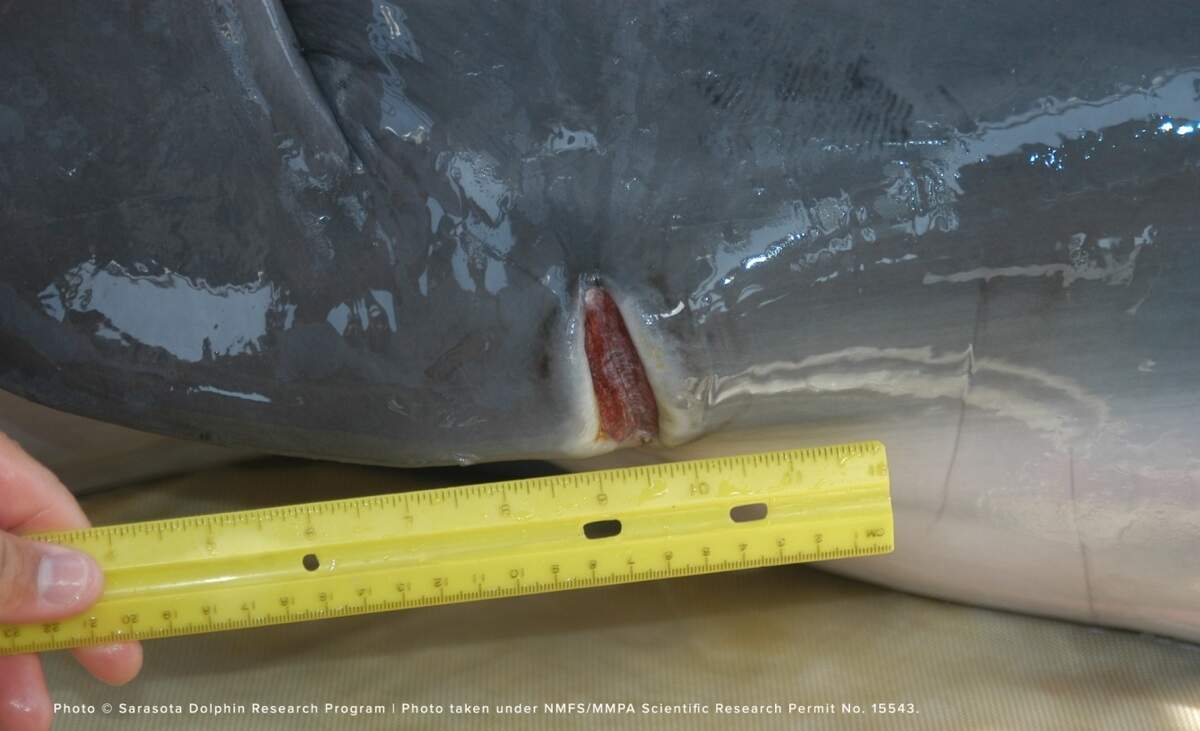
The team used a floating mat to safely position Scrappy so the veterinarians could work on him.
For all the commotion Scrappy’s life-threatening wound caused, Wells said the solution was thankfully much less climactic.
“I was able to take it off with just my little finger pulling it forward,” Wells said.
McHugh started with the research program as an intern in 2000 and came back as one of Wells’ PhD students at the time of Scrappy’s rescue. She helped track Scrappy when the Speedo was stuck on him and monitored his wellbeing after his release.
Scrappy’s story is peculiar, heartbreaking and heartwarming all at once, but McHugh said the frequency of human pollution and littering means not all creatures get the same second chance.
“This is one that is such a weird story, but has a happy ending,” McHugh said. “But there’s so many more that don’t go this way.”
Sarasota Dolphin Research Program beyond Scrappy
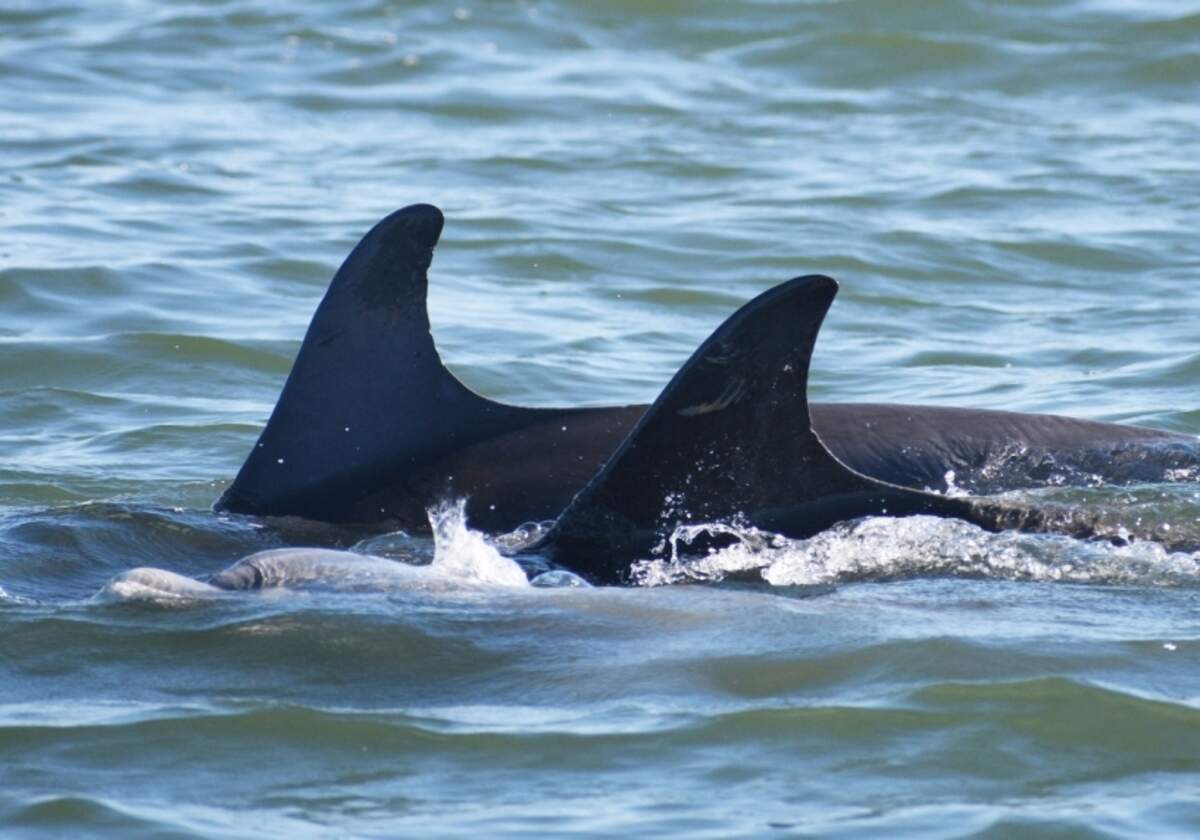
Turning 29 years old on July 5, Scrappy remains one of Sarasota Bay’s most recognizable dolphins. He has been documented by the research program more than 415 times since he was first observed as a calf in 1998.
Today, he and another male dolphin, referred to by researchers as C835, form a long-term alliance, living closely as a bonded pair — another reminder that the rescue allowed him not only to survive, but to continue living a full life in the bay.
But he is just one of the many dolphins and sea animals to receive help from the program.
Researchers there tag marine animals to track and monitor them through boat-based observations, including carrying out photographic identification surveys 10 days each month to check in on the health and social activity of each animal.
If they’re not responding to concerns from their internal research, researchers are taking calls from the public reporting marine animals in danger through Mote Marine’s Stranding Investigations program.
They also communicate with the National Oceanic and Atmospheric Administration to assess potentially dangerous situations and coordinate rescues.
If Scrappy were found today, the team would blend their timeless techniques with advancements in new technology, including an acoustic monitoring network. This technology, known as the Sarasota Bay Listening Network, uses multiple hydrophone stations around the bay to pick up sound clips of dolphins and manatees to make them accessible for researchers.
The hydrophone stations upload real-time audio clips to a website. This allows them to find dolphins quicker by having both a visual and auditorial clue of where each one is.
It also gives them an understanding of how dolphins are interacting with their environment and where they can be heard — even when no one is watching them from the boat.
The program’s impact extends far beyond dolphins. Wells noted that dolphins breathe the same air, eat the same fish and swim in the same waters as humans, meaning that just looking at their lungs and stomach contents can be a strong indicator of the health risks for humans.
“Our neighbors are telling us what could be happening or what is happening to us,” Wells said. “And so it just puts a point on how pervasive some of these pollution sources are.”
By conducting these tests, researchers can better understand how dolphins and other marine animals are settling into their environment. Even when red tides deplete their food sources by up to 75%, or waters are warm enough to harbor pathogens that can kill them, Wells said the dolphins of Sarasota Bay mostly stick together and tough out those obstacles side-by-side.
“They live in an ecological cul-de-sac,” Wells said. “No matter how bad things have gotten so far, they haven’t left those communities. Nothing is holding them in, but they stay.”
It’s a sign that dolphins in the bay value community and stability just as much as any other Sarasota resident.
Keeping track of the health conditions in the bay also can indicate whether researchers need to intervene and provide medical attention to a marine animal.
Last year, zero dolphin interventions were necessary, down from the usual one to four rescues per year. That’s not cause to call it quits, but Wells said it’s an encouraging sign that the public is taking dolphin conservation seriously.
“We had to go elsewhere and help people,” Wells said. “Whether that’s due to our outreach and education, we can’t say. We’d love to think so, and we certainly will not slow down.”
Wells took a voluntary early retirement, leaving the program to McHugh. He’ll still stay involved in marine research and preservation, but no longer handles administrative duties.
More than half of the staff, composed of 11 full-time and three part-time employees, along with graduate students and interns, have been with the Sarasota Dolphin Research Program for 15 years or more — consistency that helps ensure there are no gaps in their support to marine life.
McHugh is slipping into Wells’ shoes with gratitude.
“I was a kid growing up in Michigan, dreaming that someday I might be a marine biologist,” McHugh said. “Just getting to do that job in the first place was already a dream come true. And then being able to help take this one-of-a-kind program and make sure it continues to grow and have an impact into the future? I still kind of hardly believe it.”
Getting the public on board
One of the biggest challenges facing dolphins in the Sarasota Bay is human interference.
Picking up trash, reporting hurt animals to the Stranding Investigations hotline — at 888- 345-2335 — and exercising caution when fishing or boating are some of the small ways community members can make a big difference.
During Fourth of July weekend and throughout the summer months, Wells said those sentiments are more important than ever.
Researchers find recreational fishing gear is what most commonly hurts local dolphins, and the holiday weekend will bring a higher risk of damage given the high traffic of tourists visiting the Sunshine State.
“If a Speedo did that damage, you know what a fishing line can do,” Wells said.
Wearing polarized sunglasses and boating slowly through shallow waters, where animals have a difficult time maneuvering, are some ways to be mindful of local wildlife including dolphins, manatees and sea turtles.
“Don’t forget that when you’re out there having fun and recreating in the bay, that you’re really visiting the homes of our neighbors and the wildlife that call it home,” McHugh said.
That’s why the Sarasota Dolphin Research Program prioritizes educational opportunities. Their job is not just to research these animals, but disseminate that information to the public for maximum impact. Researchers teach about why supporting these animals and ecosystems are crucial — not just for the animals’ sake, but for the safety of entire communities. They meet with stakeholders, publish their research in journals and use social media to spread the word.
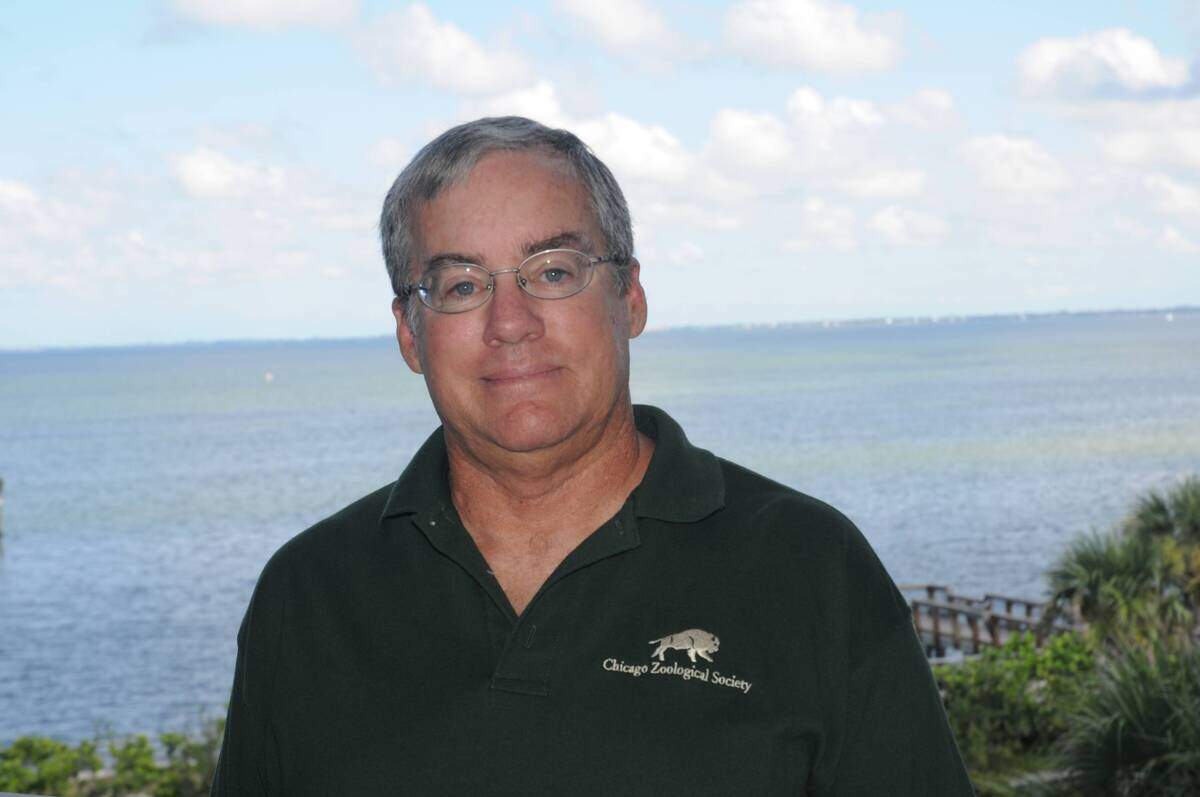
Wells said when he first started the program, dolphins were just numbers on spreadsheets, and there wasn’t a lot he could do to get the public to care about their preservation.
Now, they give names to every dolphin that calls Sarasota Bay home to help the community better understand the need to protect them.
Instead of just being those anonymous gray bodies in the bay, it’s been “gratifying to watch” them slowly being perceived by the public as vital members of the Sarasota community.
“They have families, they have complex social systems, they have things going on in the area similar to what people do, and why not appreciate that without having to anthropomorphize,” Wells said. “You don’t have to think that you know what they’re thinking, you don’t have to think of them as humans in wetsuits, they’re fascinating in their own right.”
This story was produced by Suncoast Searchlight, a nonprofit newsroom of the Community News Collaborative serving Sarasota, Manatee and DeSoto counties. Learn more at suncoastsearchlight.org.