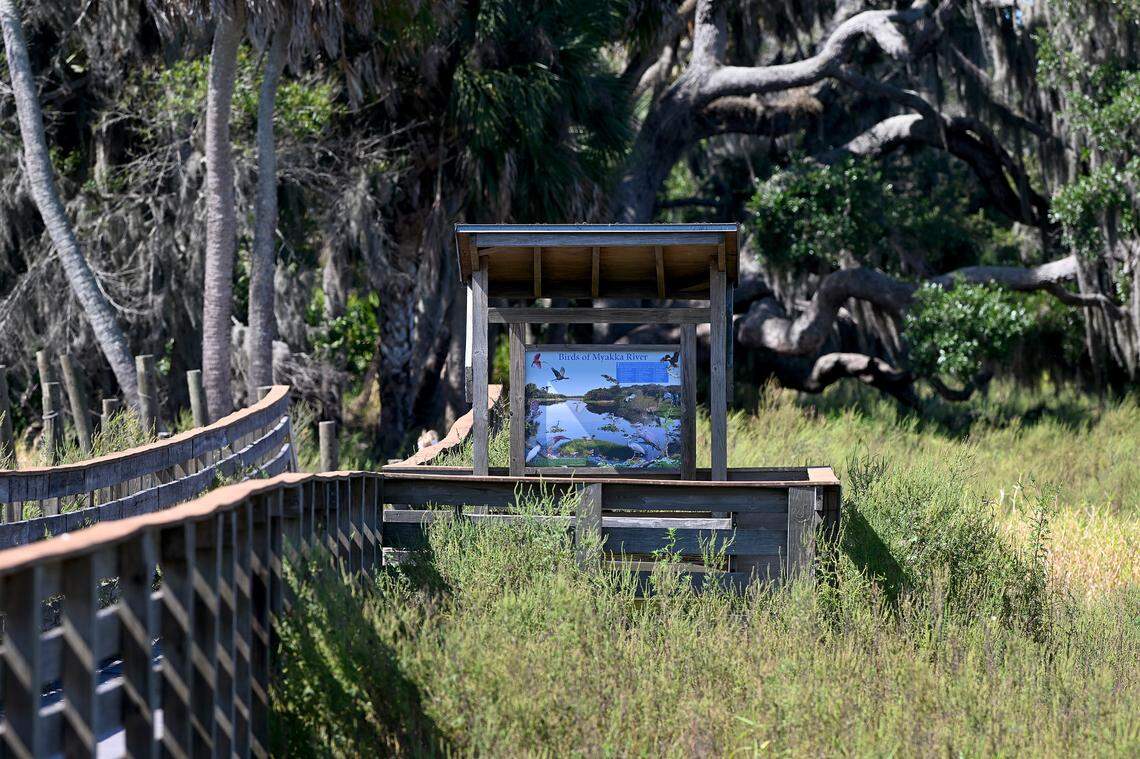
Myakka City residents alarmed by creeping development getting ‘out of hand’
Residents and officials who oversee the Myakka River are worried about the impacts of development inching closer to one of the region’s final frontiers.
Some Myakka City residents are worried about growth threatening the rural way of life that many moved there to pursue, and the Myakka River Management Coordinating Council said increased buffers are warranted. However, with Senate Bill 180’s restrictive language, there isn’t much county officials can do to limit nearby development.
At a recent Manatee Board of County Commissioners meeting, Commissioner Carol Ann Felts brought forward a discussion about what the county could be doing to preserve Myakka.
While a federal preservation designation could be on the way, county staffers are also looking at a more immediate solution by adding more boots on the ground to enforce code violations near the river.
Those who live closest to the Myakka River and the state park say it’s crucial that the county preserves the area from development impacts.
“For us, it’s not just a river. It’s a way of life,” Myakka resident Lindsey Leigh said at the meeting. “The Myakka (River) is a gem for all of us. It defines Myakka City, it represents the rural character and natural beauty that makes our area so special.”
Residents concerned about creeping development
Many residents like Leigh chose to live in Myakka because of the rural, self-sustaining lifestyle.
“We kind of moved out here to get away from urban sprawl,” Leigh said. “That’s literally the point of living out here. I think I can collectively speak for most people that live out here that that’s why we’re here and that’s how we want to keep it.”
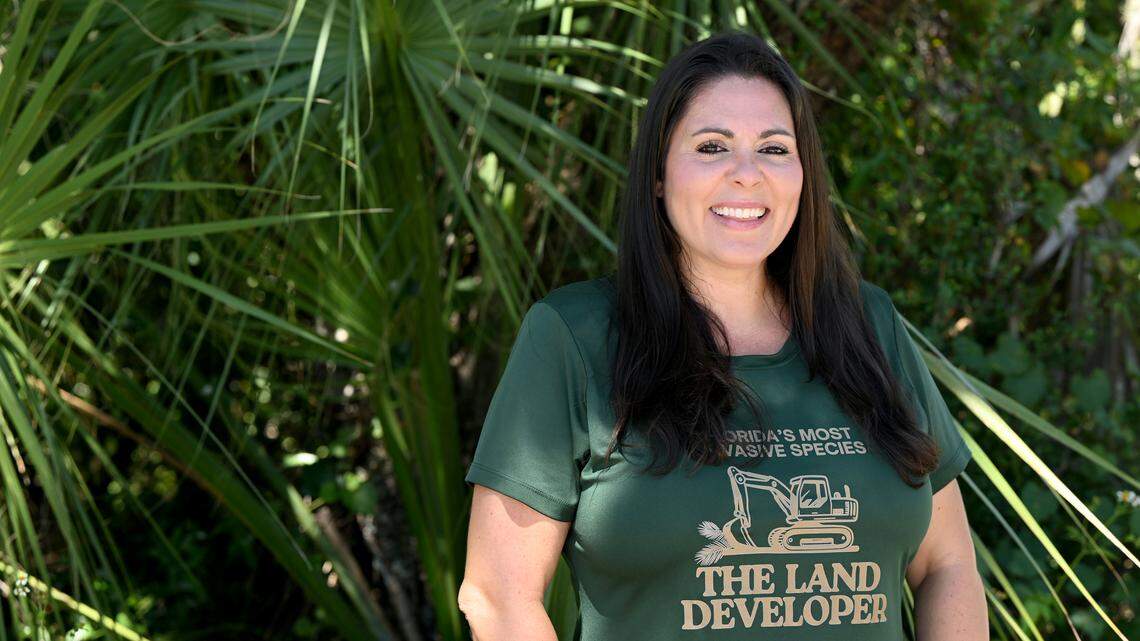
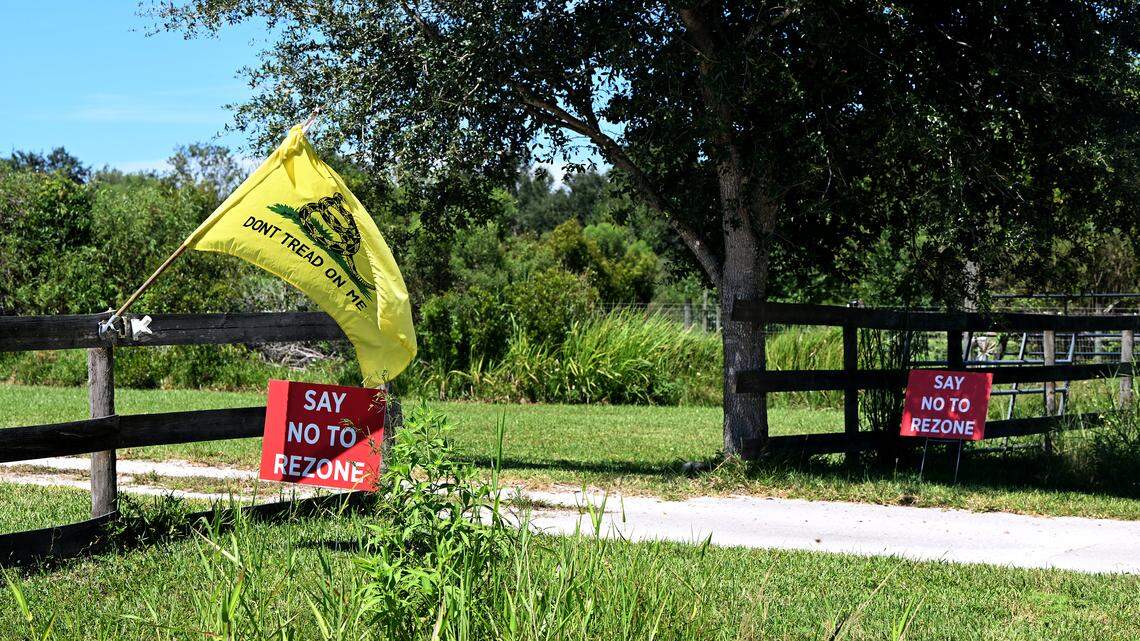
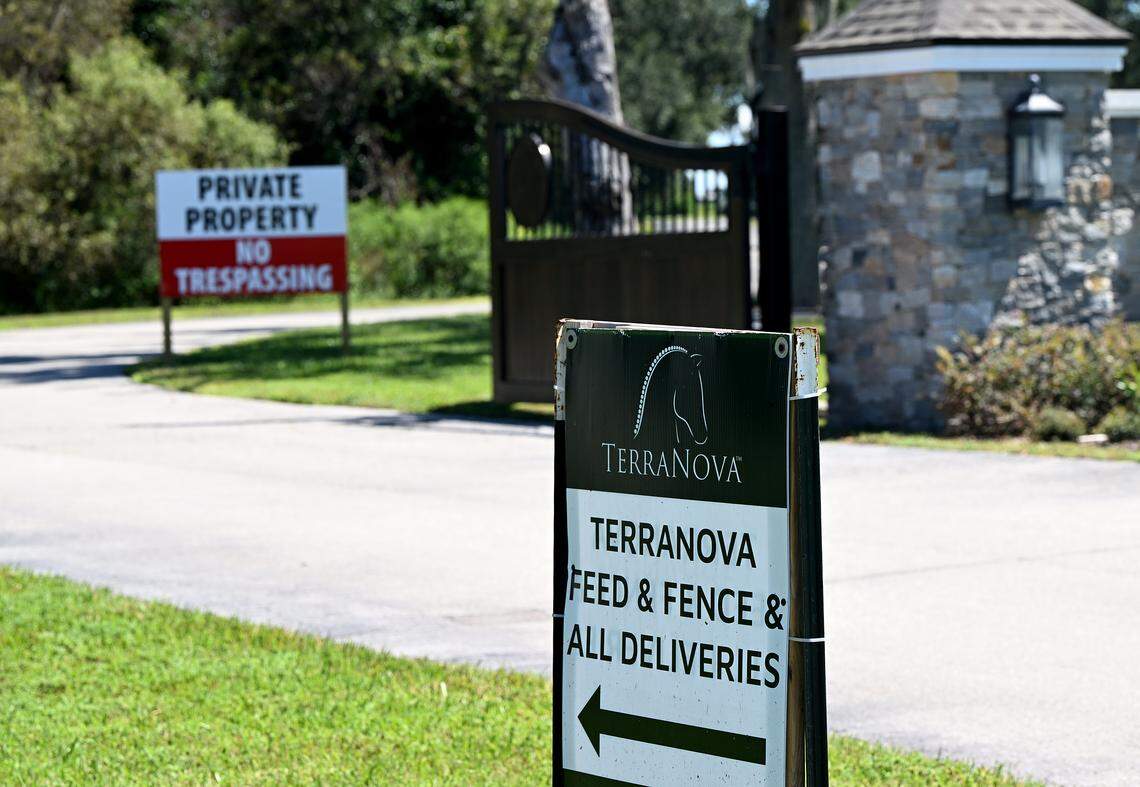
An example of nearby development that Leigh and neighbors are worried about is TerraNova’s plans to build estates on land near its golf course and equestrian center. TerraNova previously planned to request a density increase for the estates.
One of Leigh’s neighbors, Virginia Jones, moved to Myakka from Cape Coral to be more self-sufficient, raise chickens and get a little bit of space. She’s growing concerned about how development could create more light and noise pollution, likely impacting wildlife and livestock.
“I wasn’t against them building TerraNova,” Jones said. “But now, come to find out that they want to rezone those five acre lots to one acre lots…that’s concerning to me.”
Leigh advocated on social media to voice concerns about TerraNova’s proposal to rezone some of its property to increase the density. She said the plans for TerraNova felt out of place.
“It’s like planting a Disney World in the middle of rural agriculture,” Leigh said.
Steve Herrig, owner of TerraNova, said people didn’t have all the facts about what the potential density change would be.
“There are a few people putting things on social media that are completely mischaracterizing what’s going on,” Herrig said.
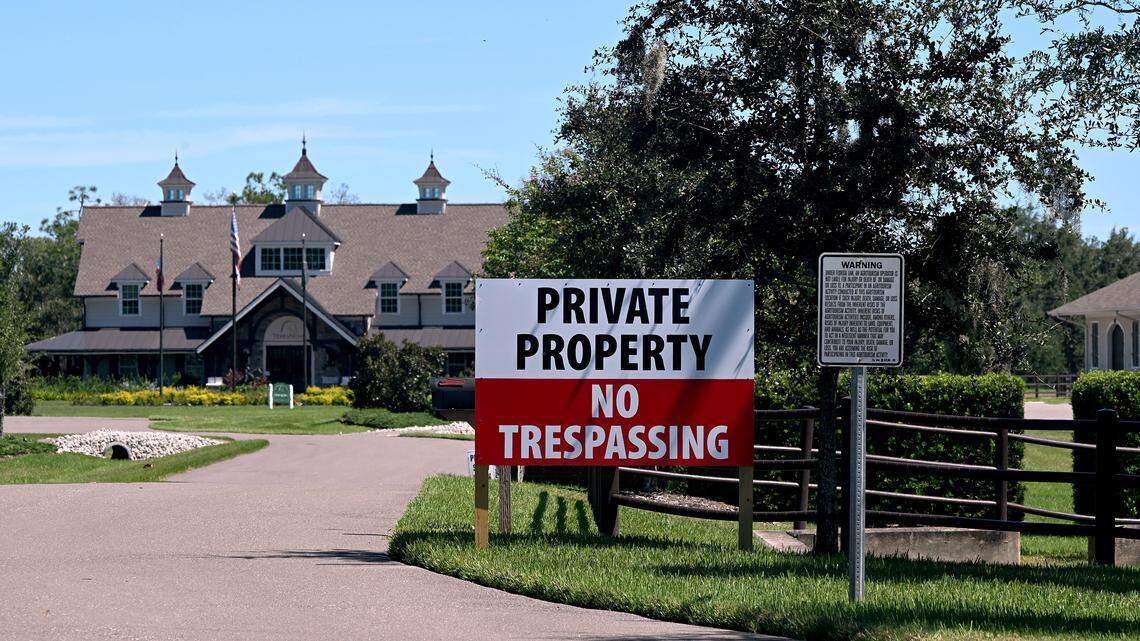
The proposal was to change the density minimums from 5-acre lots to 1-acre lots. But Herrig said that didn’t mean every lot would be an acre. The average lot size would have been about 2.5 acres, and the overall density about one unit for every 10 acres, according to Herrig.
“Some, maybe one or two, as small as one acre,” Herrig said. “We’re not introducing this new, big density…It’s a lot to do about nothing.”
TerraNova reverses Myakka development plans
However, TerraNova sent a statement to the Bradenton Herald on Wednesday — days after speaking with the Herald — saying the company decided to withdraw its residential rezoning proposal.
“From the beginning, our goal has been to support thoughtful, environmentally responsible development that respects the rural character of Manatee County,” the statement said. “We want Myakka residents to know they are being heard, and we encourage future dialogue to help guide the path forward.”
When talking about environmental impacts, Herrig said he’s done more good for the area than what some residents may think.
“I’m the best thing that ever happened to the river,” Herrig said.
He pointed to the golf course, which he called an “environmental engineering marvel” and claims it has no runoff because of a multi-million dollar investment. Herrig also said he’s also planting over 3,000 new trees as a part of the process, and is looking to put some of his land into conservation easements.
To Leigh, TerraNova is just one example of development that has slowly started to infringe on those who are trying to maintain a rural lifestyle. She worried that, if TerraNova continued its rezoning request, it could set a precedent for other developers.
“I think growth is inevitable,” Leigh said. “But I think the magnitude of growth out here is out of hand. I feel like every day there’s a new rezoning request that’s popping up, or a new plot of land that’s been sold.”
She’s not against development entirely, and wishes developers like TerraNova would have more active conversations with neighbors.
“I think there’s a responsible way for us to coexist,” Leigh said. “I think there’s a way for everybody to cohabitate. Rezoning is not it.”
TerraNova’s statement said the company will host community engagement sessions to hear from residents more and ensure transpracncy.
“By working together in this way, residents will have the opportunity to better understand our plans while helping us ensure that TerraNova remains a positive partner in our community — by supporting environmental stewardship, economic growth and cultural contributions that strengthen the community,” the statement said.
What protections are available for Myakka?
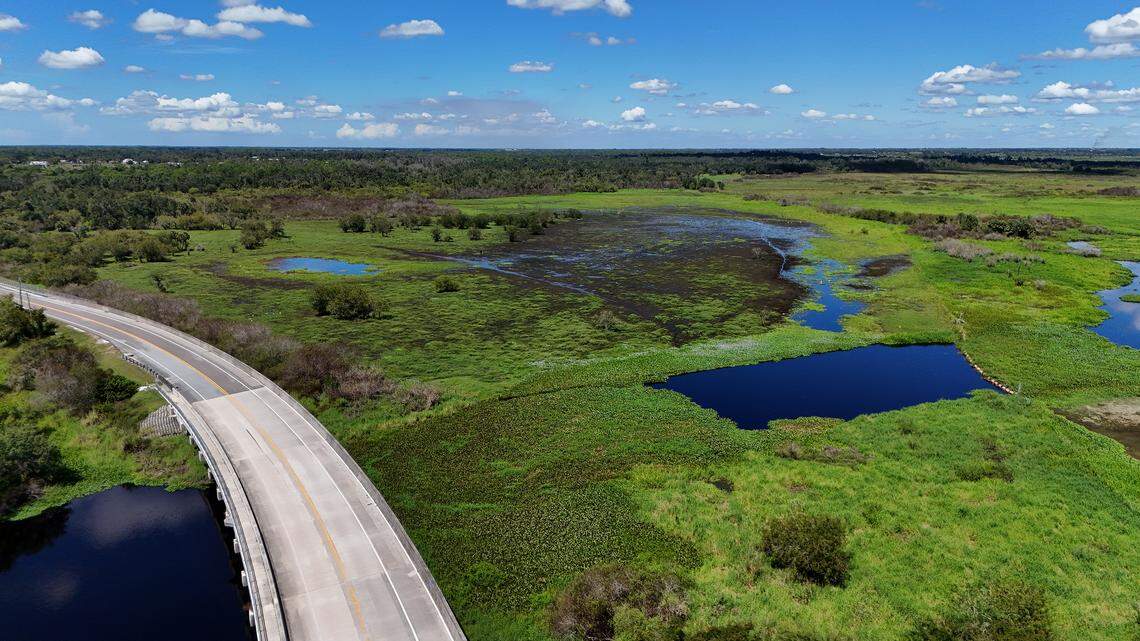
In the 1980s, officials in Sarasota and Manatee Counties debated whether to designate the Myakka River as a “Wild and Scenic River” to grant it state protection. State Sen. Bob Johnson made that a reality for the Sarasota County portion of the Myakka River with the Myakka River Wild and Scenic Designation and Preservation Act of 1985.
However, the Manatee County portion of the Myakka River does not have the same designation.
Director of Natural Resources Charlie Hunsicker said, at the time, the county was concerned that the designation would create a “non-degradation standard.” This would mean that pollutants carried into the river could not increase once the designation was put in place.
For example, if a cattle farmer wanted to switch to a large citrus farm, the farmer likely would not have been allowed to do so because it would cause more runoff, according to Hunsicker.
“We were very cautious about engaging and embracing a watershed-wide restriction…and felt at the time that the rules that Manatee County had in place were sufficient to protect land uses,” Hunsicker said.
The Wild and Scenic River designation instituted additional wetlands buffers and setback requirements. But on the Manatee County side, similar setback requirements disappeared at the will of a former board and, since then, the new board has been handcuffed by SB 180 to re-institute those protections.
Congressmen Greg Steube and Vern Buchanan also introduced the Myakka Wild and Scenic River Act of 2025, which would give federal protection to the Sarasota County portion of the Myakka River if passed.
Director of Land Protection at Big Waters Land Trust Brooke Langston said the current state designation also gives officials more power to enforce violations.
“That gives this higher level of protection and it’s more egregious to violate the river if it has this designation,” Langston said.
Langston added that Myakka River is a prime example of Big Waters Land Trust’s five conservation values: clean water, sustainable agriculture, access for all, carbon sequestration and coastal protection.
“The river provides drinking water and recreational water for us and our visitors and our neighbors, and it’s really important to keep that clean,” Langston said. “By protecting special places like the Myakka, we provide trails and open spaces and picnic areas and stretches of river to paddle.”
When asked what stakeholders could do going forward in terms of conservation and balancing development, Langston said it’s important to have conversations and find common ground.
“Get to the table, have the conversation as soon as you can,” Langston suggested. “Don’t make it a lecture. Don’t make it a guilt trip.”
Potential to add more boots on the ground
Some residents and city officials say not enough is being done to protect the Manatee County portion of Myakka, specifically the Myakka State Park and the river.
“Our natural resources department has not kept up and, in my opinion, has failed us,” Leigh said. “Oversight is weak, urgency is lacking, and that should concern every single person in this room.”
Felts said the county is handcuffed by SB 180 in terms of applying additional protections of buffers in Myakka, but she wanted to start a discussion about other ways to address issues she has heard about in the area.
“Stop telling me what we can’t do and let’s think harder about what we can,” Felts said.
Jono Miller chairs the Myakka River Management Coordinating Council, a product of the 1985 act. He told commissioners at the Sept. 16 meeting that the council has noticed illegal vegetation clearing and increased turbidity — or cloudiness — in the river.
Miller said healthy water in Myakka River should be clear, but with a brown tint due to natural tannins. In some parts though, the water is murkier and cloudy from runoff and nutrients.
Miller used the analogy that the water should look like iced tea, but it’s starting to look more like chocolate milk.
In August, the council recommended the county create additional buffers and setbacks from the Myakka River protection zone, but Miller said he would not recommend the county consider that now due to the implications of SB 180.
Rather, Miller said there is more the county could do about enforcement of development standards near the river.
“I think the job’s not getting done right now, and so there needs to be ways that the county steps up, whether that’s better monitoring, better enforcement, more inspection, more land acquisition,” Miller said. “We’re losing ground right now.”
One possibility is adding two new positions to address the “lack of staff time to touch the problem locations with frequency necessary during active land clearing and construction activity,” a county spokesperson said.
“Site inspections that occur during those initial phases for their environmental impact would be important,” Hunsicker said. “And I’m not so sure we’re up to speed on being able to make that happen at the moment.”
Staff suggested two “inspector” positions to enhance the program, but exact titles and salaries had not been determined. Commissioner George Kruse said staff would need to come back to the board with a more solidified plan before the board would consider adding any positions, adding the board already decided to cut many other positions to make next year’s budget work.
The board also suggested that Hunsicker work to see if the Manatee County portion of Myakka River could be included in Buchanan and Stuebe’s proposal.