Bradenton spills 1.7 million gallons of sewage in Manatee River, report says
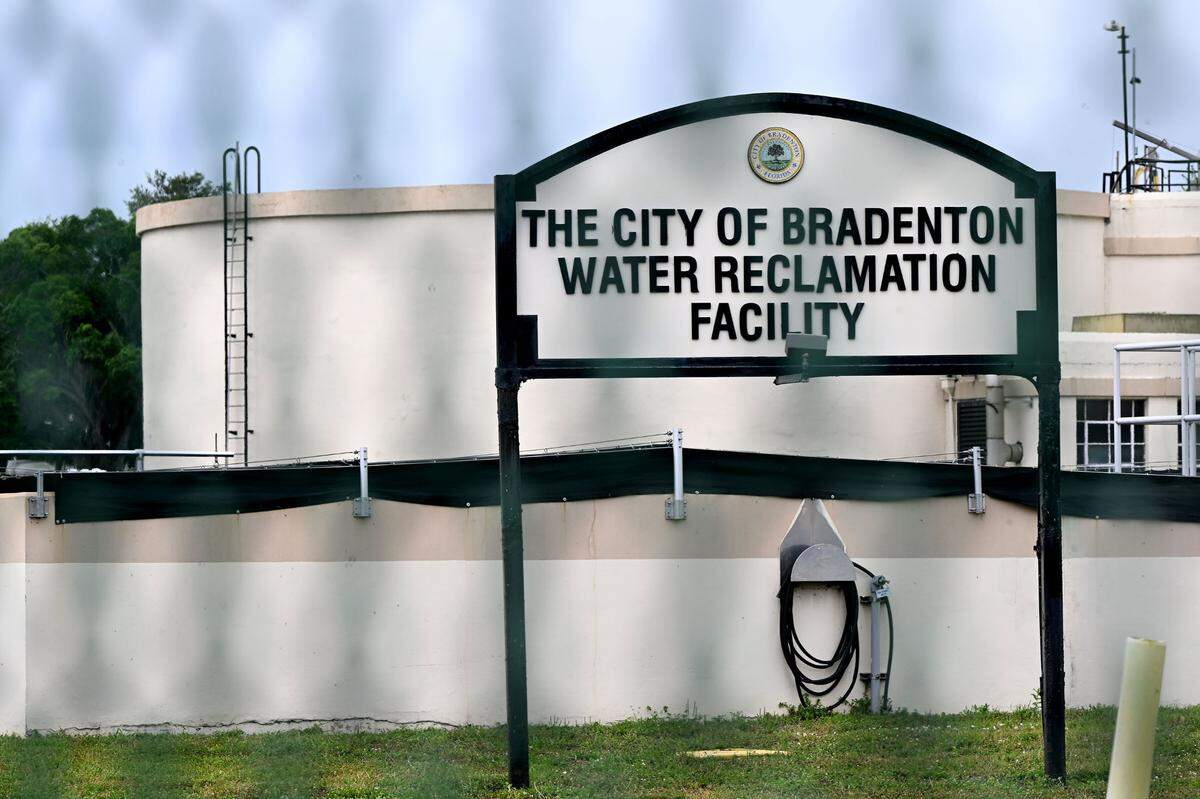
Bradenton’s wastewater plant recently spilled an estimated 1.7 million gallons of sewage into the Manatee River during an overflow at the plant, a report filed by the city says.
It’s the largest spill reported this year at the wastewater plant. It comes as the city is in the midst of millions of dollars in upgrades to its aged and troubled sewer system.
For now, the plant remains a source of constant pollution for the Manatee River. While major sewage spills have been less frequent this year, the plant still regularly exceeds state limits for nutrients in its treated wastewater, a known contributor to water quality problems such as harmful algal blooms like red tide.
Report details Bradenton sewage spill
The city’s report says that on Sept. 8, a plant operator noticed several sewage treatment systems overflowing, causing wastewater to run off the grounds into a nearby roadway and storm drain. To stop the overflow, operators opened the plant’s bypass and allowed partially-treated sewage to discharge into the Manatee River for over five hours. Plant operators closed the bypass the next morning, the report said.
An initial report on the city’s website did not include a total amount of sewage lost, listing the volume only as “greater than 1,000 gallons.” But in a report to the Florida Department of Environmental Protection, city staff disclosed that 1.7 million gallons of wastewater were “spilled or bypassed” during the incident — a volume comparable to about two-and-a-half Olympic swimming pools.
City staff said the plant was receiving “sustained high flows” of wastewater leading up to the incident, and a key piece of equipment was offline due to a mechanical failure.
“Operations staff worked to maintain the treatment process as effectively as possible under the high-flow conditions,” the report said.
A post on the city’s Instagram page, which also did not disclose the total amount of the spill, attributed the overflow to rainy weather.
It’s the biggest spill reported since January, when the city said 450,000 gallons of sewage were released during a similar issue at the plant.
What is Bradenton doing to stop sewage spills?
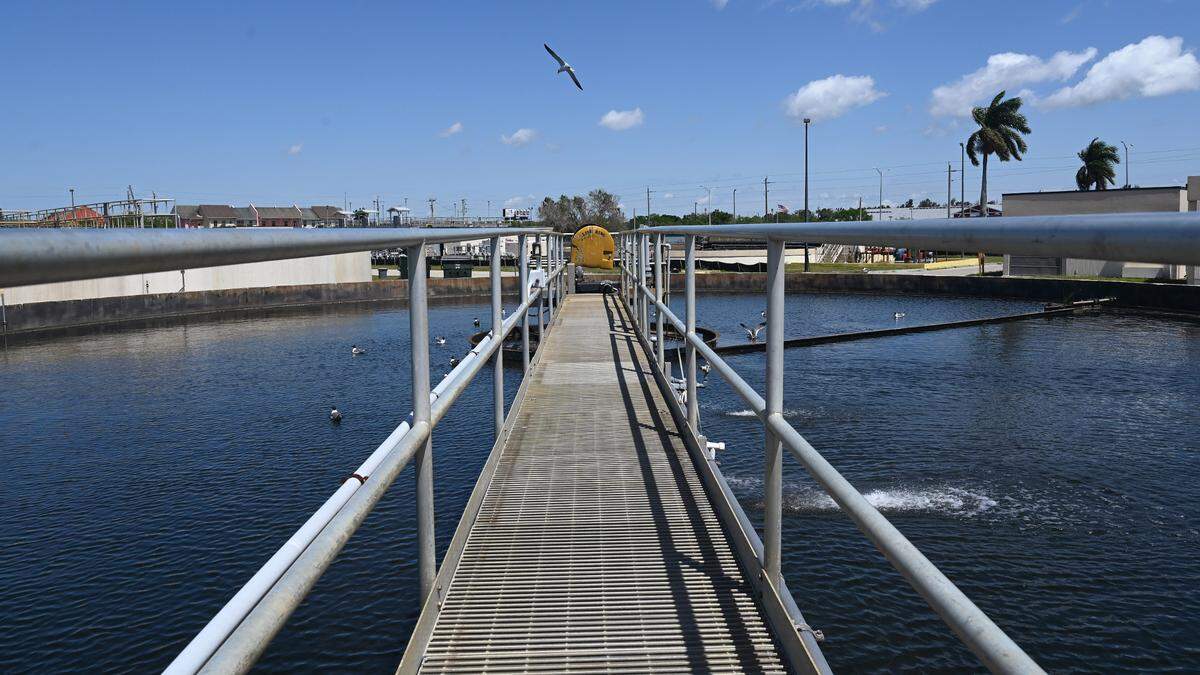
On average, Bradenton’s wastewater plant processes 5 to 6 million gallons of wastewater per day, and it’s designed to handle up to 9 million gallons.
But during heavy rainfall, the flow into the plant can far exceed capacity, overwhelming the system and leading to pollution.
Officials say they are eager to fix the city’s sewage problems. They recently launched a campaign called “Face It, Fix It” to highlight over $100 million in completed and planned upgrades.
They include $50 million in projects to increase the wastewater plant’s capacity, including a fourth clarifier tank scheduled to be complete this year, $24 million for lining pipes to stop rainwater intrusion and $30 million for lift station upgrades.
The city also faces a state-imposed deadline of 2032 to stop discharging its treated wastewater into the Manatee River.
To comply, the city is building a deep injection well that officials estimate will allow up to 10 million gallons per day of treated wastewater to be pumped underground into the Florida Aquifer. Part of the $13 million project is expected to be completed this year.
Permanent fix for sewage problem still years away
While some improvements will be done soon, the city says a permanent fix is still years away.
“Fixing Bradenton’s wastewater system is a long-term project,” a brochure for the “Face It, Fix It” campaign says. “The City is committed to rebuilding our infrastructure, but it will take years to complete.”
In the meantime, pollution continues to cost the city and local water quality.
Bradenton’s frequent pollution violations rack up financial penalties from the state, and, under the terms of a legal settlement reached with advocacy group Suncoast Waterkeeper in 2022, the city must pay additional fines to support water quality improvement projects.
The Florida Department of Environmental Protection considers the Manatee River “impaired” for high levels of nutrients and fecal bacteria. The river has also lost almost 200 acres of seagrass — an indicator of ecosystem health — over the last decade, according to Southwest Florida Water Management District data.