
Is Manatee County ready for climate change flooding? New report has answers
A new local study found that increased flooding caused by climate change poses a significant threat to over 90% of Manatee County’s infrastructure.
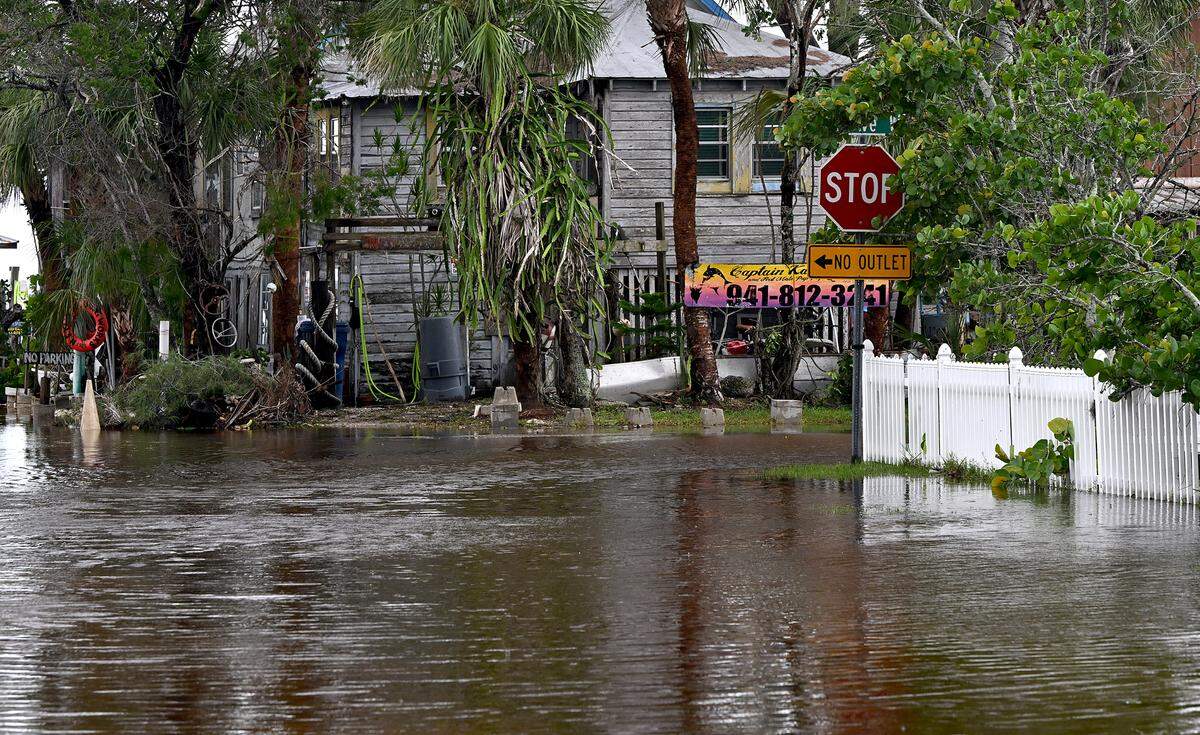
Last year’s hurricane season demonstrated that the county’s infrastructure is already struggling to handle extreme rainfall, storm surge and flooding events, problems that the Manatee County Government study notes are only expected to intensify going forward.
The state-funded study shows that roads, bridges, schools, hospitals, airports, emergency responder stations, the port and the county jail are among hundreds of key facilities that could be damaged or compromised by flooding if nothing is done to adapt.
While the 522-page report focuses on public assets, sea level rise and increased rainfall caused by climate change pose a major threat to private properties, too. The same flooding problems are expected to impact homes, condos and apartment buildings throughout the county.
The Vulnerability Assessment is part of the Resilient Florida Program, an initiative passed into law in 2021, “to prepare communities for the impacts of sea level rise, intensified storms and flooding.” The program does not directly address climate change or its root causes, instead focusing on adapting to its effects.
The Florida Department of Environmental Protection awarded Manatee County a $75,000 grant to complete the study in 2022. The state has since awarded the county over $1.7 million to boost its flood-resilience efforts.
County staff worked with Cummins Cederberg, a St. Petersburg-based coastal engineering firm, to analyze data and run projections on future flooding from four different sources: sea level rise, high tide flooding, extreme rainfall and storm surge.
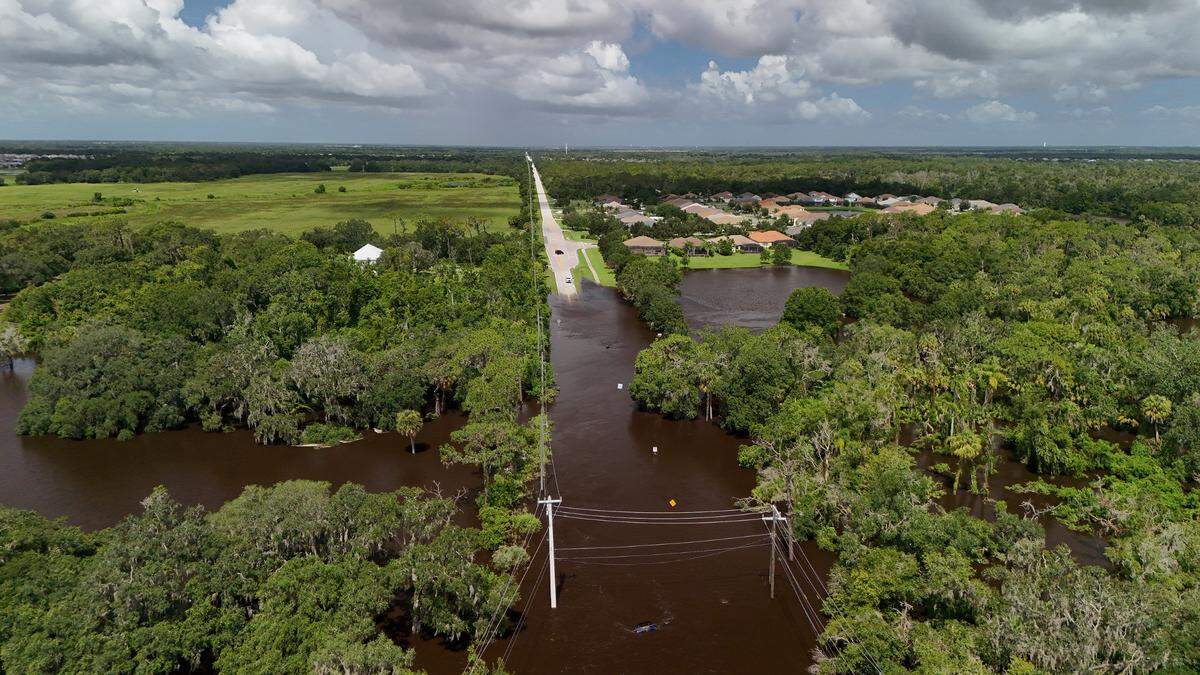
Key infrastructure at ‘high risk’
From a list of over 130,000 county assets, the study narrowed in on about 2,400 pieces of key infrastructure considered to be the most “critically and regionally significant.” Of those, 94% were considered at risk from flooding: 998 (41%) at low risk, 835 (34%) at medium risk and 461 (19%) at high risk.
The study used federal data to examine the county’s potential flooding risk by 2050 and 2080, as well as during major storm events. It also identified 13 “focus areas” where flooding needs to be addressed, including Anna Maria Island and Longboat Key, Cortez, Bradenton, Ellenton and Palmetto, Rubonia and Terra Ceia, Lakewood Ranch, Myakka City, Braden River and the upper Manatee River area.
Sherri Swanson, the county’s ecological and marine resources division manager, noted that the study is helpful because it gives an “overall picture” — showing “where multiple risks might overlap and compound” flooding.
While the report underscores the severe threat that flooding poses to Manatee County, it also comes with some good news.
Now that the assessment is complete, Manatee County will be able to access additional sources of state grant funding for projects to strengthen its infrastructure.
“Importantly, this Vulnerability Assessment helps us identify and focus on flood-prone infrastructure, guiding future adaptation projects and opening the door to future grant funding opportunities,” Swanson said.
Staff presented the study to the Board of County Commissioners for final approval at a recent meeting.
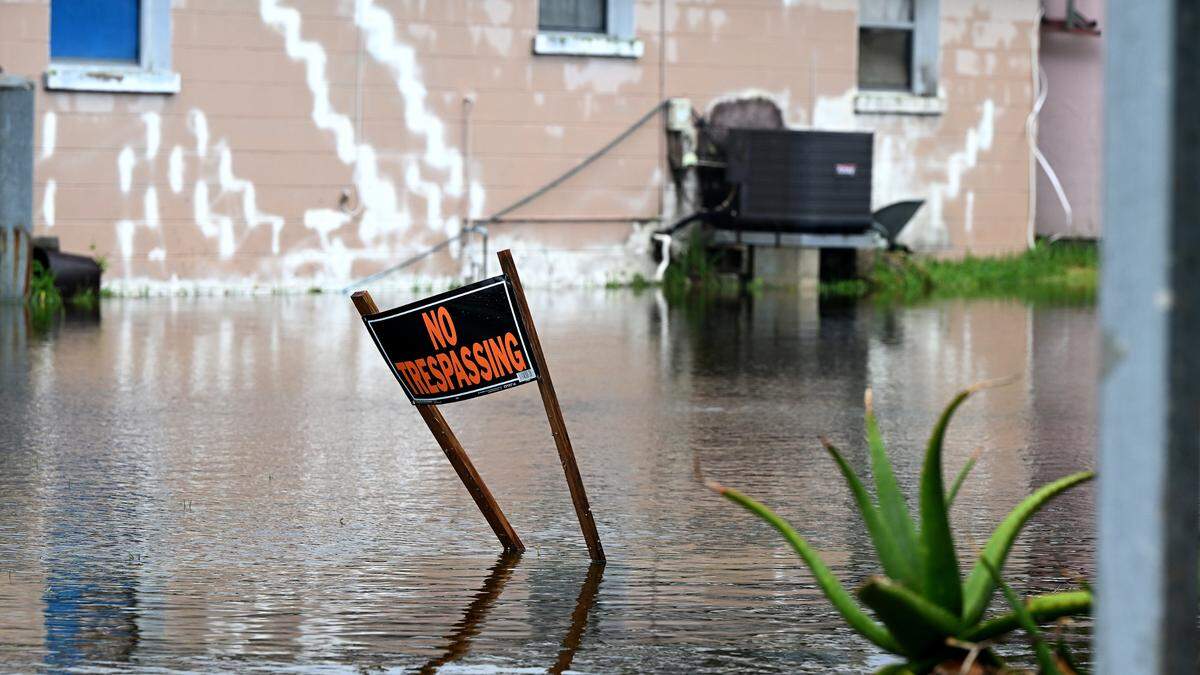
Flooding study takeaways
Here’s a closer look at some takeaways from the Vulnerability Assessment.
- Key facilities at high risk of flooding: The report identified 461 county assets at high risk from flooding, including Sea Port Manatee, Manatee Memorial Hospital, Sarasota-Bradenton International Airport, the Manatee County Jail, fire stations, roads and bridges, lift stations and more.
- Widespread flooding risk: The study found that increased flooding threats will be prevalent across the county, from Anna Maria Island and coastal Manatee to inland and East Manatee County.
- High tide flooding: Currently, peak high tides in Manatee County reach about 1.2 feet above standard sea level, but the study projects they could increase to as high as 1.8 feet by 2050. High tide or “sunny day” flooding currently affects roughly 2% of the county, which is expected to rise to 3% between 2050 and 2080, the study says. It also predicts that the county will experience a dramatic spike in high tide flooding days — up to 38 to 152 days per year by 2080.
- Sea level rise: The study used NOAA sea level rise projections from 2022, which predict over a half-foot of local sea level rise by 2050 and anywhere from 1.3 to 2 feet by 2080. The spike in sea level is expected to worsen other types of flooding, like high tide flooding and storm surge.
- Extreme rainfall: Today, an extreme rainfall event like a hurricane can be expected to cause 8 to 11% of Manatee County to flood, the study says. By 2050, 13 to 17% of the county could be expected to flood.
- Storm surge: Today a 100-year-storm surge floods about 5% of the county, but that would increase to 6% between 2050 and 2080, the study found.
- Worst case scenario: The study’s “most extreme” scenario found that by 2050, a combination of sea level rise, storm surge and extreme rainfall could cause about 17% of the county to be inundated with floodwater.
Jenna Phillips, a senior director with Cummins Cederberg, explained how the different types of flooding can compound.
“Today, in low-lying coastal areas for example, we’re seeing on the order of 2-3% of flood inundation associated with high tide,” Phillips said. “That number jumps to 5-6% associated with the 100-year storm surge scenario. And of course as you add that 12 to 15 inches of sea level rise ... those numbers increase.”
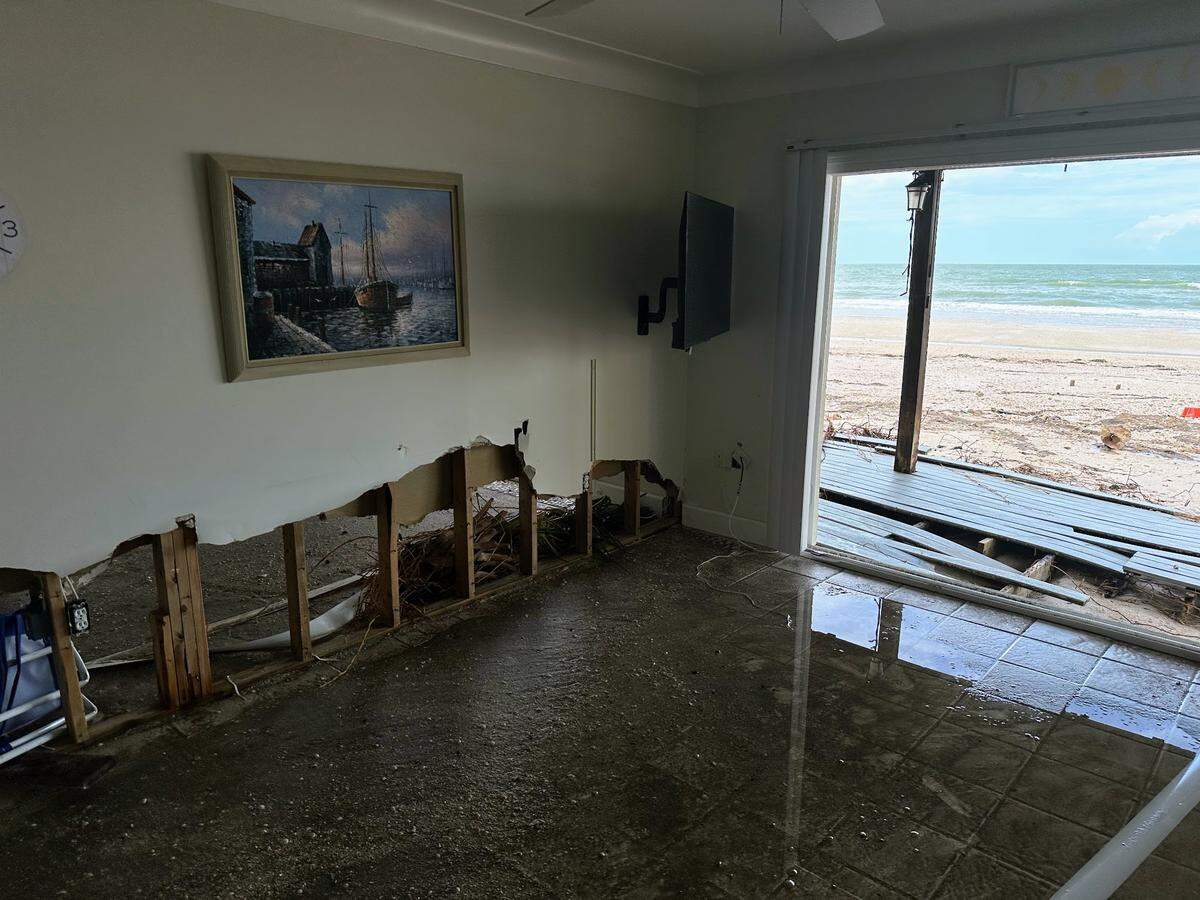
Florida program skirts climate change
While the state’s Resilient Florida Program aims to address worsening flooding, it does so without addressing the root cause: human-caused climate change.
Organizations that help plan for climate change at the state level, like Florida Sea Grant, have acknowledged the program as a step in the right direction. But they’ve also criticized it as a missed opportunity to address climate change at the source by funding efforts to slash local greenhouse gas emissions.
The program’s tone reflects a broader approach by Gov. Ron DeSantis’s administration and the Florida Legislature to downplay climate change and strike it from state policy despite acknowledging some of its increasingly devastating effects.
In Manatee County’s Vulnerability Assessment, climate change is only mentioned once, as a possible “stressor” of increased flooding.
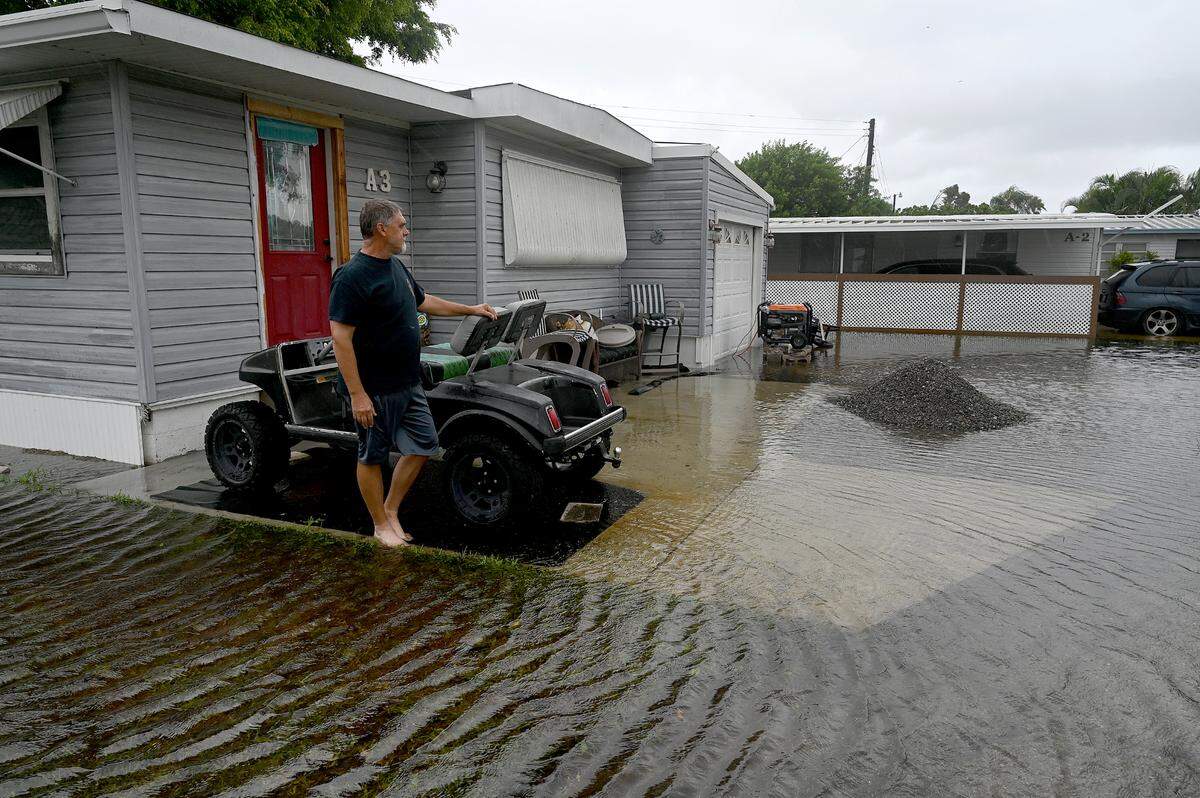
What happens next?
Commissioners voted 7-0 to accept the Vulnerability Assessment.
Now, the study will serve as a roadmap as the county starts on the next phase of the Resilient Florida Program — creating an Adaptation Plan.
“The next steps will be to look closer at those projects and identify as a county which ones we want to develop adaptation measures for,” Swanson said. “The plan will give us the chance to explore policy tools like coastal land use, seawall standards and building guidelines in flood prone areas, as well as incentives for nature-based solutions and stormwater management.”
The state has awarded Manatee County $125,000 to create an Adaptation Plan. Several resilience projects are already underway, including a grant-funded $726,000 project to create a “living shoreline” at Bishop Point to reduce erosion.
Swanson said county staff are also preparing to work with SeaPort Manatee to create a standalone Vulnerability Assessment and Adaptation Plan for the facility.
Commissioner Tal Siddique, whose coastal district was hit hard with flooding during last year’s hurricane season, said he is eager to see a specific list of projects that county leaders can start moving forward on.
“I encourage you all to continue with the action plan ... to see what the next steps are,” Siddique said. “How can we set aside and prepare funds? Longboat Key is raising streets. What can we do in Rubonia to consider that? These people pay taxes. They deserve to have their communities invested in.”
This story was originally published September 25, 2025 at 5:50 AM.