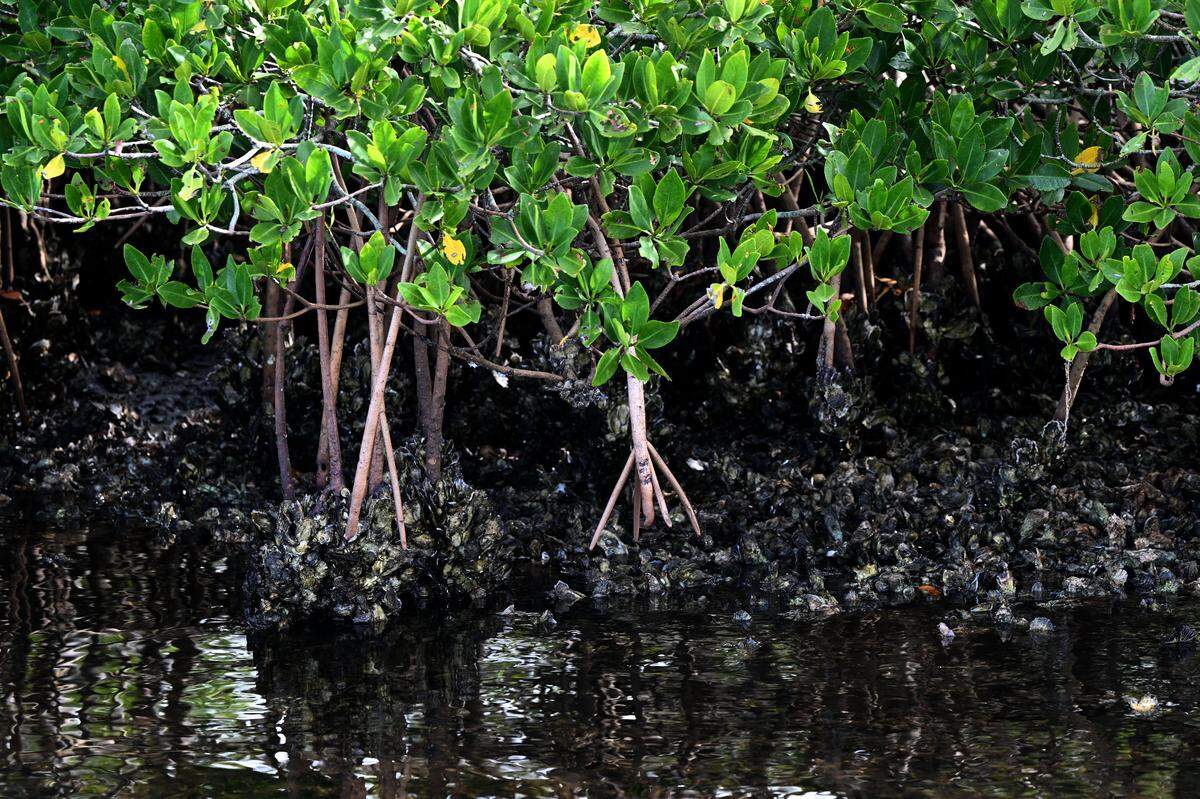
New report shines light on how Manatee development, hurricanes impact mangroves
New data released by Suncoast Waterkeeper shows the effect of hurricanes on mangrove ecosystems, and strengthens the argument for increased mangrove conservation.
Suncoast Waterkeeper, a local environmental group, recently finished its second year of the “Mangrove Ranger” program, which aims to more efficiently survey mangrove ecosystems. The group’s overall mission is to use community engagement and environmental monitoring to bolster protection and restoration efforts for local waterways.
The group’s 2025 mangrove mapping data showed how some mangrove sites suffered devastating impacts from the 2024 hurricane season, while others are on the road to recovery.
Executive Director of Suncoast Waterkeeper Abbey Tyrna said a lot of other ecosystems, like seagrasses, are more commonly monitored than mangroves, yet mangroves play a key role in a region’s recreation and economy. This monitoring gap led to the creation of Suncoast Waterkeeper’s Mangrove Ranger program.
“This program is a proactive approach to surveying the mangroves and inventorying them as we know that they have become vulnerable to development and sea level rise,” Tyrna said.
This year’s data demonstrated the need for increased conservation of mangrove ecosystems and how increasing extreme weather events can impact mangrove forests by lowering overall canopy cover.
Data shows 2024 hurricane impacts
Mangroves provide a plethora of benefits to humans and the surrounding environment, Tyrna said. Benefits include reducing storm surge by acting as a natural barrier, providing recreational opportunities and acting as a nursery for commercial and recreational fisheries.
“Mangroves are essential to our economy and our way of life here on the Suncoast,” Tyrna said.
According to the Florida Department of Environmental Protection (FDEP), mangroves provide habitat for juvenile fish like snook, tarpon, red drum and shellfish. FDEP’s website states that, without mangroves, these fisheries would “drastically decline.”
Mangrove Ranger teams are made of four people who survey one of Suncoast Waterkeeper’s eight sites across Palma Sola Bay and Sarasota Bay. The team includes a boat operator, a spotter, a data manager and a drone operator.
The teams rely on drones to cover terrain through mangrove forests that would be difficult to traverse on foot. The drones capture about 300 images during a 20-minute survey, according to Tyrna.
Those images are then stitched together and processed through software to determine health factors of mangroves, like the volume of the canopy and health of the leaves. These two elements create a site’s “health index score.”
Suncoast Waterkeeper’s reference site is a protected area of mangroves that had a health index score of 90 out of 100 in 2024. This score dropped to 59 in the 2025 survey, representing a 46% loss of canopy coverage.
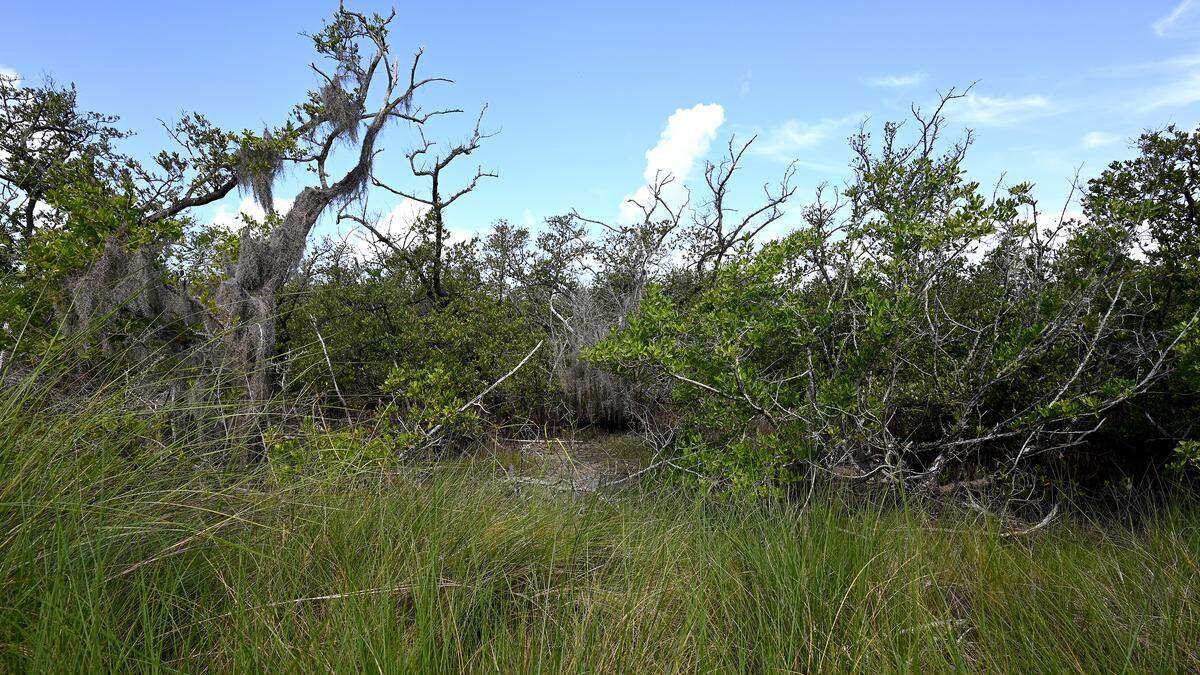
Tyrna said mangrove ranger teams found huge mangroves seemingly chopped in half by the strong winds produced by Hurricanes Helene and Milton last year.
“This decline illustrates how even the most robust and protected mangroves are vulnerable to increasingly extreme weather events,” Suncoast Waterkeeper’s 2025 report states.
In a 10-foot by 10-foot plot, Tyrna estimated half of the trees were left standing. But, despite the score being lower this year, Tyrna said there’s still hope.
“We did see a lot of new growth coming in, so we look forward to surveying it next year to see how quickly these areas recover, especially when they’re protected,” Tyrna said.
Another site near the hurricane-tattered site experienced canopy growth, demonstrating the “micro bursts” of wind from the hurricanes created losses in some areas, but not uniformly across Sarasota Bay.
Tyrna said it’s important to note that the trees that were chopped by the wind were 20 to 30 inches thick. Those dense trees likely helped absorb the wind and reduce further damage to properties inland.
Threats to mangroves and the need for conservation
There’s a common theme among the lowest-scoring sites, some as low as 36 and 38.
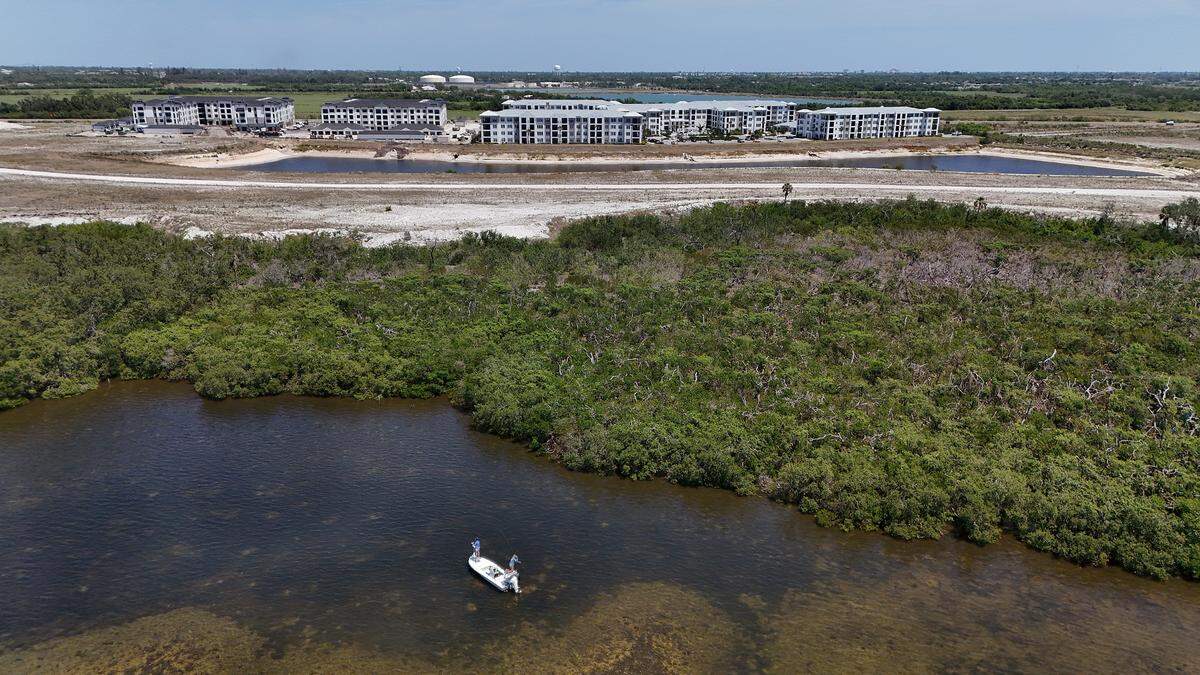
“Development is huge,” Tyrna said. “Development touches mangroves in many different ways.”
Tyrna said these lowest-performing sites have some sort of human impact, whether it’s being close to a roadway or the site of a wastewater incident, like a sewage spill.
However, there was a bit of hope at one site that was previously impacted by infrastructure failure. This site showed an 8% increase in canopy volume from last year, and it was the only site that showed canopy growth from 2024 to 2025, according to the report.
A less-obvious impact is from water runoff. Housing and commercial developments can alter the hydrology of an area, meaning how water funnels through an area.
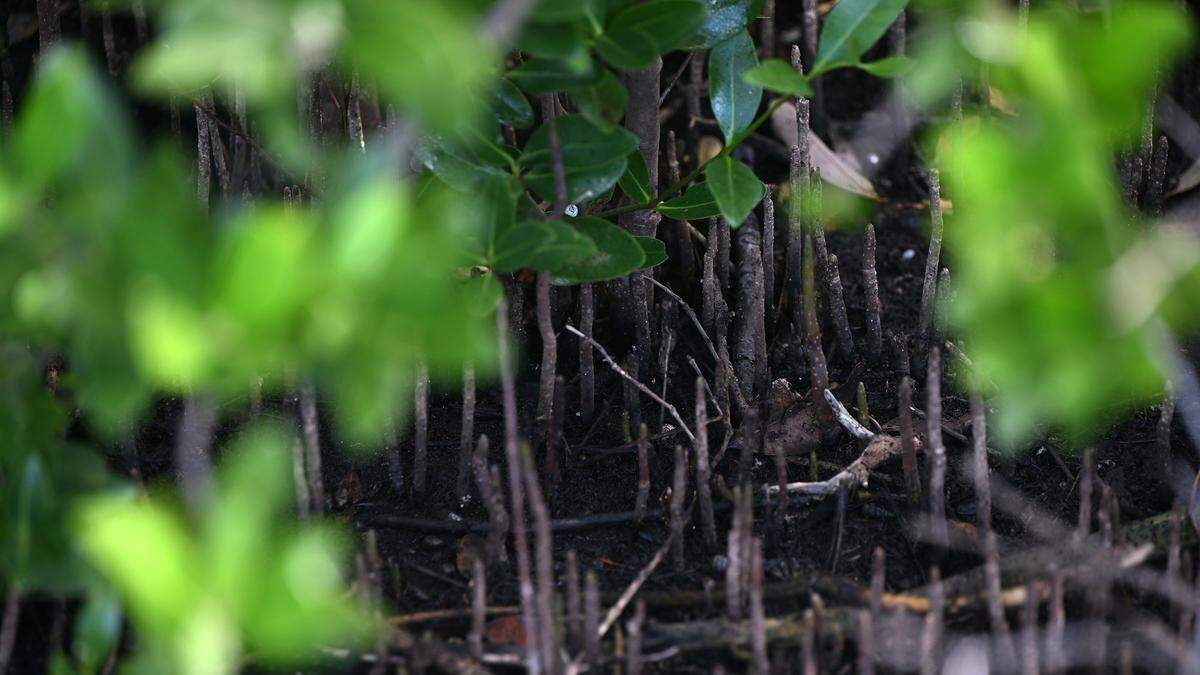
One species of mangroves, black mangroves, has roots that stick out of the ground to get oxygen. When water is funneled from developments down into mangrove forests, the increase in water can drown those black mangroves, Tyrna said.
Another human impact is mangrove trimming.
In Florida, mangroves are protected by the state of Florida through the Mangrove Trimming and Protection Act of 1996. Though it’s legally permissible to trim mangroves in certain instances, there are strict regulations on how much mangroves can be trimmed, and who can do the trimming.
When done improperly or too frequently, trimming can degrade mangrove environments. There have also been reports of properties removing mangroves entirely, according to Tyrna.
“We know that, even though the law was a compromise to protect mangroves, they’re not protecting all of the ecosystem benefits that they would normally provide,” Tyrna said. “They’re losing ecosystem benefits through trimming them, and we can see that in their health.”
The highest-scoring sites in the 2025 data are 83 and 88, one site in Palma Sola Bay and another in Sarasota Bay. Tyrna said the healthier sites are those that are removed from human disturbance or are in protected areas.
It’s because of this that Tyrna said increased conservation and sensible lawn care are crucial to maintain healthy mangrove ecosystems around the Suncoast.
Local regulations also play a key role in conservation, and Tyrna said she sees the effort of the new Manatee Board of County Commissioners in trying to restore wetlands buffers.
“I’m hopeful that, in Manatee County, there will be improvements because we have a county commission that’s really in tune to wetland protection,” Tyrna said.
Suncoast Waterkeeper plans to continue expanding the Mangrove Ranger program thanks to financial support from the Charles & Margery Barancik Foundation.
Now two years into the program, Tyrna said she believes the team has solidified the surveying method and can branch out to cover more territory to help mangrove conservation efforts.
“We feel confident that we can expand across Sarasota and Manatee County to survey more mangrove areas because it’s really important to see change over time because of the threats to these systems,” Tyrna said.