Is Manatee County’s DOGE audit political? Experts weigh in on DeSantis move
Florida political science experts speculate the state’s local government audits, like the one happening this week in Manatee County, could have lasting impacts on government relations and voters.
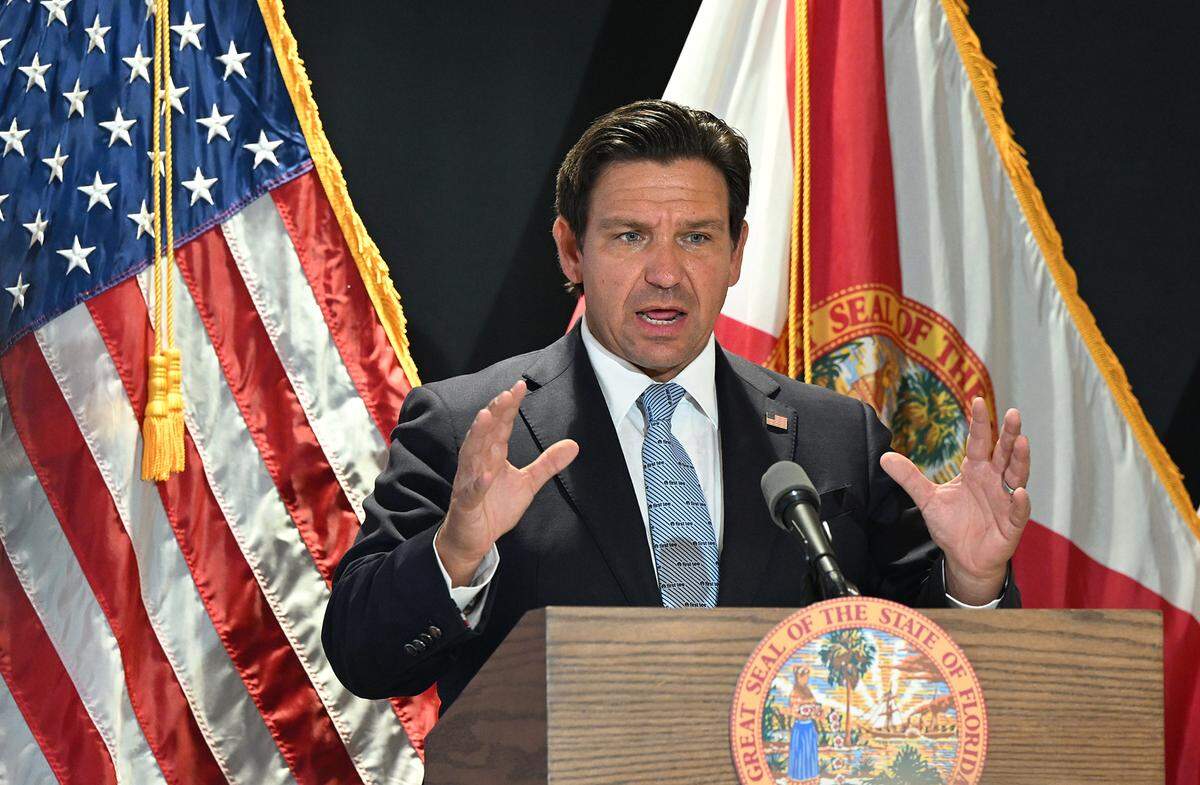
In July, Gov. Ron DeSantis announced the state’s Department of Government Efficiency (DOGE) will audit Manatee County as part of its ongoing investigations into local spending. He said the county’s increased property tax collection and budget calls for a closer look at expenditures dating back to 2019.
In a letter sent to Manatee County officials, DOGE highlighted specific items, such as the Gulf Islands Ferry, the purchase of a new $24 million county administration building in Lakewood Ranch and the recently approved purchase of Mixon Fruit Farms for $13.5 million.
But in interviews with the Bradenton Herald, several political science professors said the DOGE audit could have political implications that alienate local leaders, alter DeSantis’ legacy as governor and influence how voters approach the next election.
The state DOGE team has also targeted other counties, like Broward and Orange, with similar audits that include on-site visits and access to expenditures, procurements and personnel details.
In response to the upcoming DOGE audit, Manatee County commissioners say they have nothing to hide. DeSantis said DOGE representatives will visit Manatee County on Tuesday and Wednesday.
“If we feel we’ve been doing things properly in Manatee County, and I believe we have, then we just need to continue moving down the road as if we’ve always moved down the road,” Commissioner George Kruse said at the Board of County Commissioners July 29 meeting before approving the Mixon Farms deal.
With the state DOGE expanding its efforts to other municipalities, state political science experts say the audits could impact relationships between local and state leaders.
“I think there are a lot of ways this could go, and there’s probably several ways in which it could have lasting impacts on those kinds of relationships,” said Craig Burnett, professor and chair of the political science department at Florida Atlantic University.
Interdependence of governments
When asked if the DOGE audits pose legal or ethical concerns, political science experts agreed the audits are within the powers of the state.
Though local governments operate separately from state government, experts stress that local governments exist because the state allows them. Aubrey Jewett, an associate professor and the associate school director for the political science department at the University of Central Florida, said it’s because of this that the state has a right to look into local matters.
“Local governments are creatures of the state,” Jewett said. “The state allows local governments to form, but ultimately has control over them and could even abolish them.”
Additionally, Jewett said the state DOGE is backed by state legislation and the budget, giving the task force stronger grounds.
States have the right to look into issues like the state is doing with DOGE, especially when the state has reasons to back the claim like DeSantis’s property tax concerns, Burnett explained.
“There has been an increase in take by the local governments in terms of what they’ve been able to collect in property taxes,” Burnett said. “And it’s a reasonable question to ask where has all this money been going.”
J. Edwin Benton, professor of political science and public administration at the University of South Florida, said the same, and added there is a necessary relationship between local and state governments.
Local governments rely on states for broader policies and funding, while states rely on local governments to handle local issues and municipal tasks like waste management and courts, according to Benton.
“Whether they like it or not, the state and local governments need one another,” Benton said.
Political motivations in DOGE audit?
While the audits may be within the legal purview of the state, the professors highlighted other concerns and the potential strain this could have on state and local relationships.
Jewett said the audit can be seen as a sign of local governments losing home rule — the power of local governments to handle issues at the local level — after a period where local governments have increased emphasis on home rule.
“Now, we sort of see that we’re going back the other way,” Jewett said. “It seems the state has passed a lot of preemption requiring local governments to do things — whether it’s on immigration or taxes or, now, complying with these audits.”
“I think that does hurt the relationship between locally elected leaders and the state when (local leaders) feel they’re being micromanaged,” Jewett continued.
Burnett added that motivations are important when dealing with these types of interferences.
“These things could be done really well. I think when they start to go awry is when they do have this overly political aspect to them,” Burnett said. “And ... cutting for the sake of cutting, or targeting certain programs because we don’t like them.”
The three professors emphasized the importance of keeping these audits nonpartisan, but all speculated there could be some political agenda behind DeSantis’ move.
Jewett added the DOGE movement first took off at the federal level when President Donald Trump created the department alongside Elon Musk. Now, Jewett speculates, DeSantis and other state leaders feel the need to follow suit.
“Whenever politicians take big, high-profile actions, I think it’s safe to assume that there’s political motivations,” Jewett said. “I think this DOGE movement is political in at least a couple of ways. For Gov. DeSantis in particular, he still, I think, wants to have a political future…I think he’s trying to stay relevant and powerful in the last year or two.”
Whether the state DOGE is part of a larger political move or not, Benton also questioned the true motivations behind the DOGE program.
“Is it an effort to marginalize or to shut down programs you don’t like under the veil pretending that we’re trying to find more efficient, more cost-effective ways of doing things,” Benton asked. “And that’s sad when that happens, and I sense some of that is going on with DOGE.”
Manatee DOGE audit could have lasting impact
Experts say the effectiveness of the audits also depends on how they are performed. However, Burnett said how the investigations unfold — and with what level of expertise — will be key.
“Whether or not it’s good or bad, I think, is really dependent on the application,” Burnett said. “It can be very useful, or it could be very clunky.”
Another point Burnett and Jewett made was how the basis of the state DOGE — oversight on local governments — goes against a key Republican principle.
“It’s not lost on me that it is traditional for the Republican Party to defer to local interest. And, when you hear things like this, it kind of goes against what has been historically true for the Republican Party,” Burnett said.
Burnett, whose studies focus on voter behavior and local governance, says these actions could play a part in how parties vote in upcoming elections, and could show whether Republicans and other voters agree with the state’s decisions or not.
“Is this, in the eyes of voters, good governance or not,” Burnett said.