
Was Manatee dam release responsible for east county flooding? New reports have answers
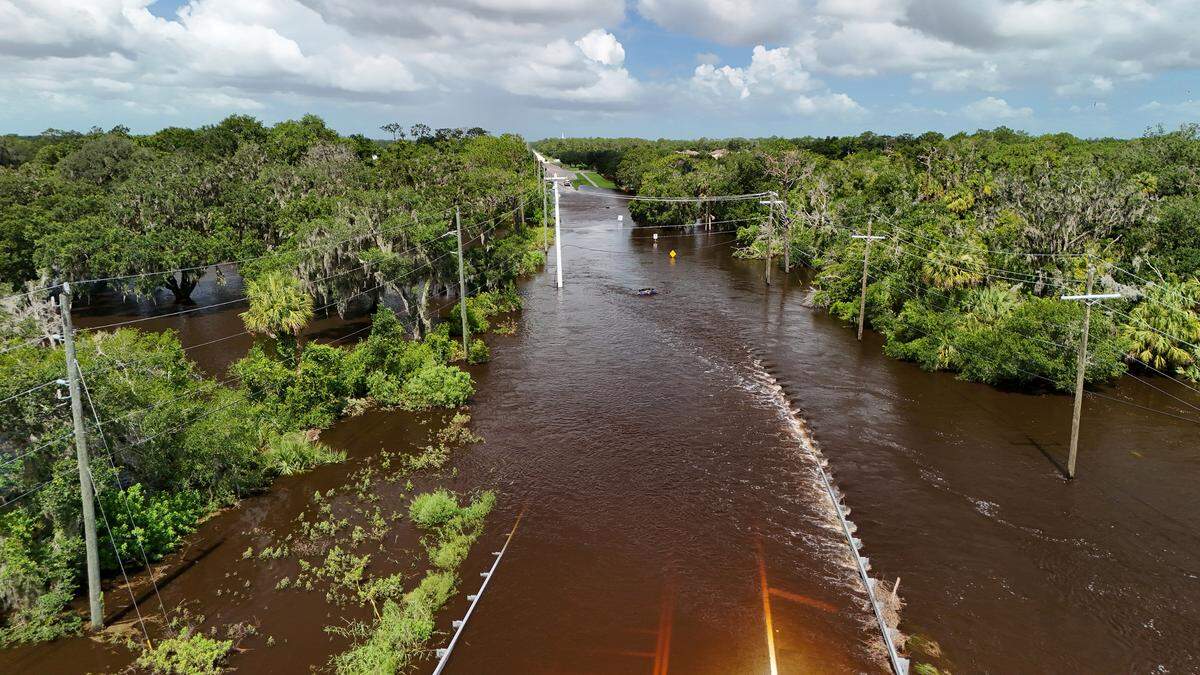
Six months after Hurricane Debby deluged hundreds of Manatee County homes, new reports answer questions about the Lake Manatee Dam’s role in the flooding.
Some residents have wondered whether the dam’s release of 18 billion gallons was responsible for flooding in other parts of the county, including the Braden River area and Lakewood Ranch.
But two separate reports — one commissioned by Manatee County Government and another by a local developer — are refuting those claims.
Instead, they point to record rainfall, increased development and other infrastructure issues as causes of local flooding.
Hurricane Debby flooding prompts Lake Manatee Dam investigation
Manatee County was already saturated from a wetter-than-normal July when Hurricane Debby arrived in early August and dumped record-breaking rainfall on the Bradenton area.
The immense amount of water threatened to overload the roughly 6 billion gallon capacity of Lake Manatee Reservoir, the source of about two-thirds of Manatee County’s drinking water. The artificial reservoir is on the Manatee River in East Manatee County.
County officials say that in order to protect the structural integrity of the dam, they must sometimes increase the flow of water leaving the lake during heavy rainfall events.
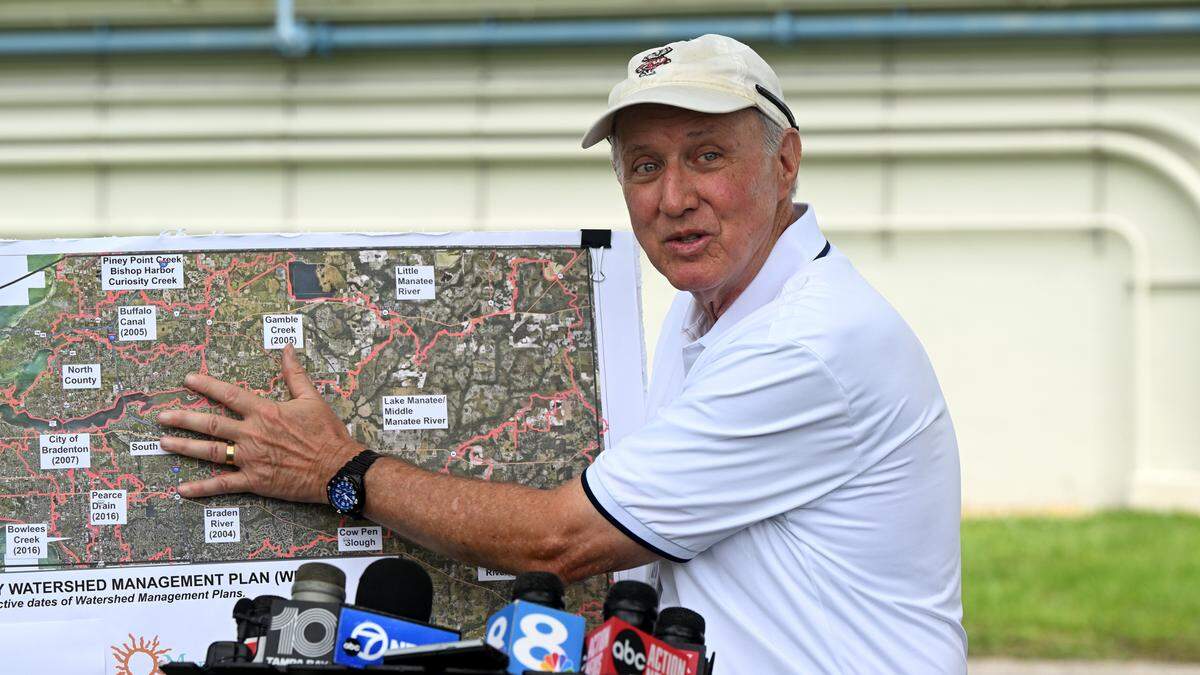
“If waters rise to the top of that reservoir, for the inability to get through the reservoir, (the dam’s) going to wash out, and we will lose our drinking water supply on the surface,” Natural Resources Director Charlie Hunsicker said at a press conference in September.
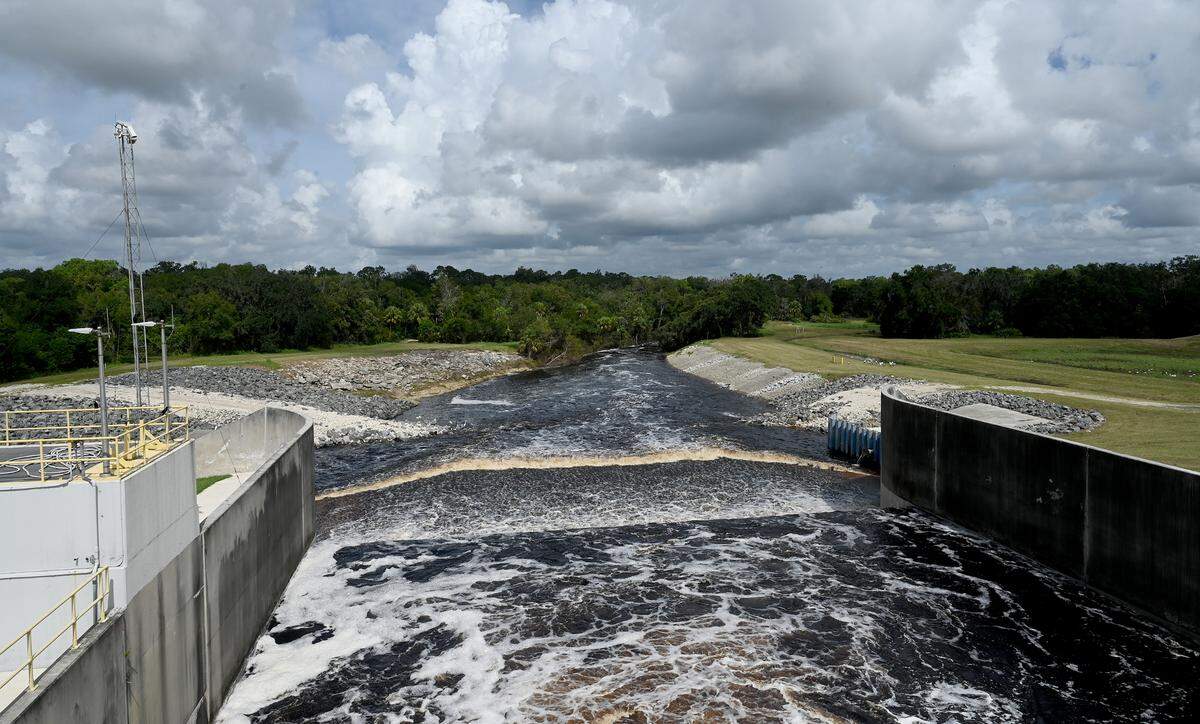
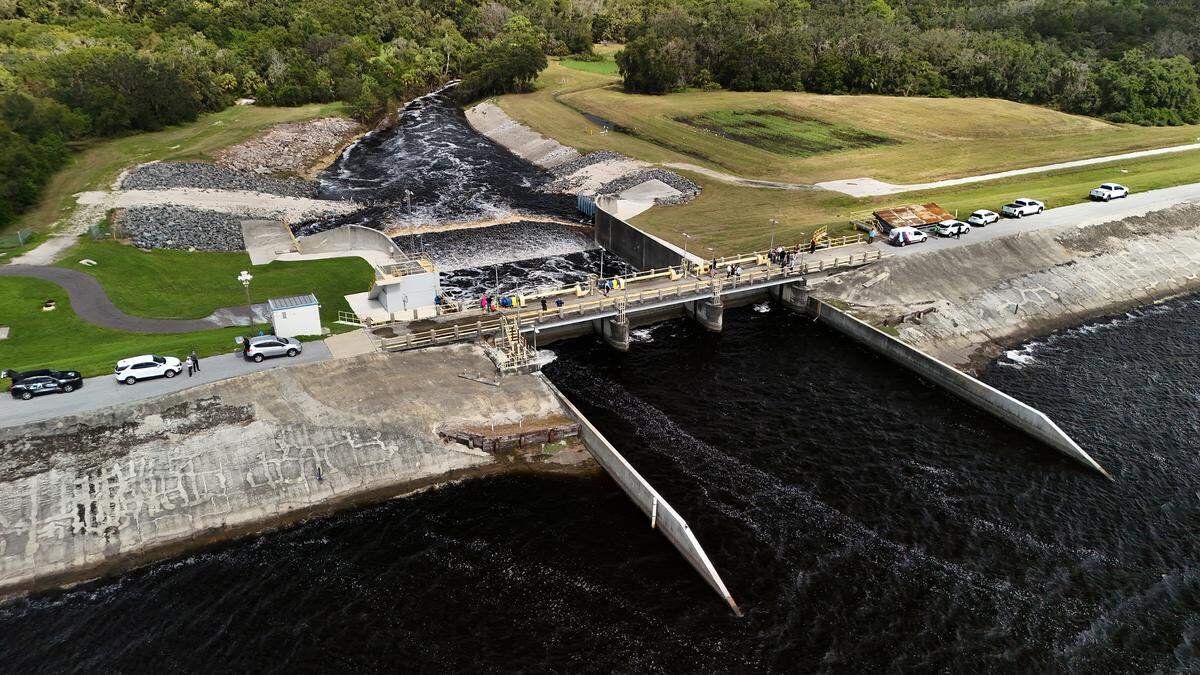
Officials said Hurricane Debby’s unprecedented rain prompted them to release 18 billion gallons of water — about 25,000 Olympic-sized swimming pools — through the dam over several days. Debby dropped record rainfall amounts of around 12 to 17 inches in Manatee County.
The county acknowledges that spikes in the rate of water flow from the dam can flood properties directly downstream along the Manatee River, where residents have historically experienced flooding.
Officials defended the release of water from the dam and said the structure worked as designed. They said the dam was built to maintain drinking water supplies and the flow of water downstream — not to control flooding.
But after Hurricane Debby, some East Manatee County residents who did not live downstream of the dam were convinced that the release was responsible for unprecedented flooding and damage to their homes.
Did Lake Manatee release cause flooding in other parts of the county?
At the time, county officials said it was “impossible” that water from the dam could have flooded homes like those in the Braden River watershed, over 40 miles away.
“There’s been a lot of folks continuing to assert and believe that the water from this reservoir and the management of the levels and releases somehow caused problems in the River Club area, the Summerfield area, the Braden Woods area of Manatee County,” Hunsicker said. “From a standpoint of geography, it’s impossible. It was rainfall, rainfall, rainfall.”
Nevertheless, officials ordered an independent investigation into the causes of local flooding.
During a recent workshop, the Board of County Commissioners heard the results of that eagerly-awaited report.
The analysis found that the dam release had “minimal impacts” on flooding downstream of the dam, including little to no impact in the Braden River area. The report found that the flooding was caused primarily by rain.
A separate analysis of Hurricane Debby flooding commissioned by Lakewood Ranch developer Rex Jensen came to a similar conclusion, noting: “Operation of Manatee River dam did not impact flooding in Lakewood Ranch.”
Investigation says dam release had ‘minimal impact’ on flooding
Patrick Tara, an engineer with Houston-based consulting firm INTERA, said his analysis found that rainfall and runoff were primarily responsible for flooding during Hurricane Debby.
Tara said he used rainfall and flood data from state and federal agencies and the county to map the flow of water during the storm.
Tara said that a water gauge at Rye Road, directly downstream from the reservoir, was the only one that showed a strong response to the dam release.
The results showed that the release did not have a significant impact on water levels in other areas of the county, including the Braden River area. Tara said water levels had already peaked in most areas of the watershed before the dam release began.
“There’s not enough time,” Tara said. “That’s another weight of evidence that the reservoir discharge was not a direct cause of the rising waters.”
Tara also employed a “coastal storm surge model” — a model frequently used by the Florida Department of Transportation — to simulate the effect of different levels of water from Lake Manatee on downstream flooding.
“The results show little sensitivity to reservoir releases,” Tara’s presentation said.
The model results showed that, during normal low and high tide conditions, a high rate of flow from Lake Manatee would increase water levels around the mouth of the Braden River by less than a foot. During a flood event, water from the dam would cause even less of an impact because the river’s size swells, increasing its capacity, Tara said.
“Local rainfall runoff caused much of this flooding,” Tara said.
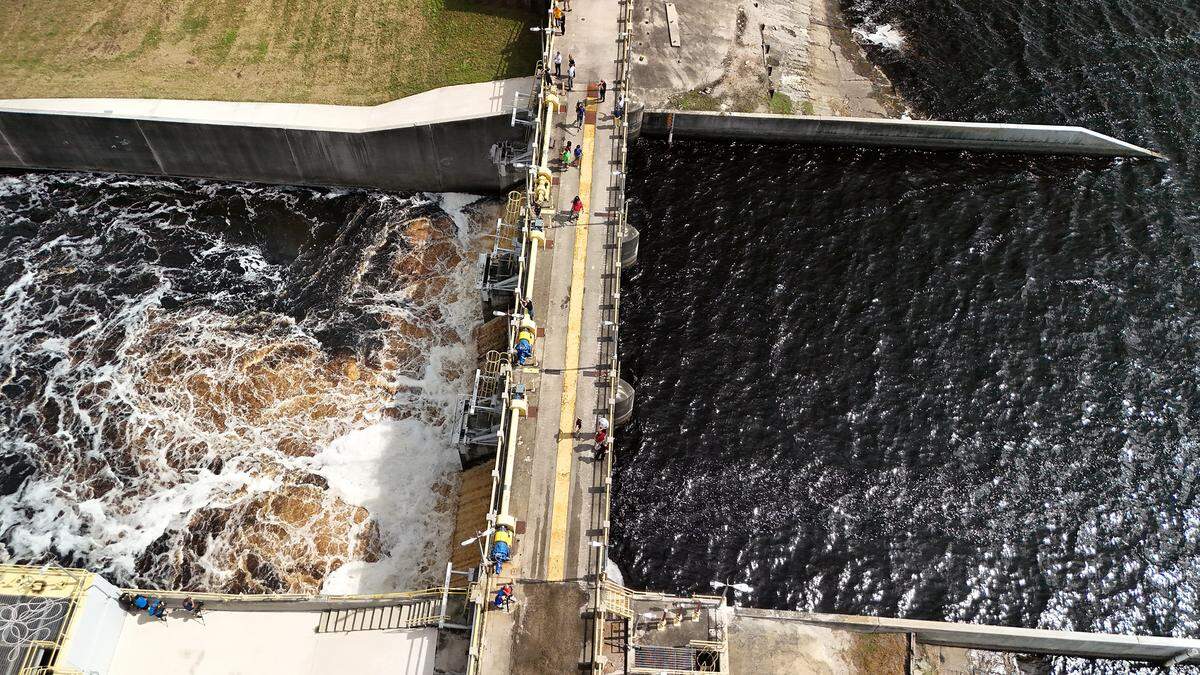
Tara also backed up the county’s assertion that the dam worked as designed during the storm.
“It wasn’t a dam failure by any means,” Tara said. “When the water gets too high inthe reservoir, they’ve got to let some of it go — actually to prevent a dam failure.”
However, Tara noted that development could have played a significant role.
“This basin ... much like the rest of Florida, has experienced a lot of growth, a lot of development. Along with that development comes imperviousness. And impervious area can impact flooding.”
Tara said Hurricane Debby surpassed the state’s design standards for stormwater ponds, and many were likely overwhelmed.
Developer report pins some flooding blame on county
Another recent report found that the release from Lake Manatee was not responsible for flooding in Lakewood Ranch.
First reported by the Florida Trident, Lakewood Ranch developer Rex Jensen and the Lakewood Ranch Stewardship District commissioned the study to pinpoint what may have caused flooding in the River Club and Summerfield areas.
They hired civil engineer Stephen Suau, who has also worked with Sarasota County Government to address flooding issues. Suau’s analysis found that a lack of stormwater maintenance in Manatee County may have contributed to flooding in Lakewood Ranch, according to a summary obtained by the Bradenton Herald.
The report claims that the flow of the Braden River was blocked at River Club Boulevard due to a buildup of sediment under a bridge and a modification at The River Club golf course that narrowed the width of the river.
Jensen shared an email he sent to the county on Feb. 15 requesting “immediate action” to address the alleged blockage of the river.
Like the county’s analysis, the Lakewood Ranch report also found that the Lake Manatee Dam was not a significant factor in local flooding.
The report concluded that the county should consider a stormwater utility fee to fund flood-prevention upgrades, an issue that the Board of County Commissioners took up at a recent workshop.
Residents want relief from flood threat
East Manatee County residents whose homes were damaged in Debby’s floods are looking to county officials to come up with solutions as another hurricane season nears.
At the commission workshop, Lakewood Ranch resident Valerie Stafford-Mallis said her neighborhood at Pine Lilly Place has flooded three times in 28 years. She brought up Jensen’s report and asked officials to take action on the Braden River blockage and other issues.
“How can that be expedited so that something can be done before hurricane season starts?” Stafford-Mallis asked.
Bill Burns, who has lived off of Upper Manatee Road with his wife Kaye Griffin for 46 years, says the storm brought “the worst flooding we’ve ever had.”
“It tore our dock off the deck and washed it down the river,” Burns told the Bradenton Herald in the weeks after the storm. “They’ve built up so much around us that we are now one of the lowest spots on the river for drainage.”
“And then opening the dam spill gates down there ... good God. It worked correctly because the dam didn’t breach. But it could have been handled a lot better.”
Burns said they were forced to make costly fortifications to their house a few years ago when flooding from heavy rains threatened the integrity of their home’s pilings.
Burns said he and his wife, who are both still working past retirement age, could not afford to move.
“We have nowhere else to go,” Burns said.
At recent meetings, county commissioners have said they’re ready to find solutions to flooding, including consideration of a stormwater utility fee, more frequent maintenance and major infrastructure upgrades.
Officials are set to discuss how they could use some of the $252 million in federal disaster recovery grants recently awarded to Manatee County for some of those projects during a public meeting that begins 9 a.m. Tuesday at the Manatee County Administration Building, 1112 Manatee Ave. W., Bradenton.