President Trump’s new immigration policies send ‘fear’ to Manatee County, advocates say
As the Trump administration expands immigration enforcement nationwide, fear of deportation is already reshaping daily life for many immigrant families in Manatee County.
While local Bradenton-area officials say there have been no raids or deportation sweeps in Manatee County, those who work closely with the immigrant community say the uncertainty is keeping families on edge.
“There is a lot of noise. There is a lot of fear in the immigrant community about what may come, and it is a really tense moment,” said Kelly Kirschner, board chair and co-founder of UnidosNow. “People do not know what will happen next.”
Kirschner, whose organization UnidosNow advocates for immigrant rights and provides resources to families in the Sarasota-Manatee area, said that while they have not yet seen a large number of families leaving Florida, there are anecdotal reports of people considering it.
On the campaign trail in 2024, President Donald Trump pledged to enforce stringent immigration policies. In an address during a joint session of Congress Tuesday, Trump framed his administration’s immigration efforts as an unprecedented effort to fulfill that promise.
“Since taking office, my administration has launched the most sweeping border and immigration crackdown in American history and we quickly achieved the lowest numbers of illegal border-crossers ever recorded,” Trump said.
Recent census data shows that about 8.6% of Manatee County’s residents are non-U.S. citizens, according to the U.S. Census data.
Manatee County’s public schools enroll a diverse student population, including children from families with varying backgrounds. The School District of Manatee County reports that nearly 52,000 students are enrolled in public schools, with about 500 students identified as migrant children. Additionally, 12.27% of students are classified as English language learners, according to the district’s most recent demographic data.
Parents are ‘panicked,’ local attorney says
Some families in the community are concerned about how immigration enforcement policies may affect them. Advocates say the uncertainty surrounding immigration policies has created fear, particularly among undocumented individuals and those living in mixed-status households.
As immigration enforcement policies evolve, some families are adjusting their daily routines in response to uncertainty about the future. Attorney CJ Czaia, who has handled immigration-related cases and co-founded UnidosNow, said he has spoken to parents who are too afraid to send their children to school.
“Kids are not going to school here in Manatee County,” Czaia said. “Parents are panicked.”
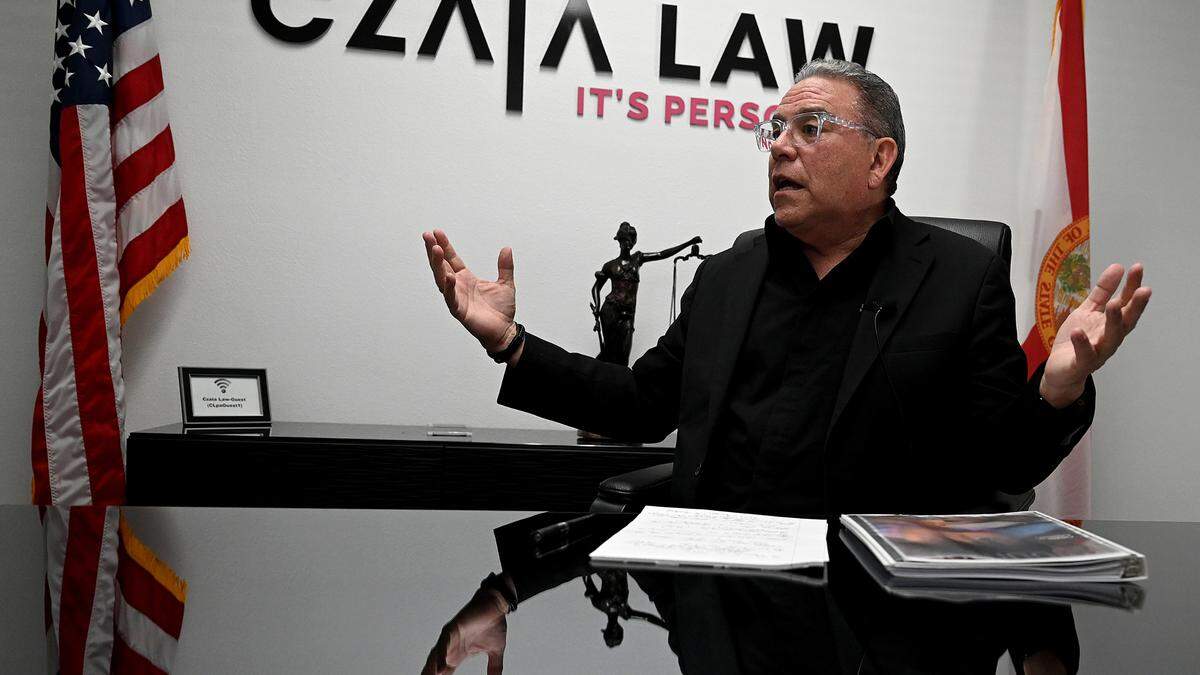
Despite these concerns, school officials say they have not observed any direct impact from recent immigration policies. Michael Barber, a spokesperson for the School District of Manatee County, told the Bradenton Herald that the district is following the latest news but has not made any policy changes related to immigration enforcement.
“We continue to monitor what is taking place in Washington and Tallahassee regarding these matters,” Barber said in an email. “The School District does not request or collect information about a student’s immigration status. The School District complies with all federal and state laws.”
So far, there have been no reports of federal immigration officials appearing at public schools in Florida, including in Manatee County. However, advocates worry that undocumented students and their families could still be at risk as immigration enforcement expands.
Florida officials ready to assist immigration crackdowns
While immigration enforcement has not reached Florida’s public schools, state officials are taking broader steps to expand their role in detaining undocumented immigrants. In February, Gov. Ron DeSantis signed a law requiring all 67 counties, including Manatee, to participate in a federal agreement allowing local law enforcement to enforce immigration violations as part of their routine duties.
The new law also enables ICE to train, certify and authorize local law enforcement officers to carry out administrative warrants within their jails, according to U.S. Immigration and Customs Enforcement.
The Manatee County Sheriff’s Office told the Bradenton Herald that the agency would comply if ICE requests assistance. Spokesperson Randy Warren said the agency has continued its policy of placing ICE detainers on undocumented individuals in county custody, a practice that began in 2019.
“Sheriff Rick Wells states that we will continue to do what we have always done: assist ICE as needed,” Warren said. “When the Department of Homeland Security requires additional assistance in removing illegal and criminal immigrants from our community, we will be prepared and willing to help.”
Other law enforcement agencies in Manatee County report no direct involvement in immigration enforcement. The Bradenton Police Department has not been contacted about any ICE activity and has not been asked to assist with detentions. Meredith Censullo, the agency’s public information officer, said that if federal authorities needed local cooperation, it would likely involve the Manatee County Sheriff’s Office, which oversees the jail.
The Palmetto Police Department also stated that it has not been involved in any immigration enforcement efforts. Chief Scott Tyler said his officers are not authorized to enforce federal law and will continue to focus on state and local laws.
Czaia, who has worked on immigration cases for years, said that while law enforcement agencies may not be conducting raids, the fear alone is enough to change how families live. He believes the immigration debate is being used as a political tool to create fear and division.
“Nobody has a problem getting rid of criminals. But these aren’t criminals. People overstay their visas and that is not a crime,” Czaia said.
According to U.S. Citizenship and Immigration Services, overstaying a visa is a civil violation of immigration law, not a criminal offense. While those who remain in the country unlawfully may face deportation, they are not committing a crime under U.S. law unless they reenter the country illegally after being removed, which is a criminal offense under federal law.
Rather than reacting out of fear, Czaia urged undocumented individuals to have a plan in place. He advised families to prepare for potential enforcement actions by ensuring they have power of attorney arrangements, access to bank accounts and contingency plans for their children in case of detention or deportation.
He also warned that some undocumented individuals, desperate to stay in the country, are being exploited by scammers and unqualified legal representatives. He recommended consulting with multiple immigration attorneys before paying large fees, saying some legal professionals offer “false hope” for cases that are unlikely to succeed.
“You need to be thinking ahead, not just hiding and hoping nothing happens,” Czaia said.
This story was originally published March 7, 2025 at 5:50 AM.