
Zero buffer? New Manatee County rules may let Aqua by the Bay developer impact wetlands
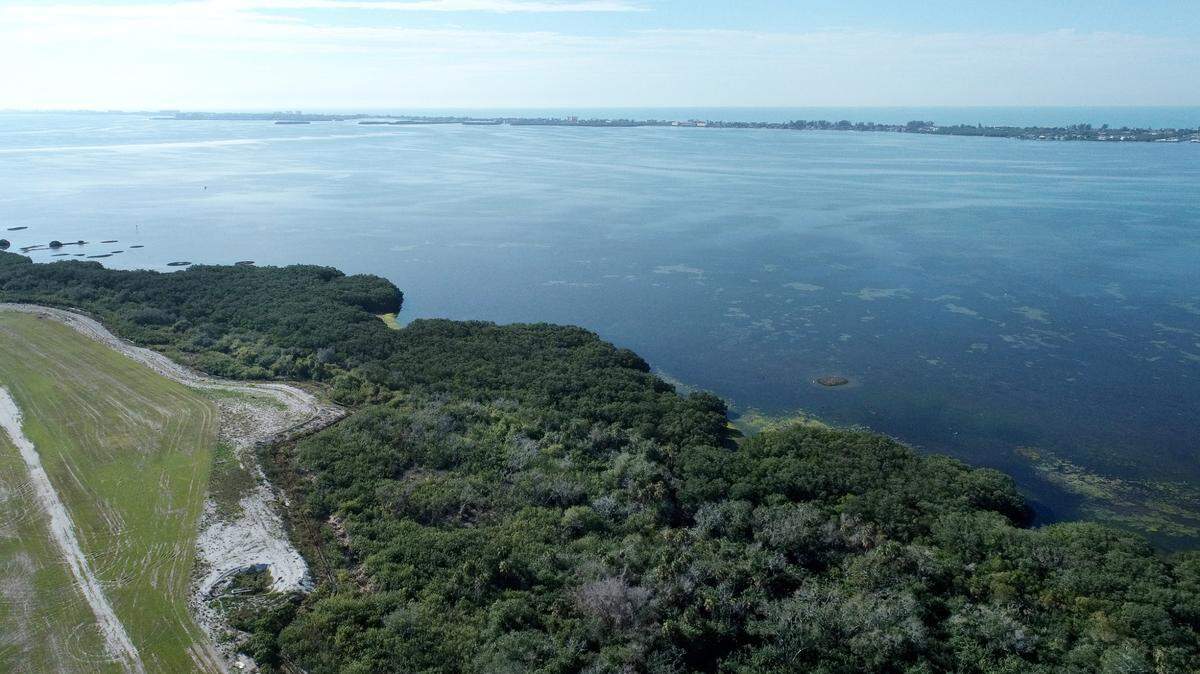
After Manatee County commissioners voted to reduce local wetland buffer zones, a prominent developer wants to build parts of a large housing complex closer to the wetlands bordering Sarasota Bay.
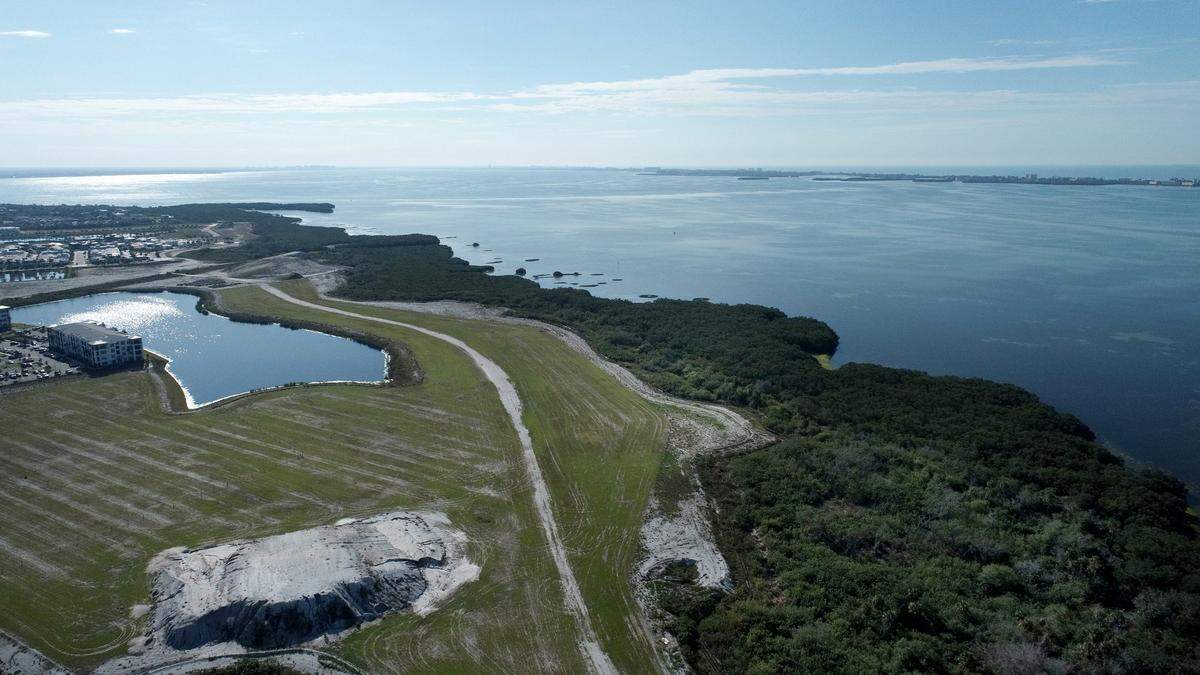
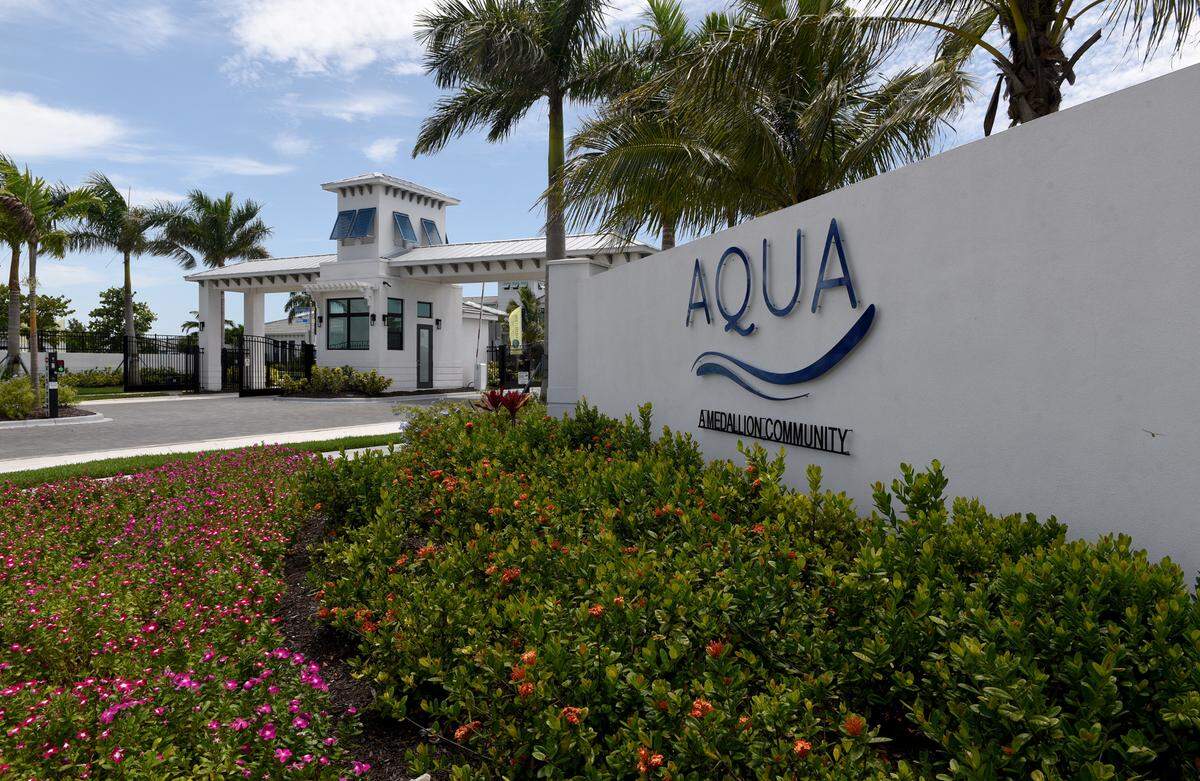
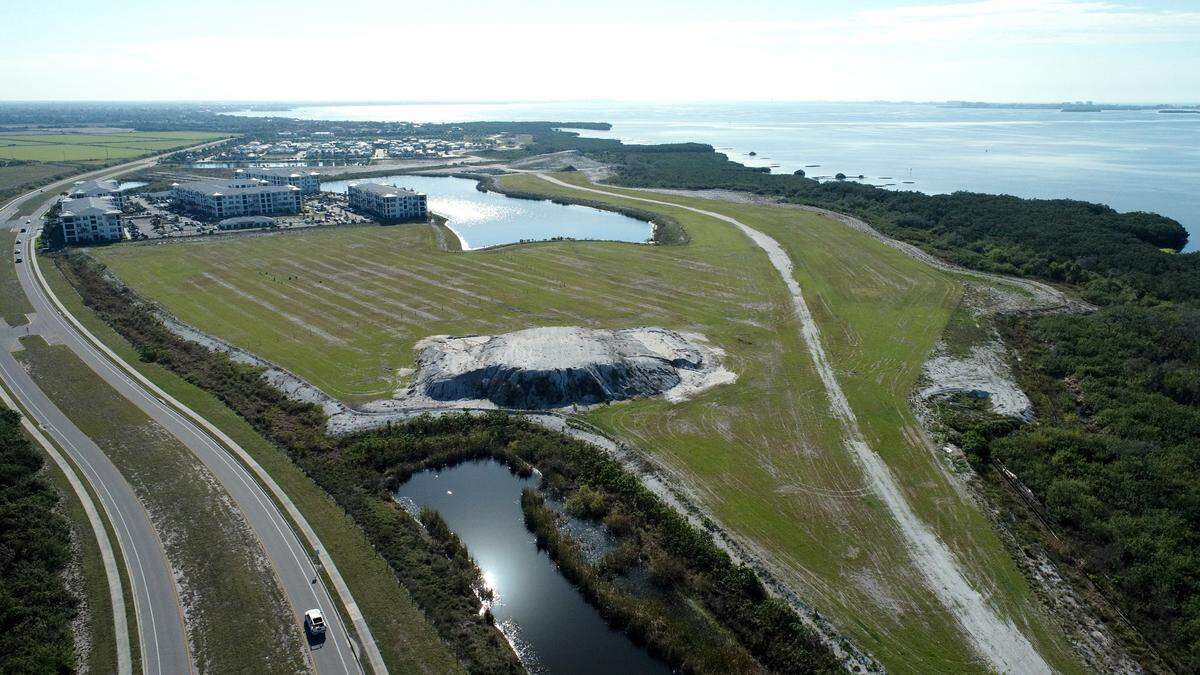
Plans for Aqua by the Bay, a project by developer Carlos Beruff’s Medallion Home, include over 2,300 multifamily units and over 500 single-family homes along El Conquistador Parkway in Bradenton.
But before the county’s wetland changes have been finalized, Beruff is asking state officials to approve an exception that would allow parts of his 529-acre development to include minimal or no wetland buffers — a move that could harm the bay’s ecosystem, local experts say.
The county’s longstanding rules require a minimum buffer of 50 feet between development and “environmentally sensitive wetlands.” But with those rules slated for removal, Beruff is seeking to reduce buffers dramatically in the next phase of Aqua’s construction.
Instead, portions of the development would be bordered only by a gabion wall — a kind of barrier made of cages filled with rocks. Other parts would have 25-foot buffers.
Scientists and environment advocates who opposed the county’s decision to relinquish its wetland-protecting power to the state are raising concerns about the potential impact on the bay’s ecosystem.
“It’s difficult to work all these years to preserve these resources for future generations and see it all being unraveled. Once it’s gone, it’s gone,” said Rob Brown, a former environmental program manager with Manatee County who retired in 2022 after 34 years. His role included overseeing local water quality protection and improvement efforts.
Some of those experts and conservation groups are asking state regulators to deny the developer’s request.
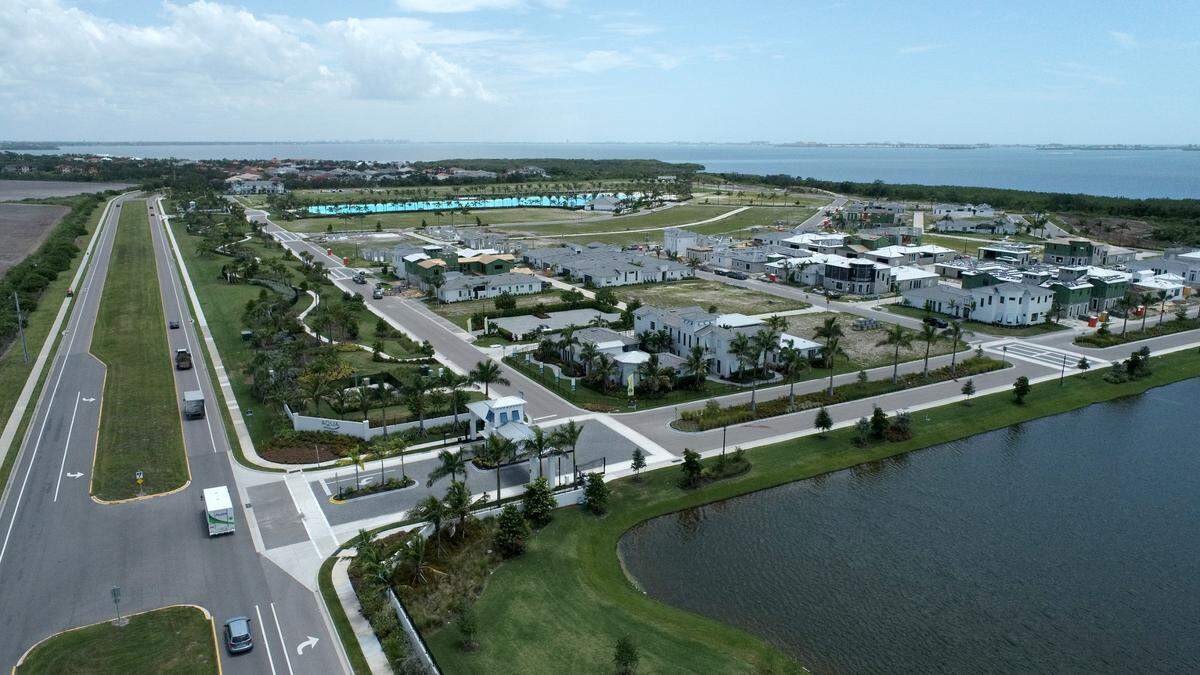
Aqua developer asks for no buffers
Carlos Beruff’s company, Medallion Home, began building Aqua by the Bay in 2020 after more than a decade of permitting and legal battles. The company previously submitted building plans to the state that met county requirements with a 50-foot wetland buffer with Florida native plants in its project design.
But last October, commissioners voted to remove the extra wetland protections from the county’s Comprehensive Plan. The move came after the Manatee-Sarasota Building Industry Association, a developer interest group, proposed the controversial change, along with other development-friendly edits to the county’s guiding documents.
County leaders must still update the county’s Land Development Code to match the Comprehensive Plan to complete the repeal of local wetland protections.
But it appears Beruff, who has long opposed the county’s extra layer of regulation, is already anticipating the day when the project only has to meet the state’s weaker wetland protection requirements.
The state recommends an average wetland buffer of 25 feet along the boundaries of development, with a minimum of 15 feet, but developers can apply for exceptions.
Beruff’s company is seeking such an exception. In a Dec. 13 application submitted to the Southwest Florida Water Management District (SWFMD), Medallion Home asked the state to allow no wetland buffers at all for parts of the Aqua by the Bay development.
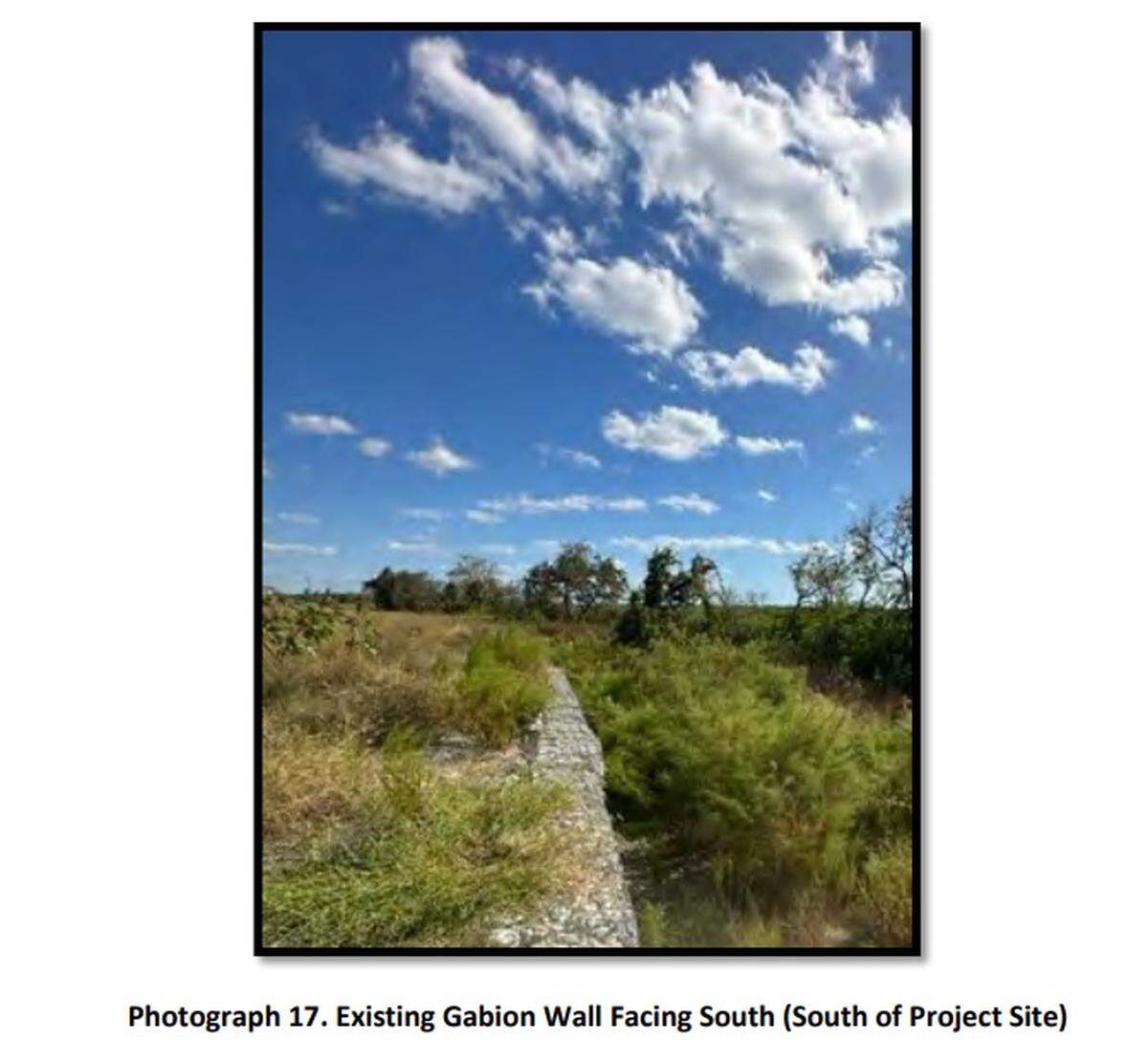
Instead, the application seeks permission to install a gabion wall — a barrier made of cages filled with rocks — as the sole line of defense between the new development and wetlands. It would connect to a section of gabion wall built in the first phase of Aqua’s construction that had to comply with the county’s wetland protections.
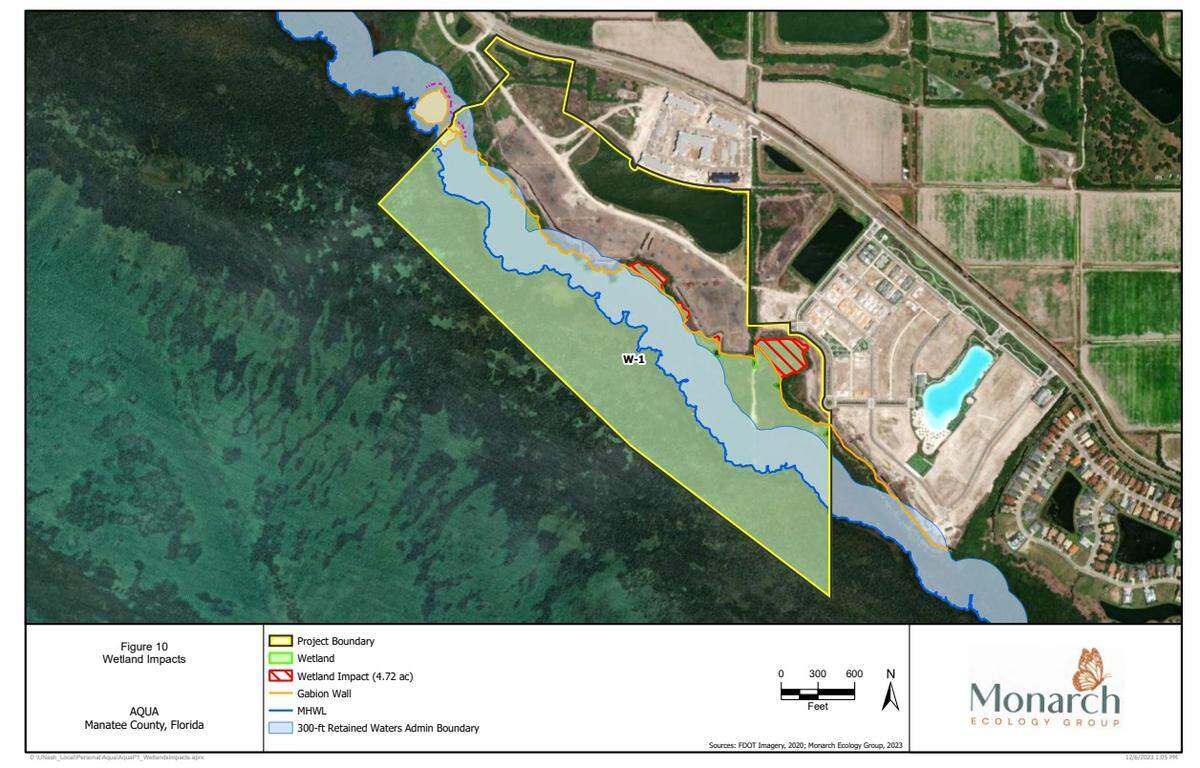
“As shown on the Construction Plans, the proposed gabion wall is being proposed in the uplands but is being proposed immediately landward of the wetland line in many cases. Therefore, the 25-foot average buffer is not being proposed,” says a report by environmental consultants Monarch Ecology Group submitted along with Beruff’s permit application.
“We understand a 15-foot minimum, 25-foot average buffer is recommended to ensure no adverse secondary impacts will occur, but the gabion wall has been designed to ensure no secondary impacts occur,” it continues.
The report also proposes allowing the developer to build parts of the wall directly through several acres of “low-quality” wetlands.
In a Jan. 12 letter, SWFMD regulators said they needed more information before the application could proceed, including details about the project’s potential impacts on wetlands and wildlife.
They also asked the applicants to consider changing the plans to include a 25-foot wetland buffer.
“In order to avoid secondary impacts to wetlands, has the Applicant considered moving the gabion wall landward to the 25-wetland buffer?” the letter states.
Advocates ask state to deny building plans
Groups opposing the approval of Aqua’s new plan say that gabion walls are no comparison to natural wetland buffers when it comes to protecting the environment’s health.
Abbey Tyrna, a wetland ecologist and executive director of Suncoast Waterkeeper, submitted a complaint to SWFMD opposing the gabion wall and minimal buffers.
“If you don’t give the buffer, you don’t have the opportunity for the wetland to expand. You really can strain it,” Tyrna said.
“That’s going to change the response of the wetland. You put on top of that rainfall events and sea level rise and you have a potential recipe for disaster. We’re going to be killing our wetlands by a thousand cuts.”
Tyrna said the proximity of high-rise construction could cut mangroves off from the sun.
“Mangroves don’t do well in shade,” Tyrna said. “But throw on a buffer, and you don’t have these secondary impacts.”
Manasota-88, an environmental advocacy nonprofit, also submitted a letter asking SWFMD not to approve Aqua’s application.
In the letter, Manasota-88 chairman Glenn Compton argued that bordering the wetlands with a wall could greatly reduce the health of the wetlands over time and impact plants and animals that rely on them.
“Reasonable assurances have not been provided that the project would not adversely affect the conservation of fish and wildlife, including endangered or threatened species or their habitats, or marine productivity in the vicinity of the proposed development,” Compton wrote, noting that the site contains bald eagle habitat.
“All wetland impacts should be avoided, and a 50-foot buffer required,” the letter said.
Role of wetlands and wetland buffers
Wetlands play a vital role in the ecosystem. They filter stormwater runoff, improve water quality, prevent erosion and provide wildlife habitat. They also help recharge the aquifer and sequester huge amounts of climate change-causing carbon, which can be released into the atmosphere if wetlands are damaged or destroyed.
The value of wetlands has also been quantified in dollars.
A 2020 analysis found that, on average, a square kilometer of wetlands can prevent about $1.8 million in storm damage per year, and up to $36 million over 30 years. It was based on 20 years of tropical storm and hurricane data.
The study estimated that a square kilometer of wetlands in Manatee County could provide $806,000 of annual storm protection, as of 2016.
In Florida, wetlands have disappeared at a rapid rate with development for housing and agriculture.
The state had lost almost half of its wetlands by 1990, according to the U.S. Fish and Wildlife Service, with more heavy losses documented since.
Buffers are one tool that governments use to preserve wetlands and the benefits they provide.
Scientific research suggests that buffers of at least 50 feet are needed to protect wetlands from human disturbance, and buffers of 100 feet or more are preferable. In general, the bigger the buffer, the more benefit it provides, research suggests.
“These natural systems need to be protected from development and human interactions because they serve a very important function,” said Brown.
“These wetland protections are for the benefit of the community as a whole. It doesn’t make any sense to remove them, except for making developers money,” he added.
Wetland buffers vs. gabion walls
Wetland scientists generally agree that a natural vegetation buffer is the best choice when it comes to maintaining the health and function of wetlands.
According to AJ Reisinger, assistant professor of urban soil and water quality at the University of Florida, wetland buffer benefits include improving water quality through nutrient and sediment removal, fostering biodiversity and the natural ability to flood and dry out.
Reisinger said gabion walls can be “very useful” in the right circumstances, but they come with some risks.
“(Gabion walls) are beneficial at reducing erosion, protecting surrounding property, and routing water to wherever the engineering plans need the water to go,” Reisinger said in an email.
But gabion walls are only built to withstand a certain amount of pressure. If those specifications are exceeded during an extreme weather event like a hurricane, it can cause an “extreme failure,” Reisinger said.
Wetlands, on the other hand, are “expected to flood and have natural responses,” Reisinger said. He said buffers can be designed to mimic natural wetland functions in beneficial ways.
Brown added that any changes that threaten to cut off or change the flow of water around a wetland can eventually kill it.
“You put up a physical wall against a wetland and you’re destroying the hydrology. It’s not going to do well,” Brown said.
Beruff has long opposed wetland buffers
The county hinged its recent arguments to reduce wetland buffers on the advice of land use planner Daniel DeLisi.
DeLisi is an associate of Beruff’s who previously represented the developer in court. In 2015, they mounted an unsuccessful legal challenge to the county’s wetland buffer rules.
Beruff did not respond to a request for comment about the recently proposed design changes at Aqua. In a 2016 deposition as part of his legal challenge, Beruff characterized the county’s wetland buffer requirements as “arbitrary” and “stupid.”
According to Brown, one of the county’s top water quality experts before his retirement, other local developers did not complain about the county’s longstanding wetland rules.
“Nobody else really had any problem with the buffers,” Brown said.
Beruff challenged the county’s wetland buffer rules with another lawsuit in 2020, which he also lost.
Beruff is a former chairman of SFWMD and current chairman of the Citizens Property Insurance Corporation Board of Governors. His projects account for thousands of homes built or planned in Manatee County, including Aqua and a new 5,300-home development recently approved for East Manatee.
The prominent local developer is also a frequent contributor to political campaigns, including maximum donations to several Manatee County commissioners during recent election cycles.
Concerns raised to county leaders
At a time when other Florida counties are increasing environmental protections, including wetland buffers, hundreds of residents questioned Manatee County’s decision last year to cut wetland protections at the encouragement of developers.
Commissioners, citing conservative values, framed cutting the protections as a property rights issue that would give homeowners the ability to build a pool or a mother-in-law suite closer to the water. They also dismissed claims that the rule change was solely to benefit developers.
At a commission meeting on Jan. 9, residents expressed concerns about how the board’s decision is playing out with the proposed plans at Aqua.
“No buffers are being proposed. Zero feet. This is what happens when you let the state take control of the buffers,” Manatee County resident Ken Piper said during public comment.
“If you don’t have a buffer, and the sea level rises, you lose the mangrove shoreline,” Joe McClash, a former county commissioner, said during public comment.
McClash encouraged commissioners to rescind their decision on wetland buffers.
What happens next?
Commissioner George Kruse, who cast the sole vote against reducing wetland buffers, is also calling on his colleagues to reconsider before the new rules become finalized.
Kruse argued that the board’s decision was based on an incorrect understanding that the state would still require wetland buffers.
“They made up a narrative story to justify this vote against the will of the public,” Kruse said. “Now there’s no buffer. Nothing is preventing this board from saying we were fed incorrect information and now we’re seeing the fault of this logic. Let’s stop it before this gets out of hand.”
Commissioner Kevin Van Ostenbridge, who was chairman at the time of the wetlands decision, declined to comment on Aqua by the Bay’s permit request.
McClash is seeking an administrative hearing with the state to challenge the county’s reduction of wetland protections in the comprehensive plan. Until that suit is finalized, the changes cannot move forward.
A date for the hearing has not yet been set.
SWFMD’s review of Aqua’s permit application is still pending.
This story was originally published February 8, 2024 at 5:50 AM.