It’s hotter than ever in Bradenton! New records set, more ER trips and A/C repairs
The Bradenton-Sarasota area is a blast furnace these days, with record-setting heat resulting in frantic calls to air conditioning companies and more visits to hospital emergency rooms.
So far, 2023 is the warmest year on record in the Bradenton-Sarasota area, the National Weather Service in Tampa Bay said this week.
At 73.8 degrees, the average temperature surpassed previous records set in 2020, 2019, 1990 and 2012.
It’s one of several records broken this year.
New record daily high temperatures are becoming a regular occurrence. Recent record highs for the Bradenton-Sarasota region include 99 degrees on July 5, 97 degrees on July 1 and 91 on April 5.
Nighttime temperatures are also rising, with new minimum daily temperature records broken on June 27 (81 degrees), June 19 (81 degrees), June 17 (83 degrees) and March 4 (75 degrees).
Humidity has been spiking right along with the temperature, according to the weather service. The two forces combine to produce the heat index, or “feels like” temperature, which in recent days has threatened to peak around 110 degrees.
The heat index has been running 5 to 10 degrees above normal.
Heat advisories — when the index reaches 108 — were issued Wednesday and Thursday and could continue into the weekend.
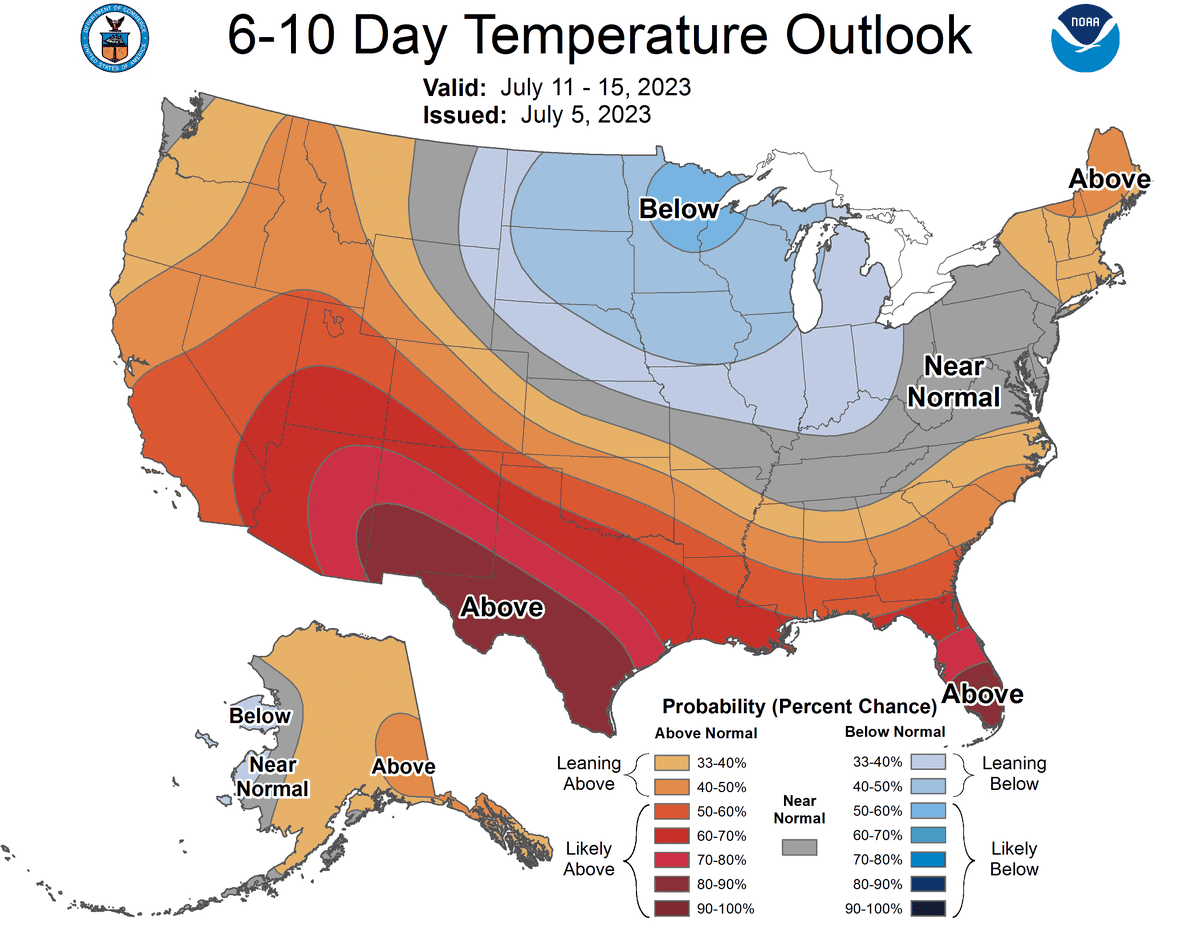
Temperatures have a high probability of remaining above normal across much of the South in the next 6-10 days, according to a forecast from the National Oceanic and Atmospheric Administration.
Odds in Southwest Florida are especially high, at 70-90%.
As the effects of climate change continue, the number of extreme heat days that Florida experiences each year are predicted to rise dramatically.
A 2022 study found that Florida is likely to see the greatest increase in local hot days (days at or above the 98th percentile temperature) of any state over the next 30 years.
The business of cooling
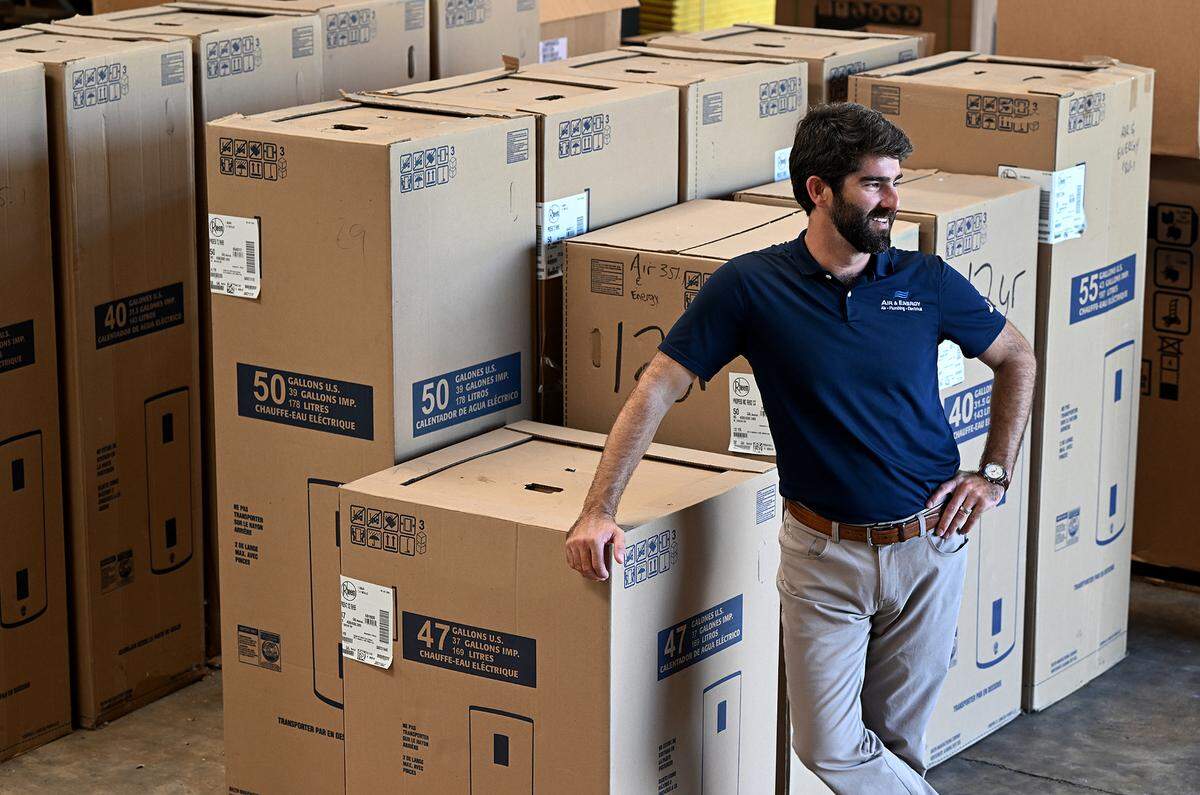
Ryan Brown, service manager for Air & Energy, 555 Sixth Ave. W., said his company received 80 calls for service in two days this week, when normally there might have been 20 to 30 calls — a roughly 220% increase.
At Hughes Heating and Cooling, 4523 30th St. W., office manager Tat Hughes says it seems hotter now than in the past.
“I’ve worked here since 1973, and I’ve never seen it this hot. It’s part of the price we pay for living in paradise. People need to stay hydrated,” Hughes said.
Stewart Moon, owner of Air & Energy, said his repair staff often encounter temperatures of between 130 and 150 degrees when they have to go into attics for air handler or ductwork.
Air & Energy provides its workers with electrolytes and, when possible, runs air conditioning into the attic to make working conditions as safe as possible.
After about 10 minutes in a super-heated attic, it’s time to climb down and take a break, Moon said.
Heat slams A/C repair companies
Matt Chaney, president of Veteran Air, 5928 21st St. E., said that this is the busy time of the year and that there is plenty of work to go around.
“The hotter it gets, the more frantic the calls,” he said.
Chaney and other air conditioning professionals say that preventive maintenance during spring, fall and winter can help prevent breakdowns in the summer, especially for units nearing the end of their life.
“The stuff we are dealing with now are systems on their last legs,” Moon said.

Something else homeowners can do is have an expert take a look at how well their house is insulated and possibly add more insulation. An air conditioner has difficulty getting rid of the heat when a house is poorly insulated.
Tat Hughes has one other bit of advice for homeowners wanting to stay cool: “Always use a licensed contractor.”
Life-threatening weather
Lakewood Ranch Medical Center reports an increase in heat-related illnesses.
“If you have a high body temperature, fast pulse, headache, dizziness, nausea, confusion or hot, red, dry or damp skin, you need to call 911 as you may be experiencing heat stroke which is a medical emergency,” said James Livingston, director of the Lakewood Ranch Medical Center emergency room.
“Some tips for keeping cool include limiting your outdoor activities to times of day when it is coolest, stay hydrated by drinking plenty of fluids. Avoid alcoholic or sugary drinks and stay in an air-conditioned area,” he said.
Dr. Sanjiv Tewari, chief medical officer at HCA Florida Blake Hospital, said that heat stroke occurs when the body’s normal cooling mechanisms, including sweating, fail. Risk factors for heat stroke include high ambient temperatures, strenuous activity, dehydration, alcohol intake, extremes of age (babies and the elderly), certain chronic diseases and some medications.
If untreated, heat stroke can lead to death. Symptoms include high fever, confusion, seizures headache, nausea, vomiting, flushing and dry skin despite being showing signs of fever.
Brain damage, myocardial infarction, kidney failure, muscle breakdown and hypotension can ensue, Tewari said.
In order to prevent heat stroke, avoid being outdoors when it is very hot and avoid exertion at high temperatures. It is important to drink lots of fluids and to stay indoors in a cool environment during heat waves. Alcohol and stimulants, either medications or drugs, should be avoided.

Medical attention should be sought immediately for temperatures 104 degrees or higher or if one has a fever and any symptoms of heat stroke, Tewari said.
Rob Coseo, director of business development at Manatee Memorial Hospital, said in an email that his ER has not seen any uptick in people with heat-related issues.
“Perhaps Floridians are just more resilient and prepared for summer heat. However, our transient population and those that work outdoors such as landscapers are at greater risk during these higher temperatures,” Coseo said.
Good practices for outside activities include staying hydrated, limiting exercise to morning or later evening hours when it’s cooler, loose and light-colored clothing, as well as sunscreen and hats to prevent burns, he said.
“While important to take care of yourself, take note to check in on family, friends, co-workers and neighbors as it relates to overexposure to heat. According to the CDC, those who are at highest risk include people 65 and older, children younger than two and people with chronic diseases or mental illness.
“And don’t forget your pets,” Coseo said.