How a Tampa Bay captain raced against the clock to help win a local fishing tournament
Most single-day fishing tournaments tend to last at least eight hours with a sunrise start and early afternoon finish.
As we move closer toward summer, tournaments like the Crosthwait Memorial and Fire Charity Fishing tournament will last 48 hours for offshore boats and a day and a half for inshore anglers.
Over the course of a day, there may be small windows of good tide and active fish that are desired to turn into a worthwhile catch.
Some days, eight hours go by quickly when the fish won’t bite, and Capt. James Beers didn’t have much time to get a catch together in the recent AdventHealth Foundation West Florida Fishing Tournament.
“I picked up the group at 9 a.m., and had to post all fish caught by 1 p.m. to the leaderboard,” explained Beers, who fishes often in southern and upper Tampa Bay.
“This time of year there are a lot of corporate fishing tournaments that tend to hire 50 to 70 guides. We get a team of anglers and I usually ask them what they want to do. Some just want to catch fish and have fun, while others want to try to win, but we may not catch as many fish. The best groups are the ones who say, ‘We’re trusting you and what you want to do, it’s a Friday and we’re not in the office so let’s have fun.’ Luckily in this tournament, I had one of those groups.”
Beers’ team, AdventHealth Sebring and PT Solutions, included local Advent Hospital CEO Jason Dunkel. With only four hours of fishing time, he ran to an area to fish for snook first, despite a poor tide. The tournament format would have a first-place category for the longest individual snook, redfish and trout, as well as the biggest slam combination of the three.
“We went into some Tampa Bay creeks where snook have been coming out for spring. I figured we could chum them up and get some activity going then wait for the better part of the tide to try and catch redfish. We kind of had to prioritize what the tide would give us, and luckily we got a decent amount with one 29-inch snook after two hours of working at them,” Beers said.
When the 29-inch linesider hit the measuring board and was turned into the online scoreboard, Beers made the decision to use the improving tide and try for redfish. When he pulled into his spot, he could see they were active but just not quite getting close enough to catch. With little time left, they patiently waited.
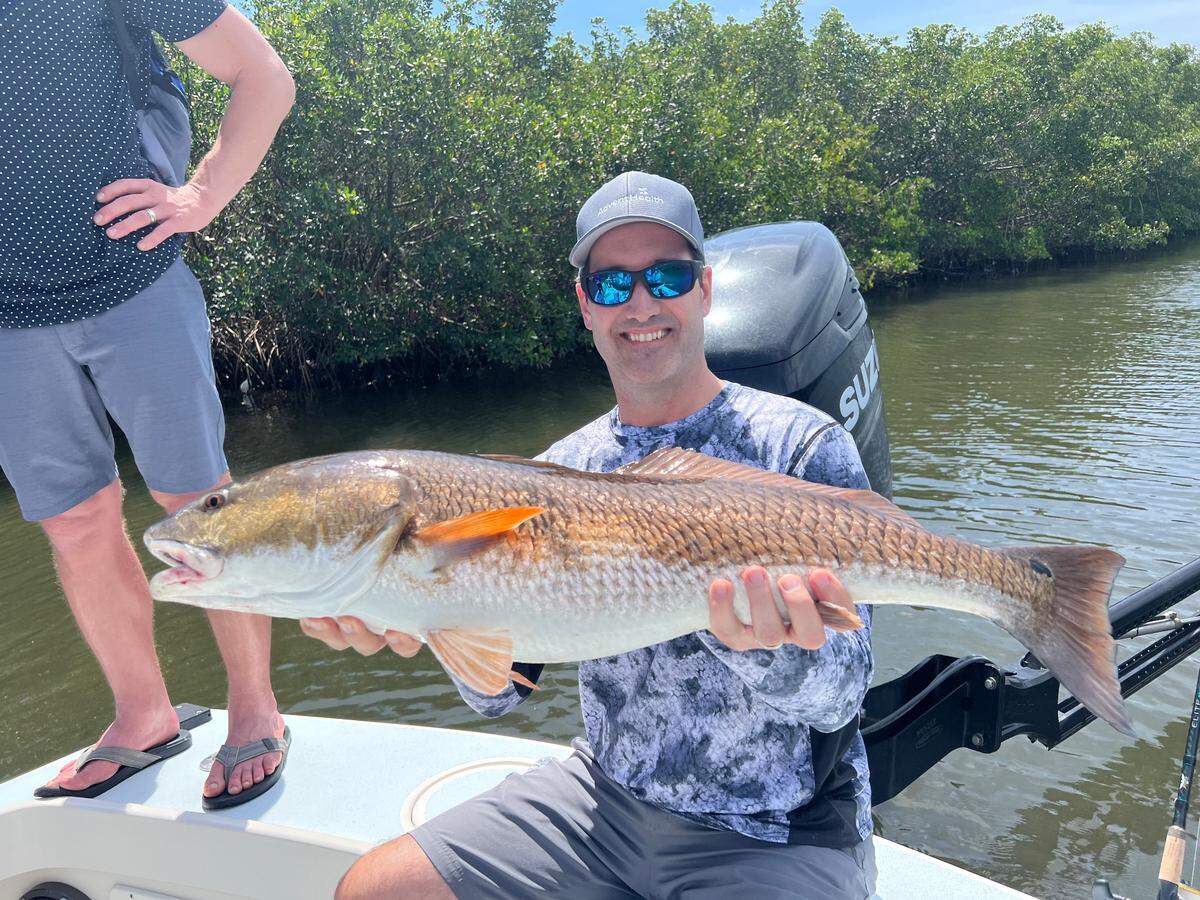
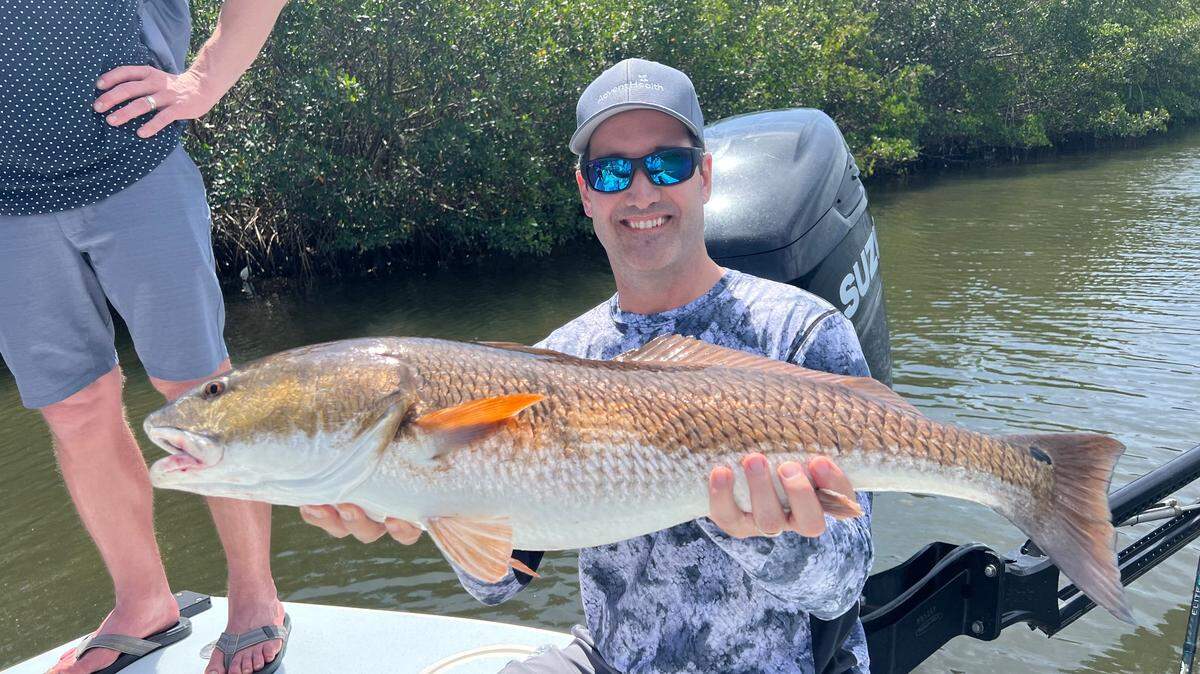
“The water wasn’t quite high enough up on the flats where the big groups were. We finally got close enough and could see blowups around us. That’s when I saw some pinfish in the livewell I got while catching bait and hooked one on. It didn’t last 10 seconds out there before being eaten. For big redfish, it seems pinfish always work.”
With Dunkel on the rod, he worked the redfish to the boat. After a lengthy fight, it was netted and put on the board at a quality 35 inches. Once turned in, the group only had 40 minutes of fishing time left to catch a trout.
“I told the guys the area we were in wasn’t good for trout, so we had to make a 20-minute run. The warm spring has pushed them south in the bay and toward the bridges. They trusted me, and after we got set up we could see trout but caught two catfish first. With two minutes left of fishing time, we got an 18-inch trout to turn in!”
After their entire catch was submitted, Beers and his team ended up in first place with a quality 82-inch slam over the short tournament time. Their redfish was the biggest of the tournament as well, taking home first place in that category.
“These aren’t hyper-competitive tournaments and are mainly for fundraiser events, in this case for life-changing programs at AdventHealth,” the victorious captain said. “But when you get this many guides together, we’re all out there trying for bragging rights.”