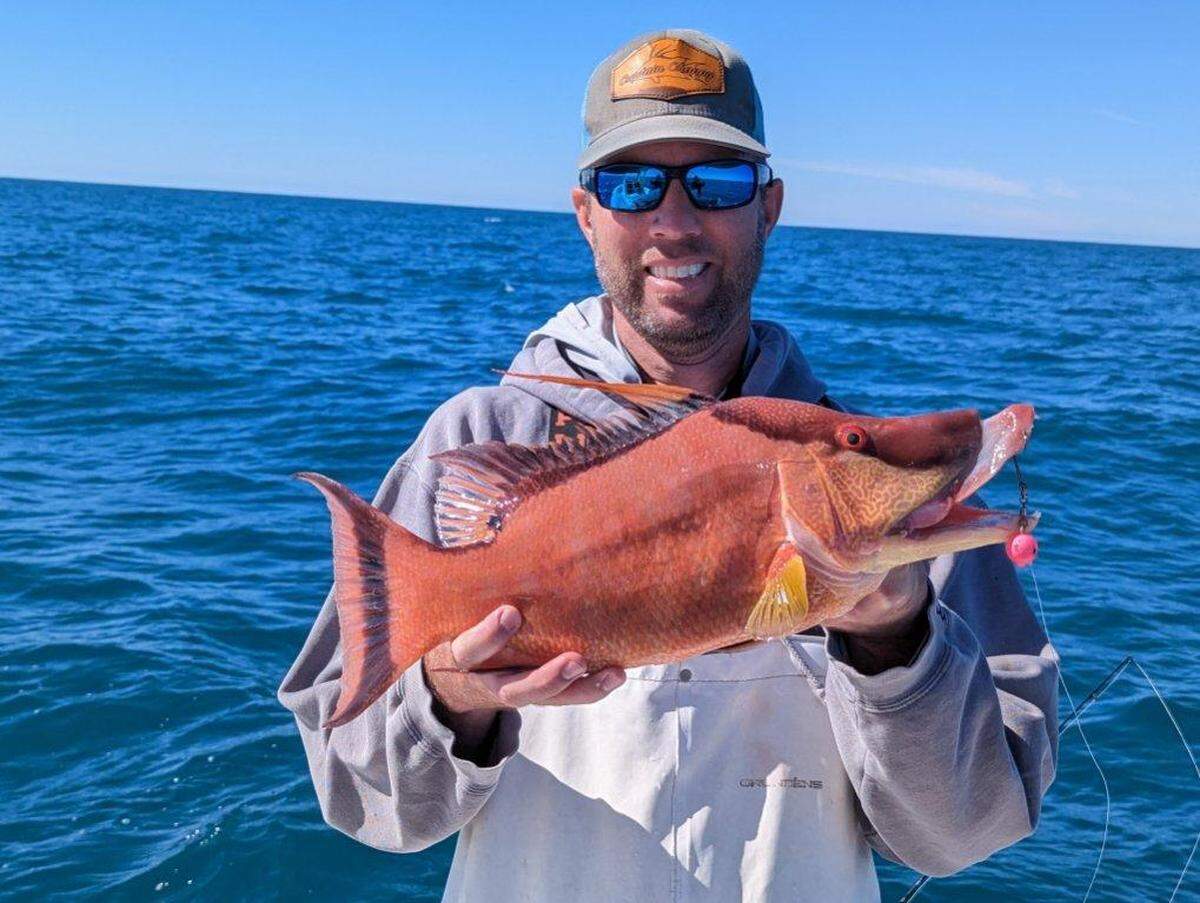
How to catch snapper and hogfish in Tampa Bay waters on a cold January day
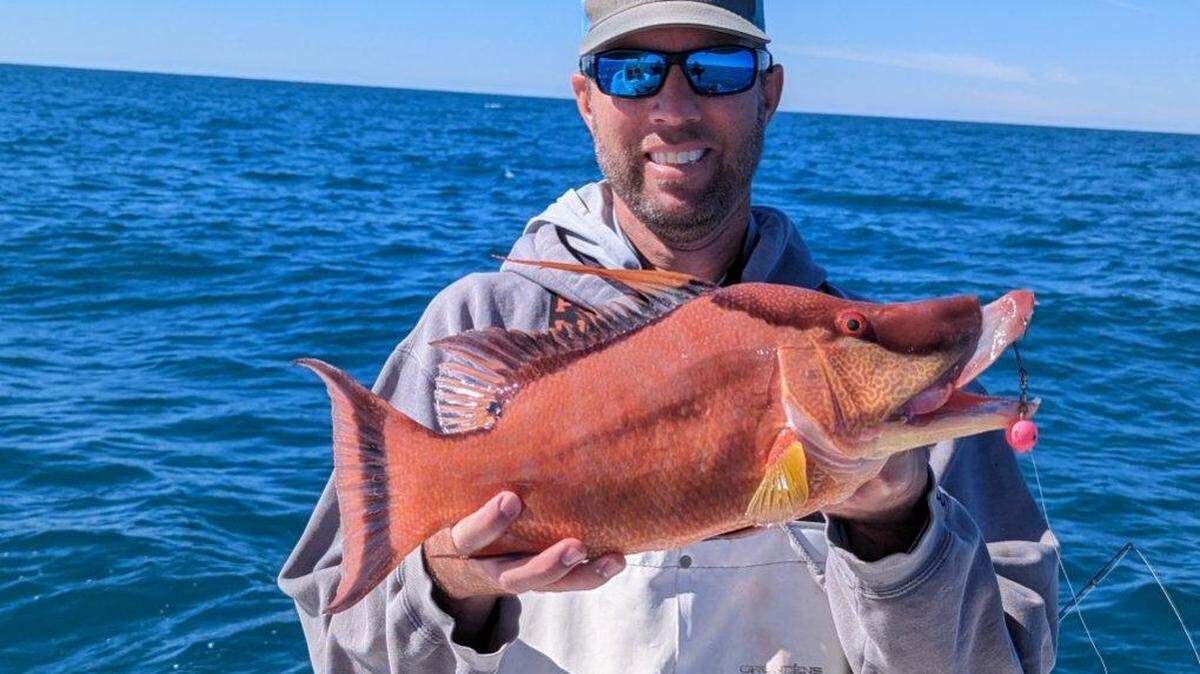
When I was invited out on a recent trip to showcase how good nearshore fishing is in the winter, I was in no hurry to leave early in the morning.
This trip was in the middle of January after nighttime temperatures dropped into the 30s, but the daytime was supposed to rise back into the 60s.
The plan was to leave at 9 a.m. on a Monday and fish some nearshore big ledges which tend to be the best places following strong winds and cold temperatures.
I left my house, and my truck’s temperature said 37 degrees outside. We cleared Longboat pass around 9:15 a.m. and headed west about 10 miles in the cold air.
For bait, shrimp were all we really needed with snapper and hogfish on the agenda. A few light to medium spinning rods as tackle with 20 pound leader attached to jig heads and Hogballs.
The first spot I checked was a hard bottom area without much relief. It was apparent that wasn’t going to be the best bottom for the day as no fish were marked or caught, so within 5 minutes we were out.
The next spot was in about 50 feet, a big ledge. I prefer big ledges after windy days as fish use them for protection. When the Garmin fish finding unit lit up it with activity, it was apparent the bottom was alive as fish were coming up even before we dropped a bait.
I thought it would be good, but didn’t know it would be that good. The first drop with a 1/4 ounce jig head and half shrimp was bit immediately on the drop and a 14-inch mangrove snapper was welcome to the fish box.
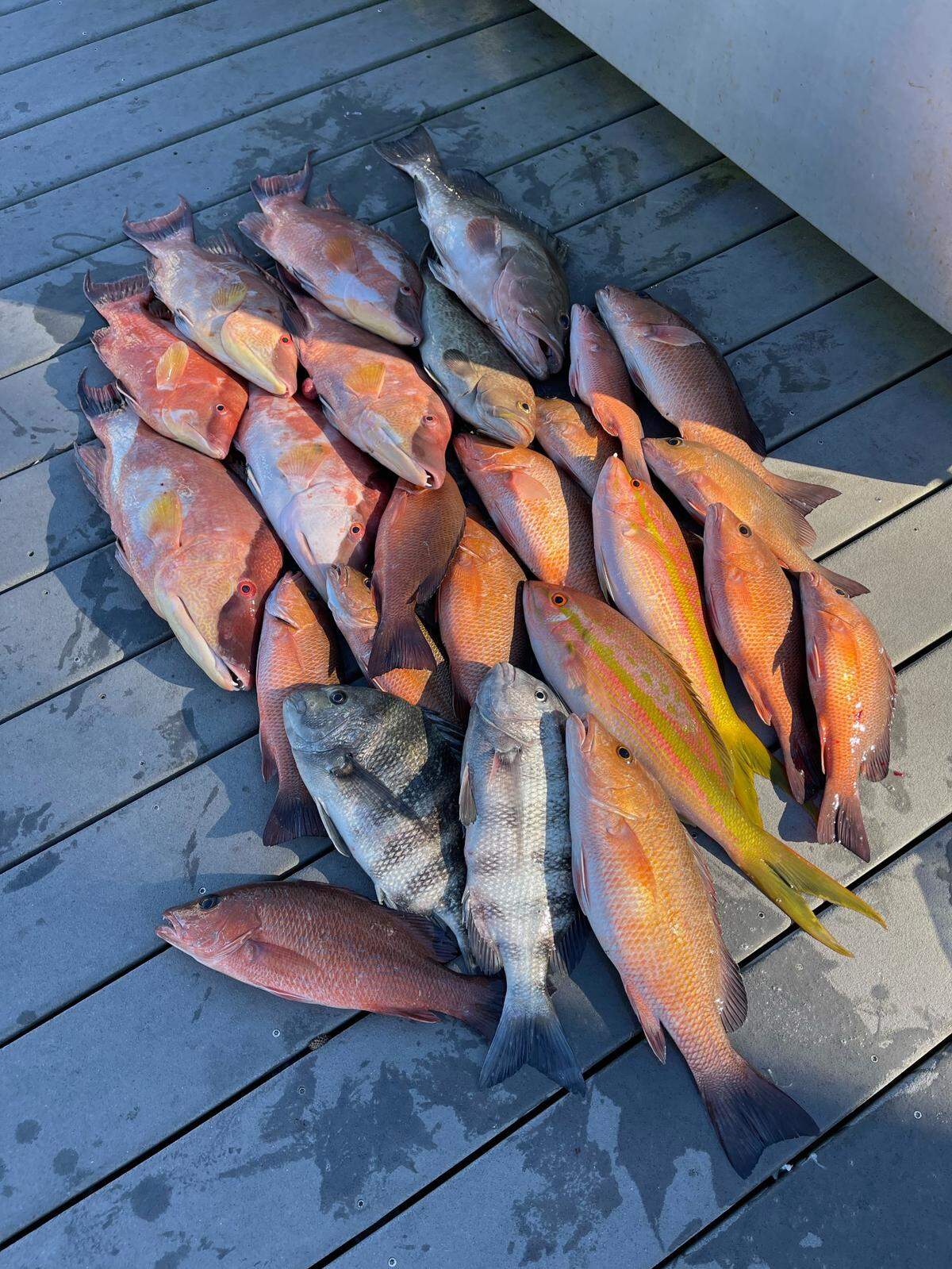
From then on, it was one after another on mangrove snapper, red grouper, some sheepshead and a few other by catch species. There were very few grunts, which can be a pain to get through for more desired targets.
Since it was a teaching mission and showcasing different species, I decided to move a little further west to another big bottom area in 60 feet.
This time the target was going to be hogfish, but after fishing more 1/4 ounce jig heads, a few big yellowtail snapper along with scamp grouper and mangrove snapper made choosing what to target difficult.
After the snapper limit was hit, it made the decision to fish the bottom easier so I rigged a 1.5 ounce Hogball XL and sent it past the snapper that were eating higher off the bottom. The heavier jig allowed it to bypass the other species, and leaving it right on the bottom is the way to get hogfish.
A few grunts started the bottom activity, and when it seemed like the hogfish weren’t going to cooperate I started to think about where to fish next. But like it always seems to work on the “last” bait a small hogfish ate.
With wintertime hogfishing, you’ll sometimes get 10 hogfish on a spot one day and zero the next. When they eat, get back down immediately. Over the next 30 minutes, we caught about 10 hogfish with six big keepers and broke off one that had to be a monster.
With a full fish box we checked one more spot, a big ledge in 70 feet.
That ledge was overrun with amberjack that come shallower in wintertime. There was more than enough meat to go around and we were back inshore by 3 p.m., a quick trip that was extremely successful by fishing big structure after strong wind and cold days, a wintertime staple.
The beginning of February is shaping up to follow a similar pattern to this trip. If you can sneak out after a cold front look to fish bigger bottom structures which provided protection for fish.